Circuit Breaker Keeps Tripping: When to Call an Electrician
A circuit breaker that keeps tripping needs attention when the cause isn't clear or the trip happens again. Stop using the affected circuit and call Earth Electric; if you smell burning or see smoke, leave the area and call emergency services.
Get a Free EstimateWhen should you call an electrician for a tripping breaker?
Call us if a circuit breaker trips again or you can't identify the cause. Stop using the affected circuit while we find the problem.
A burning smell or smoke calls for immediate action. Leave the area and call emergency services.
Warning signs that a tripping breaker needs attention
A tripping breaker can come with signs of an electrical problem. Tell us what you've noticed so we can focus our checks.
Why does a circuit breaker keep tripping?
A circuit breaker can keep tripping because of an overload, an electrical fault, or a faulty breaker. The trip alone doesn't identify the cause, so we check the circuit before recommending a repair.
A circuit overload happens when the devices on a circuit draw more power than it can safely carry. A short circuit occurs when electricity takes an unintended path, while a ground fault sends current toward ground.
A faulty appliance or damaged wiring can also cause a trip. A bad breaker can trip without an overload, so we check the breaker and the circuit wiring.
What can you do safely when a breaker trips?
You can stop using the affected circuit and unplug appliances if it's safe. We check the circuit and identify the fault.
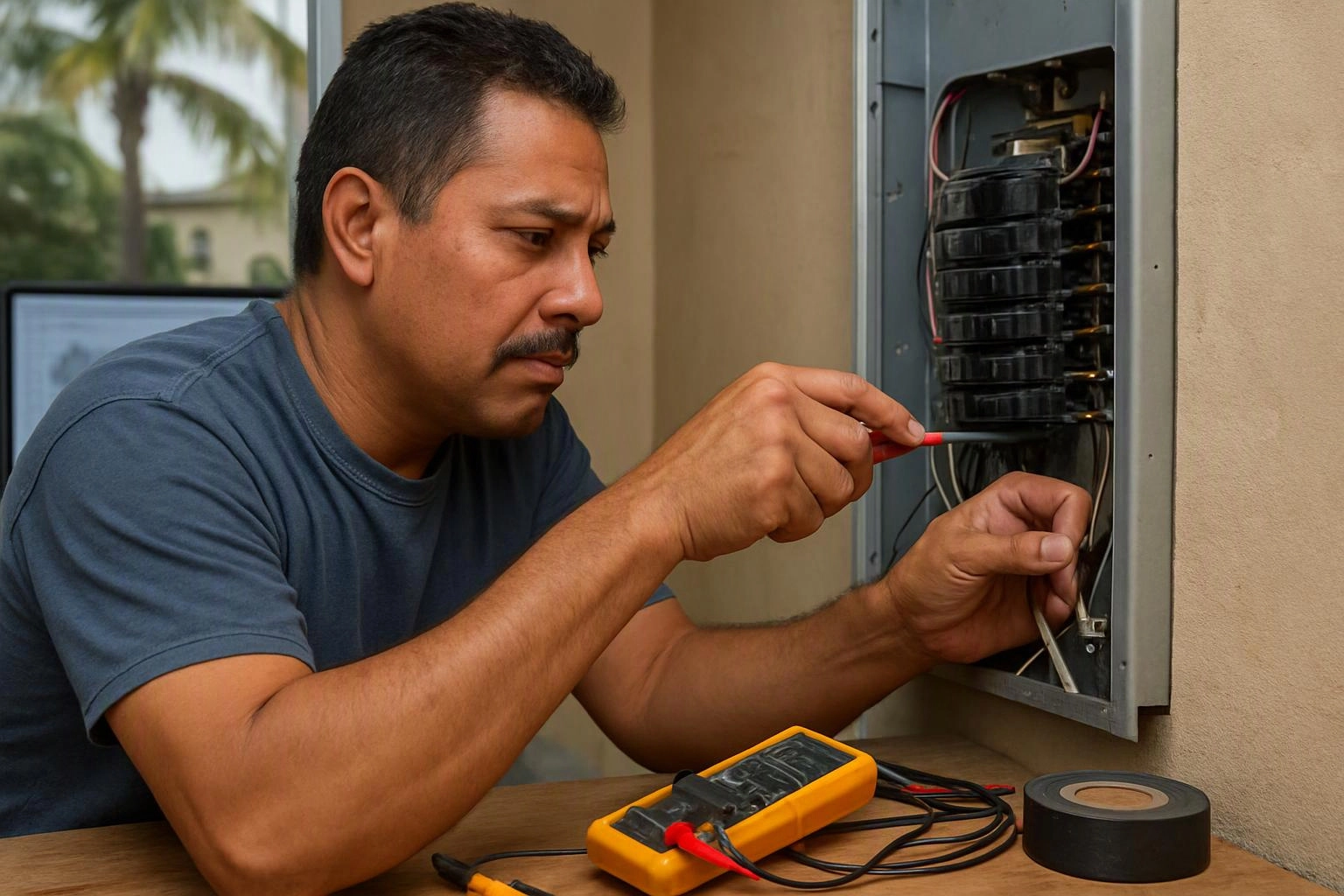
| Factor | What you can do yourself | What we do |
|---|---|---|
| Affected circuit | Stop using it. Unplug appliances only if it's safe. | Check the circuit and its load for the cause of the trip. |
| Electrical panel | Don't open the panel or keep resetting the breaker. | Inspect the breaker and connections as part of troubleshooting. |
| Smoke or burning smell | Leave the area and call emergency services. | Assess the electrical damage and recommend the needed repair when it's safe. |
Urgent electrical faults may need emergency electrical repair. We assess the fault before deciding what work is needed.
How do we diagnose and fix a tripping breaker?
We check the affected circuit, its load, and the breaker to identify the cause. We recommend repair, replacement, or a dedicated circuit when our findings support it.
Our Electrical Troubleshooting includes checks of wiring and connections. We also look at the circuit load and signs of damage.
We recommend Circuit Breaker Repair or Circuit Breaker Replacement when the breaker needs work. We may recommend Dedicated Circuit Installation when the load needs its own circuit. We check the proposed work against applicable code and inspection requirements.
What changes the quote for a tripping-breaker repair?
A tripping-breaker repair quote depends on the fault and the work needed to fix it. The condition of the wiring and breaker can change the scope.
A repair, breaker replacement, or dedicated circuit each involves different work. Ask us for a quote that explains the proposed work. Free Estimates Available.
Contact Earth Electric to discuss the tripping breaker and request an estimate. Tell us about any warning signs you've noticed.
Get a Free EstimateWhat Are the Key Specifications to Know?
- Topic Focus
- Circuit Breaker Keeps Tripping: When to Call an Electrician
- Related Core Service
- Electrical Troubleshooting
- Evaluation Method
- On-Site Inspection & Written Scope
- Compliance Standard
- Local Building Code & Manufacturer Specs
Related Resources
Emergency Electrician vs Regular Electrician: When Should You Call?
What It SolvesPower Out in Part of Your House: Causes and Next Steps
What It CostsEmergency Electrical Repair Cost Factors: After-Hours Calls and Troubleshooting
How It WorksWhat Happens During an Emergency Electrical Repair?