Electrical Outlet and Circuit Safety Checklist for Older Homes
An electrical outlet and circuit safety checklist helps find common home hazards. These include overloaded outlets, unsafe cords, damaged wiring, missing GFCI protection, and old two-prong receptacles. Check outlets before use. Limit extension cords. Watch for circuits that trip or feel hot. Keep high-wattage appliances on proper circuits. Major appliances may need dedicated circuits. Never replace a damaged or ungrounded outlet before an electrician checks the wiring, grounding, panel, and code needs.
Get a Free EstimateWhat This Electrical Safety Checklist Helps You Find?
An electrical safety checklist helps find common outlet and circuit problems. It can reveal overloads, damage, loose wires, missing GFCI protection, and old two-prong outlets. It can also show when an electrician should check wiring, grounding, circuit size, or the electrical panel.
Older homes often have fewer outlets and circuits. Modern homes use more power. One circuit may serve a fridge, microwave, computers, chargers, lights, and small appliances. That may be safe, but it needs close attention.
Check each outlet for cracks, looseness, heat, stains, or a missing cover. Think about where each outlet sits. Kitchens, bathrooms, laundry rooms, garages, workshops, offices, and outdoor areas have different risks.
Our team can help find the cause of an outlet problem. A damaged outlet may need replacement. Repeated trips or old wiring may need a full check. Earth Electric can help you plan urgent repairs, safety upgrades, and other electrical work.
Before You Check: Prepare for a Safe Home Electrical Inspection
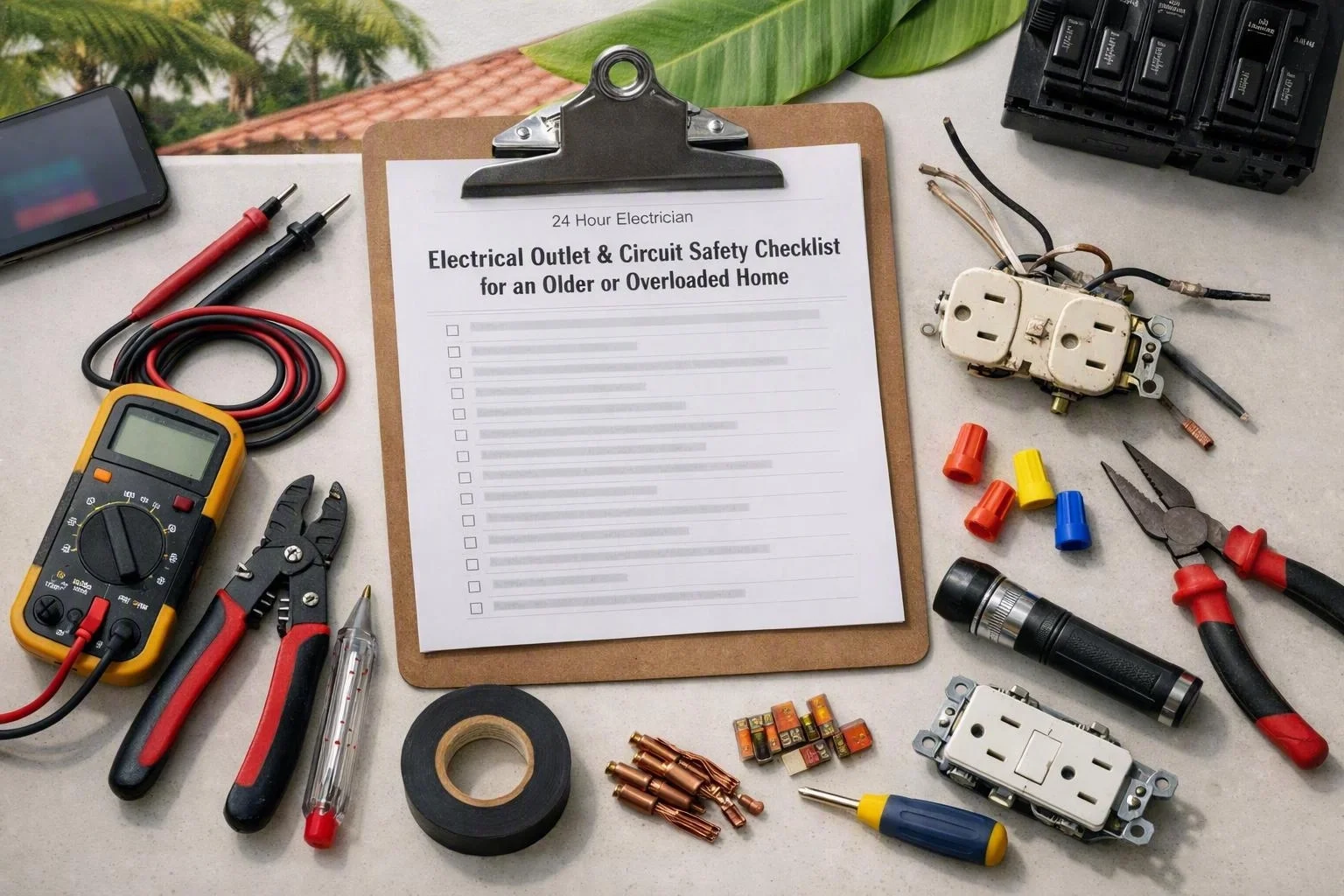
Start with a visual check. Never remove covers or touch wires. Unplug devices you don't need. Find the breaker for each area. Keep water away from electrical items. Stop if you see exposed wires, sparks, smoke, or strong heat. A qualified electrician should handle wiring and panel work.
Older homes may have few outlets, old panels, or ungrounded wiring. Their systems may not support modern appliance loads. You don't need to open the panel for a useful first check. A basic check takes about 15 to 30 minutes per floor.
Wear closed-toe shoes during the check. Safety gear doesn't make live wiring safe to touch. Leave the area if you smell burning or see smoke. Seek urgent help for an active hazard.24 Hour Electrician may be needed when the danger can't wait.
How to Tell Whether an Outlet or Circuit Is Overloaded?
An outlet or circuit may be overloaded if a breaker trips often. Heat, dim lights, loose plugs, and shared high-wattage devices are also warning signs. Many cords or power strips can signal too few outlets. Stop using the circuit. Have an electrician check the load, wires, and breaker.
One sign doesn't prove the cause. A breaker may trip from an overload, short, damaged device, or another fault. Don't keep resetting it. Write down what was running. Note if one appliance caused the issue or several rooms were affected.
Is Using Many Extension Cords Dangerous?
Many extension cords can create danger. Chained cords, covered cords, and wrong outdoor cords can overheat. Cords under rugs also create fire risks. They can cause trips across halls, stairs, garages, and work areas.
Use extension cords for short-term needs. Keep them visible, dry, and away from heat. Never use one for a heater, major appliance, or shop tool unless the maker allows it. The cord must also have the right rating.
What Should I Do if I Do Not Have Enough Outlets?
Don't add many power strips or cords. Ask an electrician to check the wiring, circuit size, and outlet locations. Adding outlets may help. Yet more outlets on one circuit won't add more power.
The right fix may be receptacle replacement, Outlet And Switch Installation, or Dedicated Circuit Installation. A high-wattage appliance may need its own circuit. Workshop tools, laundry machines, and office equipment may need one too.
During the Check: Test Outlets, Appliances, and Circuit Behavior
Test only parts you can reach safely. Watch how circuits act during normal use. Check that GFCI devices trip and reset. Note breaker trips. A plug-in tester can't find every wiring, grounding, or overload problem.
Don't create an overload on purpose. Pay close attention to kitchens, bathrooms, laundry rooms, garages, workshops, and outdoor areas. These spaces often use water, motors, heaters, or many devices.
AFCI protection may matter in living areas. GFCI protection matters near water and outdoors. Ground faults can stay hidden when an outlet looks normal. We can check the panel, safety devices, appliance load, and circuit together.
When Does a Home Need a Dedicated Circuit?
A dedicated circuit may be needed for a high-wattage appliance. It may also help when shared circuits trip often. Some appliances have special circuit rules from the maker. Common examples include ranges, dryers, air-conditioning units, water heaters, and shop tools. Some medical or mobility devices may need one too. An electrician should check the load and panel first.
A shared circuit may work for small loads. The wires and breaker must be the right size. Adding an outlet doesn't add circuit power. A load check looks at the appliance, wires, breaker, use, and panel space.
Circuit and Outlet Decision Guide
Use this guide as a first step. Hidden wire damage may change the best repair.
| Observed condition | Likely concern | Appropriate next step |
|---|---|---|
| Several small devices share one connection | Crowded shared circuit or poor cord practice | Reduce loads and request a load review |
| Heater, dryer, or range trips a breaker | High demand or insufficient circuit capacity | Assess for a dedicated circuit |
| Outlet is near water without protection | Shock risk and missing GFCI protection | Have protection evaluated and corrected |
| Older panel has little spare capacity | Panel limitations or aging equipment | Schedule an electrical inspection before adding loads |
| Outlet is loose or damaged | Worn receptacle, loose connection, or heat damage | Stop use and arrange outlet upgrade or repair |
Dedicated Circuit Installation may help a major appliance. Our crews can explain if an outlet upgrade is enough. They can also tell you if the wiring, safety devices, and panel need work.
After the Check: Record Problems and Plan Repairs
Write down each room, outlet, appliance, symptom, and breaker response. Stop using hot or damaged outlets. Remove unsafe cords and power strips. Schedule an electrical inspection for repeated faults or old wiring. A professional may suggest outlet and switch installation, GFCI replacement, wiring work, or dedicated circuit installation.
Good notes help an electrical contractor find patterns. One bad outlet may have a local problem. Issues in many rooms may point to a circuit, panel, or wiring problem. Keep your notes simple. Don't test beyond your skill level.
We can help plan repairs in stages. Safety hazards come first. Grounding and protection issues come next. Capacity work follows, such as new circuits or better outlet placement. Don't make a temporary repair permanent until the wiring is checked.
Should Old Two-Prong Outlets Be Replaced?
Old two-prong outlets should be checked before replacement. They may show that the wiring has no ground. A three-prong outlet without a ground can give a false sense of safety. An electrician can check the wiring and choose a safe fix. Options may include rewiring, GFCI protection, or a grounded receptacle.
A two-prong outlet shows an older home system. It doesn't prove that every wire is unsafe. The key points are the ground wire, secure connections, and current rules. A GFCI device can help protect against shocks. It doesn't create an equipment ground.
Never use an adapter to make an ungrounded outlet seem grounded. We can check the outlet, ground wire, panel, and connected devices. Correct Outlet And Switch Installation in Miami may be part of a larger check. The same safety steps apply in other older homes.
Red Flags That Require Prompt Electrical Attention
Stop using the affected equipment when these signs appear. Get prompt help. Never hide the problem with a new cover or larger breaker.
Questions About 24 Hour Electrician
Is Using Many Extension Cords Dangerous?
It can be dangerous when cords are joined, overloaded, damaged, covered, or used as permanent wiring. They may overheat and cause trips. Use cords only for short-term needs. Keep them visible and dry. Ask an electrician about adding outlets or a dedicated circuit.
What Should I Do if I Don't Have Enough Outlets?
Don't depend on many power strips or extension cords. Have an electrician check the wiring and circuit size. A professional may add outlets, replace worn ones, improve protection, or install a dedicated circuit.
How Do I Know an Outlet Is Overloaded?
Warning signs include trips, heat, loose plugs, flickering lights, stains, buzzing, or many high-wattage devices on one connection. Stop using the outlet. Have an electrician check the load, wiring, and breaker. Don't keep resetting the breaker.
When Do I Need a Dedicated Circuit?
You may need one when an appliance has special maker rules, overloads a shared circuit, or uses much power. Ranges, dryers, air-conditioning units, water heaters, and shop tools often need one. An electrician should check the load and panel first.
Should Old Two-Prong Outlets Be Replaced?
They should be checked first. A two-prong outlet may connect to ungrounded wiring. An electrician can check the ground path and suggest rewiring, GFCI protection, or a grounded receptacle. Never install a three-prong outlet without checking its ground.
Our team can check outlet symptoms, circuit use, grounding, safety devices, and panel capacity. Contact us through our electrical service team to discuss a safe next step.
Related Resources
How Much Does It Cost to Rewire a House in Miami?
house rewiring cost and timeline Miami
What It CostsEV-Ready Electrical Installation: Costs, Capacity, and Project Steps
EV ready electrical wiring installation cost Miami
What It CostsLighting, Landscape Lighting, and Ceiling Fan Installation Costs
lighting ceiling fan and landscape lighting installation cost
How It WorksElectrical Inspection and Code-Compliance Corrections: Process and Cost Factors
electrical inspection and code compliance correction cost