EV Charger Electrical Installation for Miami Homeowners
Earth Electric installs EV-ready electrical setup for Miami homeowners by evaluating the existing electrical panel, sizing a dedicated circuit, completing needed panel or service upgrades, and verifying the installation through electrical inspection. Level 2 chargers and Tesla Wall Connectors typically require dedicated circuits. While older panels may need capacity improvements before charging equipment is installed. A local electrician can coordinate the installation requirements, identify electrical safety issues, and help determine the practical charging setup for the home.
Get a Free EstimateWhy Miami Homeowners Need EV-Ready Electrical Infrastructure?
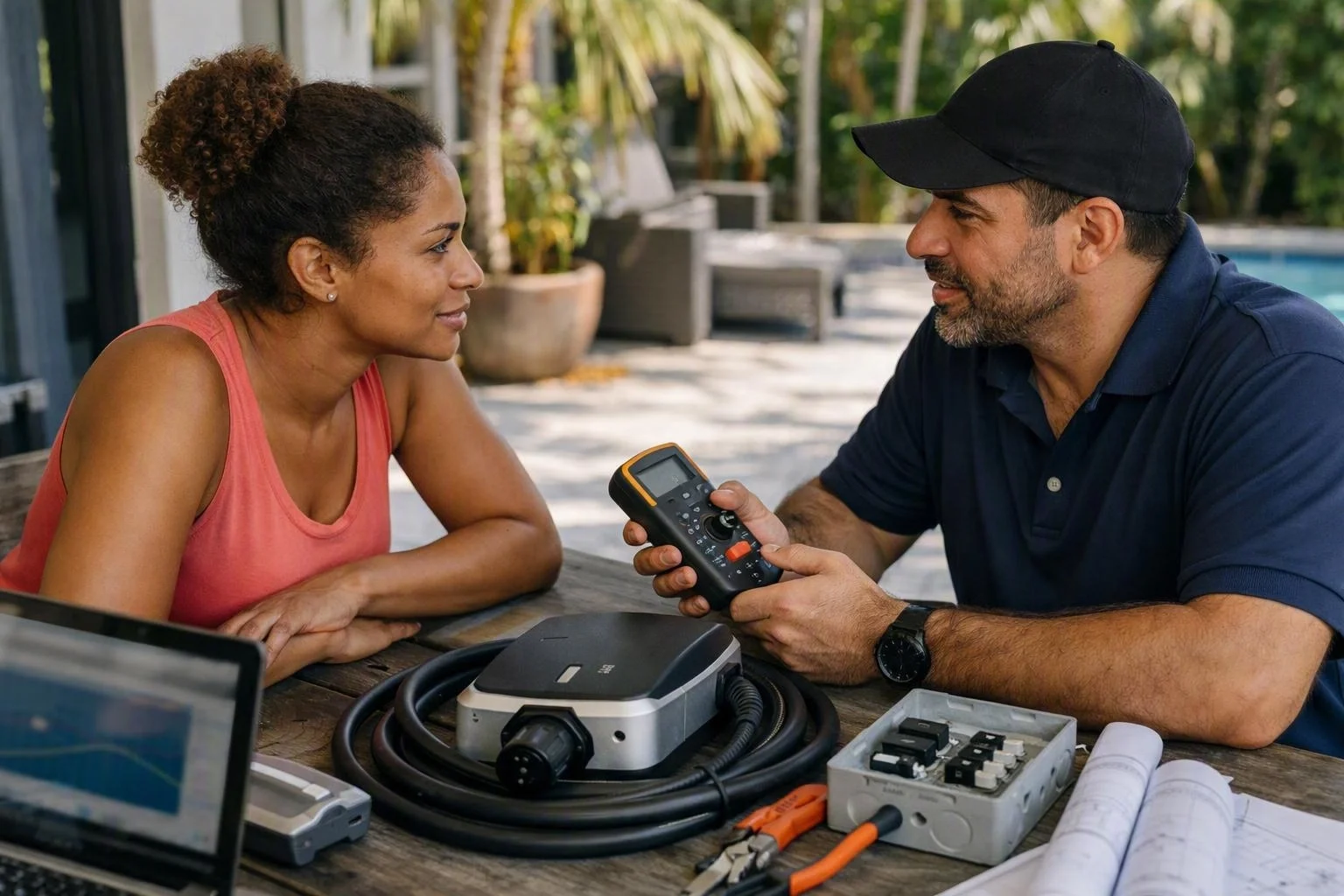
EV-ready electrical setup gives Miami homeowners a safe, dependable way to charge an electric vehicle at home. The installation accounts for daily driving needs, Level 2 charging demand, available panel capacity, indoor or outdoor equipment placement, and local environmental conditions so the charging system supports the home rather than overloading its electrical system.
Home charging is convenient, but the charger is a continuous electrical load. The wiring, circuit breaker, equipment, and service must work together. A proper plan also considers where the vehicle is parked and how far the circuit must travel from the panel.
Older Miami homes, remodeled properties, and homes with high existing demand may have limited capacity. A local electrical evaluation helps identify these issues before equipment is purchased or installed.
Does Your Electrical Panel Support an EV Charger?
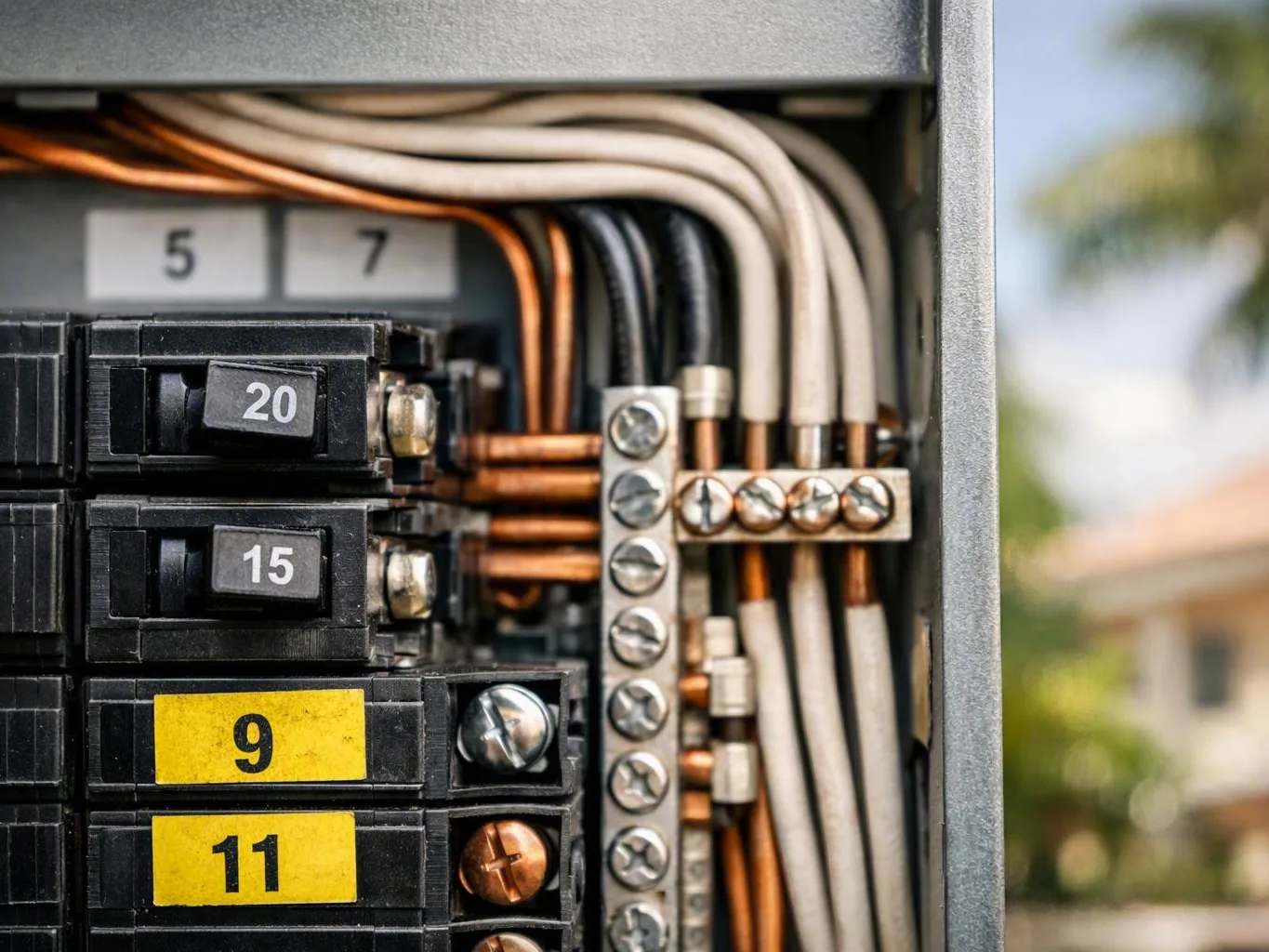
An electrical panel supports an EV charger when its available capacity, bus rating, breakers, wiring, and overall condition can safely handle the charger’s continuous load. An electrician should perform a load calculation and inspect the service before installation. If capacity is insufficient, a panel upgrade or electrical service upgrade may be required.
The first question is not simply whether an empty breaker space exists. The electrician reviews the home’s service rating, main service equipment, existing circuit loads, and the proposed charging amperage. Heating, air conditioning, pool equipment, electric water heating, and other large loads can reduce the capacity available for an EVSE.
A load calculation compares expected demand with the service rating and panel limits. It also checks whether the circuit breaker and conductors are correctly sized for the charger’s continuous load. A panel may appear clean while still being too small, outdated, damaged, or unsuitable for new equipment.
For the query “does my electrical panel support an EV charger,” the practical answer is found through an on-site assessment, not a visual guess. We check the panel, main disconnect, grounding, wiring condition, and available service capacity.electrical service upgrade.
Level 2 EV Charger Installation in Miami: Dedicated Circuits and Tesla Wall Connectors
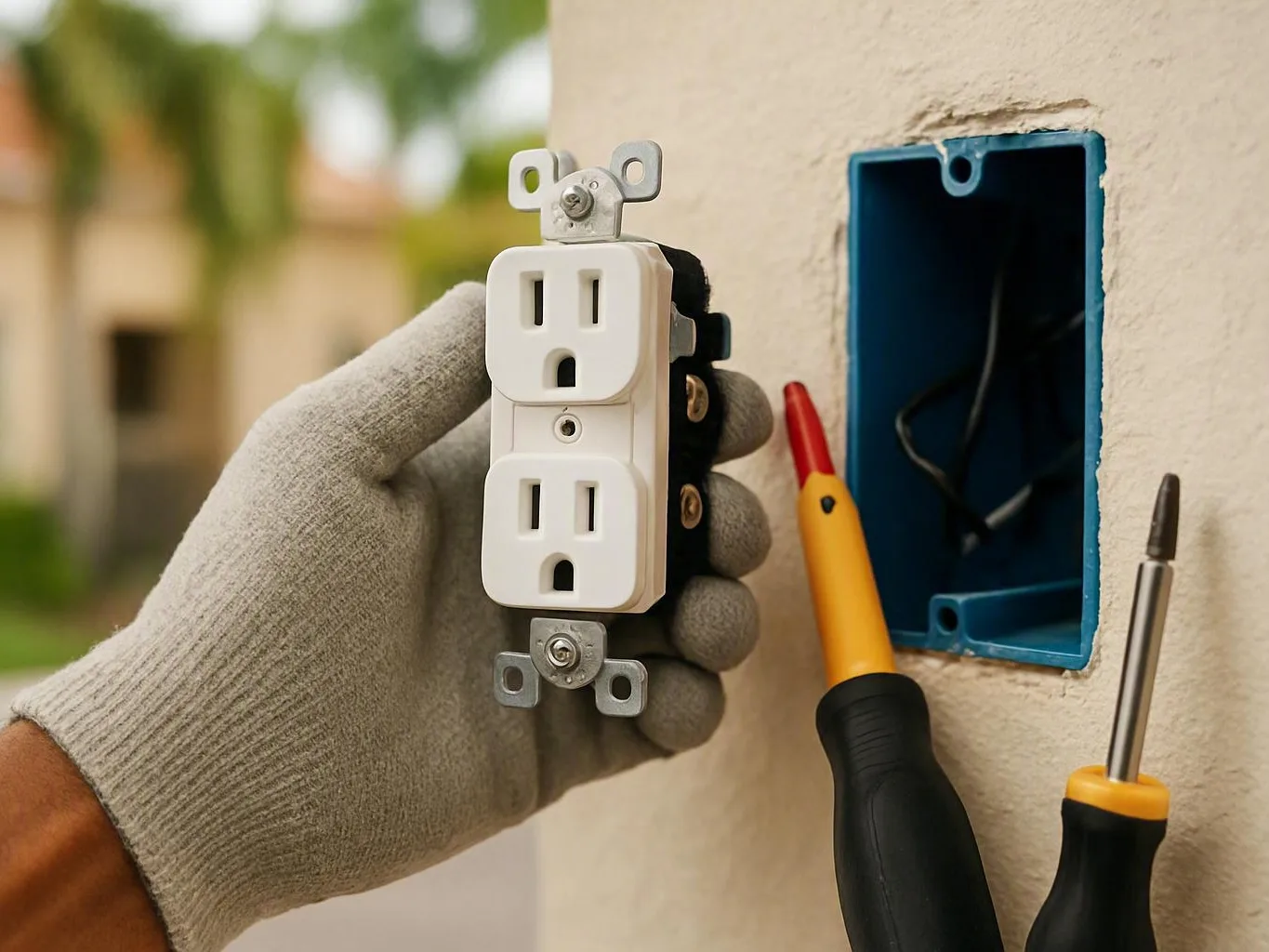
Level 2 EV charger installation in Miami generally uses a dedicated 240-volt circuit sized for the equipment and vehicle. A Tesla Wall Connector also requires compatible wiring, overcurrent protection, and adequate panel capacity. We can evaluate the charging location, route the circuit, and identify electrical upgrades needed for safe operation.
A Level 2 EV charger uses higher voltage than a common household outlet. Which can provide faster charging for many vehicles. The exact charging amperage depends on the vehicle, EVSE settings, charger instructions, circuit size, and available service. The circuit should serve the charger alone rather than share power with general-purpose outlets.
For a Tesla Wall Connector dedicated circuit in Miami, the installation plan must account for the connector model, vehicle requirements, conductor size, breaker rating, and installation distance. Outdoor equipment needs a weather-resistant enclosure and protected terminations. Coastal air, humidity, heat, and storms make sound enclosure placement and corrosion-aware work especially important.
Dedicated Circuit Installation may be straightforward when the panel is close to the garage. Long runs to a detached garage, carport, or outdoor parking space can add conduit, wiring, supports, and routing decisions. The completed system should include suitable overcurrent protection and a clear way to disconnect power when needed.
Most residential projects commonly involve one dedicated circuit and a circuit route that may range from a short garage run to several dozen feet, depending on the home layout. The actual design must be based on site conditions rather than a typical figure.
What Happens During an EV Charger Electrical Installation?
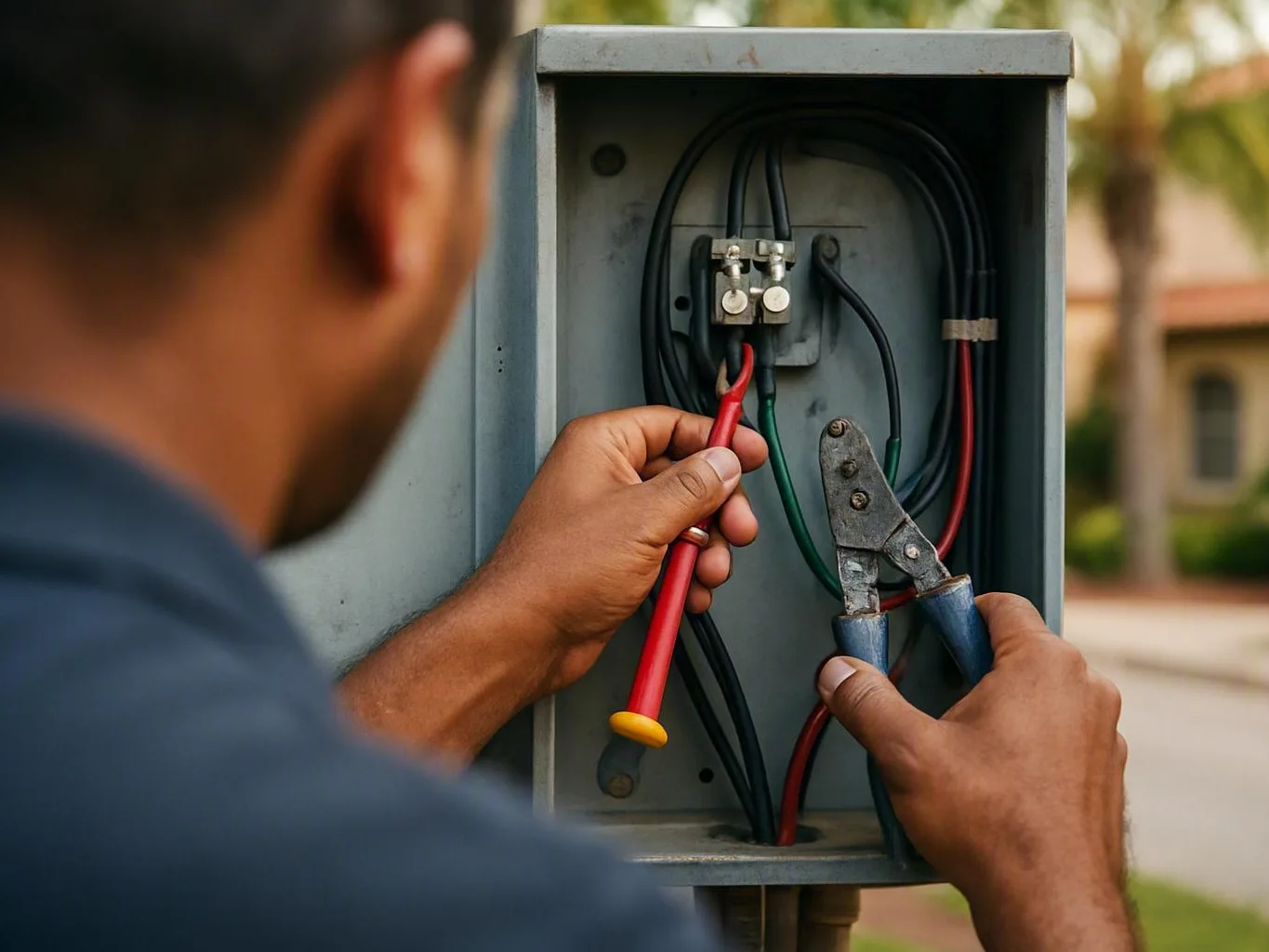
An EV charger electrical installation begins with an assessment of the electrical service, panel, charger location, and vehicle requirements. The electrician then designs and installs the dedicated circuit, connects the charging equipment, checks protective devices, and completes the applicable electrical inspection so the system can operate safely.
Miami-Dade permitting and inspection requirements can affect the installation sequence, documentation, and final approval. Planning these steps early helps prevent a charger from being installed before the electrical work is ready for review.
Which Electrical Upgrade Does Your Miami Home Need?
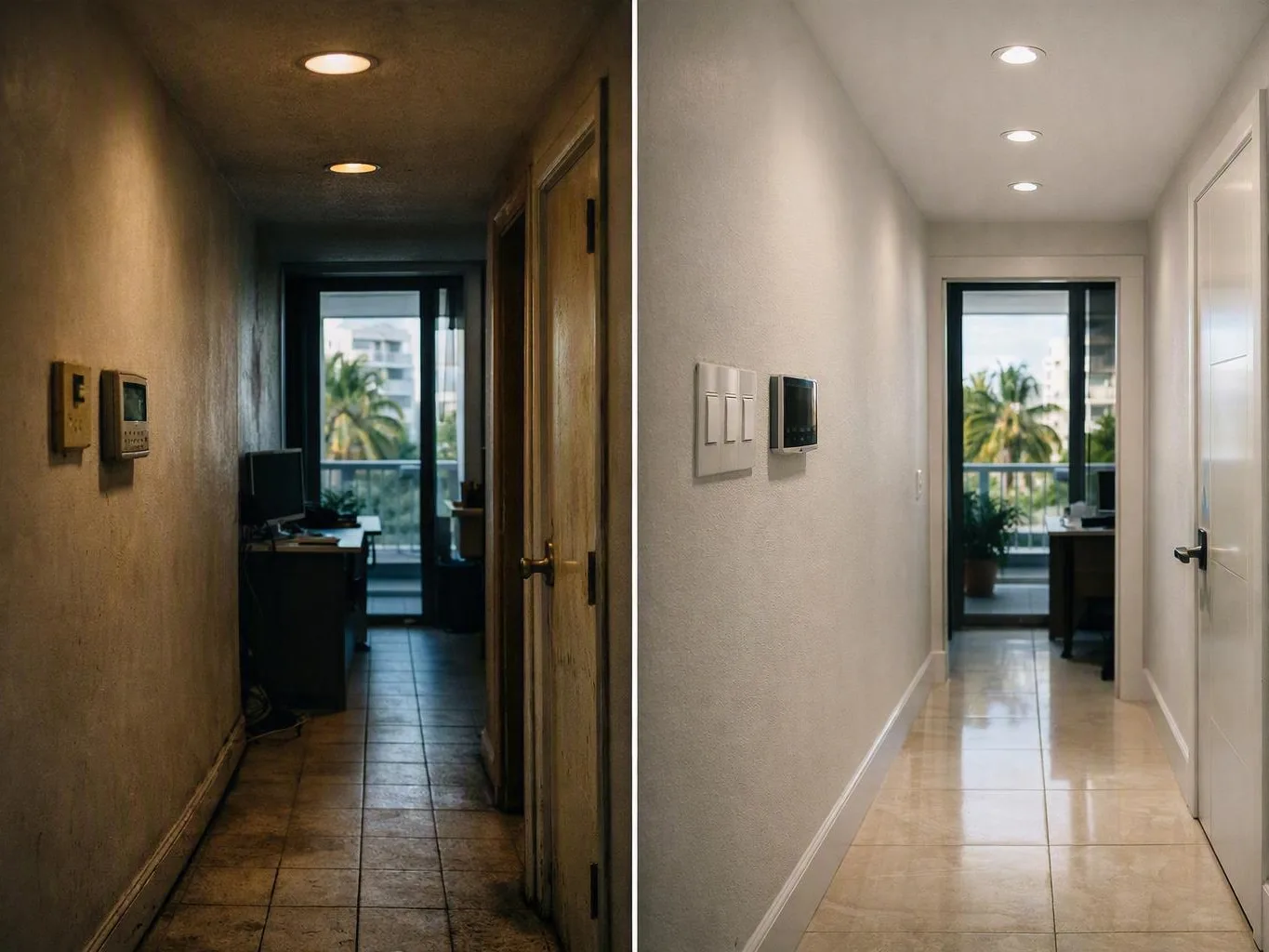
The required electrical upgrade depends on the home’s existing wiring, panel capacity, service rating, charger output, and installation route. Some Miami homes need only a dedicated circuit. While others require a panel upgrade or service upgrade before charging equipment can be added. An electrical inspection confirms that the completed work is ready for use.
The table below shows common planning paths. It is not a substitute for a load calculation or an on-site review. Because panel condition and wiring routes vary from one property to another.
| Observed condition | Likely work | Why it matters |
|---|---|---|
| Adequate service and sound panel | Dedicated circuit installation | Provides a properly sized path for the charger. |
| Limited spaces or an aging panel | Electrical panel upgrade | Improves distribution capacity and equipment compatibility. |
| Insufficient service rating | Electrical service upgrade | Adds broader capacity for the home’s total demand. |
| Long or exposed route | Conduit and protected wiring plan | Protects conductors and supports a safe installation. |
| Work completed | Electrical inspection | Verifies applicable installation and approval requirements. |
Existing wiring must be checked before it is reused or extended. A panel upgrade alone may not solve a long-run problem, and a new circuit may not solve a service-capacity problem. The correct plan connects the charger output, route, panel, and home demand.
EV Charger Features and Common Challenges for Homeowners
The most important EV charger features for Miami homeowners are charging speed, vehicle compatibility, circuit protection, weather resistance, cable reach, and convenient placement. Common challenges include long wiring runs, limited panel capacity, outdoor exposure, difficult conduit routing, and selecting a charger whose electrical demand exceeds the home’s available service.
Choosing equipment before checking the electrical system can create avoidable problems. Start with the vehicle’s charging limits. Then compare the desired speed with the home’s service capacity and the planned location.
Features That Matter
Common Challenges
Plan Your Miami Home EV Charging Installation
Planning an EV charger installation starts with choosing a practical charging location and identifying the vehicle’s charging requirements. We can review the home’s electrical setup, explain whether a dedicated circuit or upgrade is appropriate, account for Miami installation conditions, and outline the inspection and completion steps before work begins.
Our EV-ready electrical setup installation in Miami is planned around the home, not just the charger. We consider panel capacity, service rating, route length, conduit, outdoor protection, storm exposure, and access to the disconnect. That approach helps homeowners avoid selecting equipment that the existing system cannot safely support.
Ask for an evaluation before buying equipment if the home has an older panel, recent remodeling, electric appliances, a detached garage, or a long driveway-to-panel distance. These conditions can change the circuit design and may affect permit coordination with Miami-Dade authorities.
We can also discuss whether a basic circuit, a Level 2 charger, or a broader electrical upgrade makes sense for your driving routine. A 24 Hour Electrician may help with urgent electrical concerns, while planned charger work still requires proper design, installation, and inspection.
Contact us to discuss the charging location and electrical needs of your home.
Questions About 24 Hour Electrician
How Much Does It Cost to Install an EV Charger in Miami?
The cost depends on the charger, circuit length, wiring route, panel condition, service capacity, outdoor requirements, and permit or inspection needs. A short circuit from a suitable panel is different from work involving a panel upgrade, service upgrade, detached garage, or long conduit run. An evaluation is needed for a reliable project scope.
Can I Install a Level 2 Charger at Home?
Many homeowners can install a Level 2 charger when the electrical service, panel, wiring, and location support the required 240-volt circuit. A load calculation and inspection should be completed first. Some homes need a dedicated circuit only. While others need a panel or service upgrade.
Does a Tesla Wall Connector Need a Dedicated Circuit?
Yes, a Tesla Wall Connector is typically installed on a dedicated circuit sized for its configured charging amperage. The circuit also needs compatible conductors, overcurrent protection, suitable grounding, and enough panel capacity. The final design depends on the connector model, vehicle, installation route, and service equipment.
How Do I Know if My Electrical Panel Can Handle an EV Charger?
An electrician should inspect the panel, main service, breakers, wiring, service rating, and existing electrical demand. A load calculation determines whether enough capacity remains for the charger’s continuous load. An empty breaker space alone does not prove that the panel can safely support new charging equipment.
Do I Need an Electrical Panel Upgrade for an EV Charger?
Not always. If the existing panel has adequate capacity, condition, space, and compatible equipment, a dedicated circuit may be enough. An electrical panel upgrade or electrical service upgrade may be needed when the panel is undersized, outdated, overloaded, damaged, or unable to support the charger and the home’s other loads.
Related Resources
Electrical Panel Upgrade Cost in Miami, Options, Price Factors, and Timeline.
electrical panel upgrade cost Miami
What It CostsHow Much Does It Cost to Rewire a House in Miami?
house rewiring cost and timeline Miami
What It CostsEV-Ready Electrical Installation, Costs, Capacity, and Project Steps
EV ready electrical wiring installation cost Miami
How It WorksElectrical Inspection and Code-Compliance Corrections, Process and Cost Factors
electrical inspection and code compliance correction cost