Signs of an Electrical Emergency
Signs of an electrical emergency include heat, smoke, shocks, and damaged wiring. Keep clear of the danger and get help rather than trying to inspect it yourself.
- A burning electrical smell near wiring or equipment.
- Smoke or flames from an outlet, panel, or appliance.
- An electrical shock when touching equipment or a surface.
- An exposed wire that may be live, including damaged wiring.
- A sparking outlet, especially with heat, smoke, or a burning smell.
- An electrical panel that feels hot or shows signs of burning.
- Water near electrical equipment, especially if the equipment is wet.
When Does Emergency Electrical Repair Address a Burning Smell in Your Home?
Emergency electrical repair addresses a burning smell when wiring or equipment may be overheating. Overheating can lead to an electrical fire. Leave the area and call emergency services if you see smoke or flames.
Don't use the affected equipment or try to find the source yourself. We can address the fault through Emergency Electrical Repair.
What to Do When Electrical Danger Appears
Electrical danger calls for keeping clear of the hazard and getting help. Leave the building and call emergency services if there's smoke, fire, or immediate danger.
- Keep clear of damaged wiring, wet equipment, and anything that may be energized.
- Leave the building if there's smoke, fire, or immediate danger. Call emergency services from a safe place.
- Shut off power only if you can reach the disconnect safely without approaching the hazard. Don't enter water or touch wet equipment to reach it.
- Stay away from fallen power lines and anything touching them. Call emergency services and the utility from a safe place.
- Call emergency services for an electrical shock. Don't touch the person while they may still be in contact with electricity.
How Does Electrical Troubleshooting Identify a Tripping Breaker in Your Home?
Electrical troubleshooting identifies why a breaker trips by checking the affected circuit and connected equipment. We investigate the fault rather than repeatedly resetting the breaker. Smoke, heat, or a burning smell makes the situation urgent.
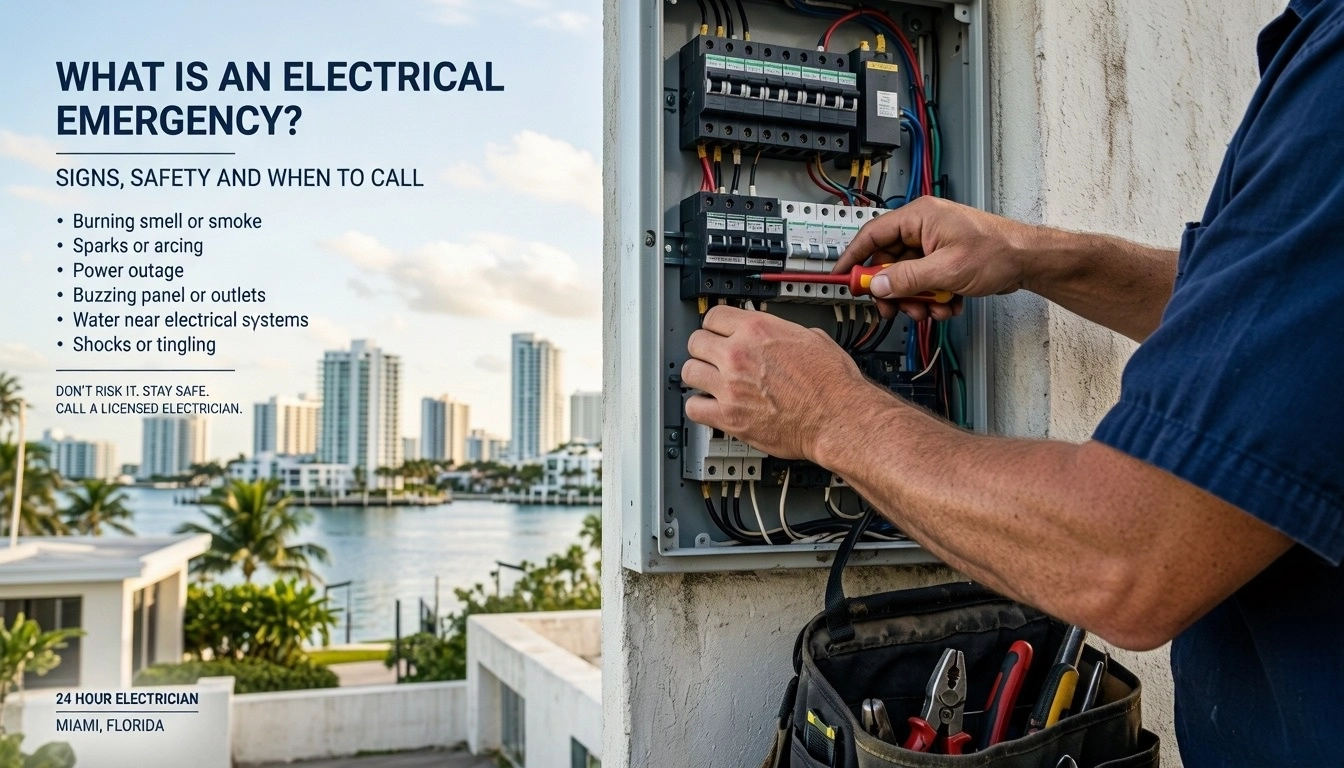
A circuit breaker can trip when a circuit is overloaded or has an electrical fault. We check the circuit and equipment to identify the cause and determine what needs repair.
Electrical Problems That May Not Be Emergencies
An isolated outage or flickering lights may need attention without signaling immediate danger. We can use electrical troubleshooting to check the cause.
Watch for warning signs such as heat, smoke, or a burning smell. If those appear, keep clear and follow the emergency steps above.
What Happens After You Call
After you call, we ask about the hazard and inspect the electrical problem when it's safe to do so. Tell us what you noticed and whether emergency services are involved.
We check the affected equipment and wiring to diagnose the fault. We'll explain the repair scope and provide an estimate based on the work needed.
Contact Earth Electric to discuss an urgent electrical problem or request an estimate.
Get a Free EstimateWhat Are the Key Specifications to Know?
- Topic Focus
- What Is an Electrical Emergency? Signs, Safety and When to Call
- Related Core Service
- Emergency Electrical Repair
- Evaluation Method
- On-Site Inspection & Written Scope
- Compliance Standard
- Local Building Code & Manufacturer Specs
How Does the Evaluation & Execution Process Compare?
| Evaluation Stage | Technical & Quality Criteria | Timeline Checkpoint |
|---|---|---|
| Initial Diagnostic & Assessment | Identify root cause, site constraints & code requirements | Before any work begins |
| Written Scope & Option Comparison | Compare repair vs. replacement tiers & material grades | Prior to project approval |
| Code-Compliant Execution | Follow manufacturer specs & local permitting standards | During active service |
| Final Verification & Walkthrough | Verify installation alignment, performance & clean site handoff | Upon project completion |
Related Resources
Flickering Lights: Electrical Causes and Warning Signs
Brand vs BrandEmergency Electrician Companies Worth Comparing: Earth Electric and Alternatives
Compared ToEmergency Electrician vs Regular Electrician: When Can Electrical Repairs Wait?
What It CostsEmergency Electrical Repair Cost Factors: After-Hours Calls and Troubleshooting