Can a ceiling fan light kit be repaired?
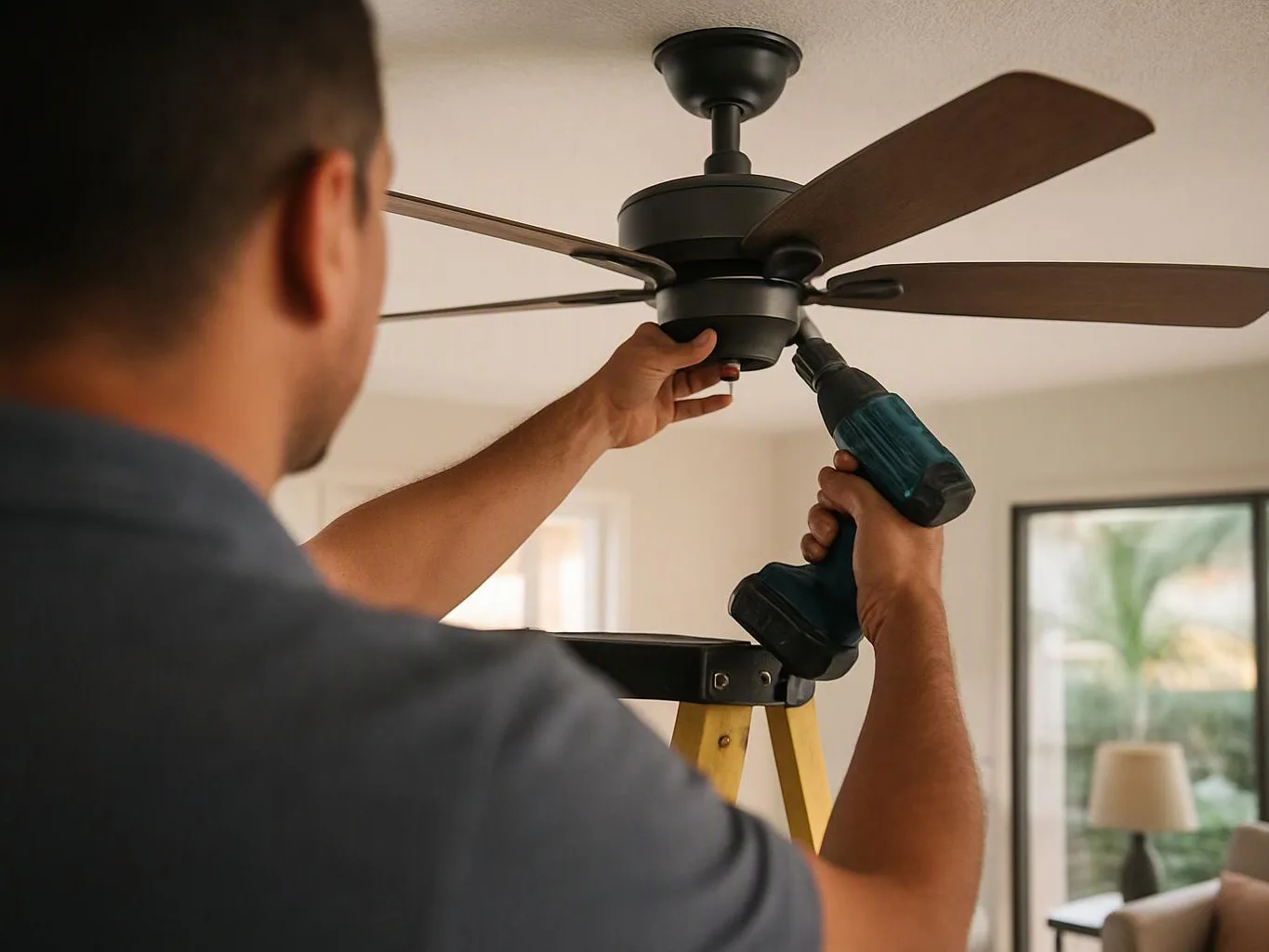
Yes, a ceiling fan light kit can be repaired when its parts and wiring are serviceable. Earth Electric checks the pull chain, socket, LED module, dimmer switch, and connections. We isolate power before testing, then explain whether repair or part replacement fits the fixture.
Which material changes how long fan light repair takes?
The light kit's construction can change the work involved, especially when it uses an integrated LED module. We check access, wiring, the socket, and control before setting the repair scope. Customers should share the fan model if it is available, but we do not require a brand assumption to begin diagnosis.
How does a fan repair visit move from the first call to the last step?
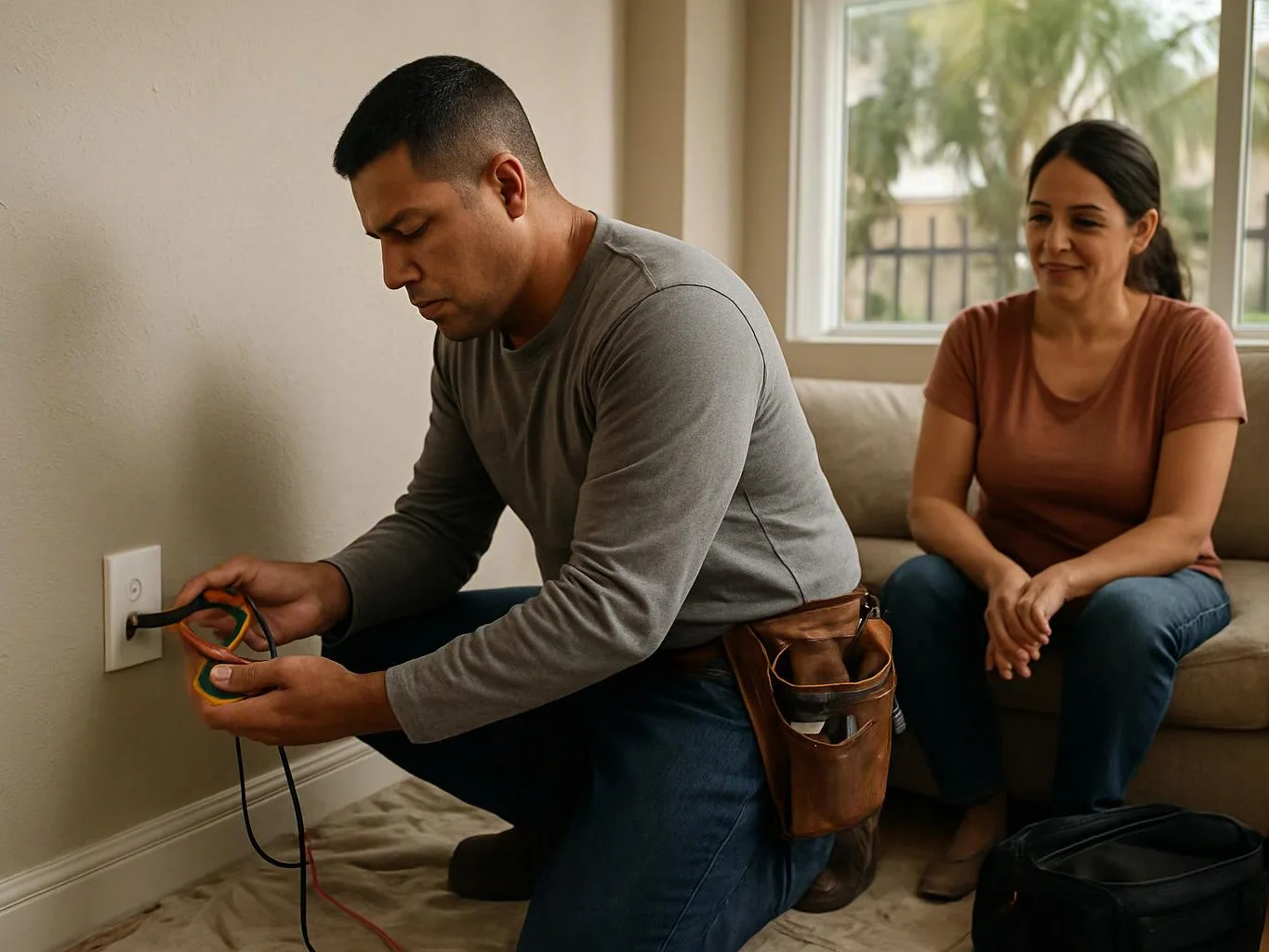
The visit moves from symptom review to circuit isolation, part testing, approved repair, and final operation checks. We identify the affected control or light component first. Customers receive the repair scope before work begins, and we test the fan and light after the work.
How can a customer tell whether fan repair fits the property?
Fan repair fits when one ceiling fixture has a control, light, wiring, or operation fault. We can inspect the fixture in a home, business, or managed property. A wider outage, repeated breaker problem, or panel concern calls for broader electrical troubleshooting.
What makes a fan repair quote change from one fixture to another?
The failed part, fixture access, wiring condition, and repair versus replacement decision change the quote. We review those factors during the assessment and provide a free estimate. The quote reflects the actual fixture and approved work, not a generic fan service.
When should I stop using a ceiling fan light?
Stop using the light when it sparks, smells hot, flickers sharply, or has a warm switch plate. We treat those signs as electrical safety concerns and isolate the affected circuit before inspection. Customers should avoid opening the fixture until the fault is checked.
Why does a repaired fan light fail again?
A repeat failure can come from a worn control, damaged socket, loose connection, or a fault beyond the fixture. We test the full control path instead of changing one part without checking the circuit. Customers receive the findings and the next repair option after diagnosis.