When should a circuit breaker be replaced?
Age damage is a reason to replace a breaker when the device trips, will not reset, shows heat marks, or has mechanical failure. Earth Electric checks the breaker and circuit before replacing it. Repeated trips can also come from wiring or connected equipment, so we test the circuit instead of treating every trip as a breaker fault.
Who is a good fit for circuit breaker replacement, and who needs a different service?
Homeowners, businesses, and property managers fit this service when one breaker has failed and the panel remains suitable. We recommend broader electrical work when damaged wiring, a failing panel, or limited capacity causes the problem. Panel upgrades, rewiring, and circuit repairs address conditions that a single breaker replacement cannot resolve.
What does the crew look at first during breaker replacement?
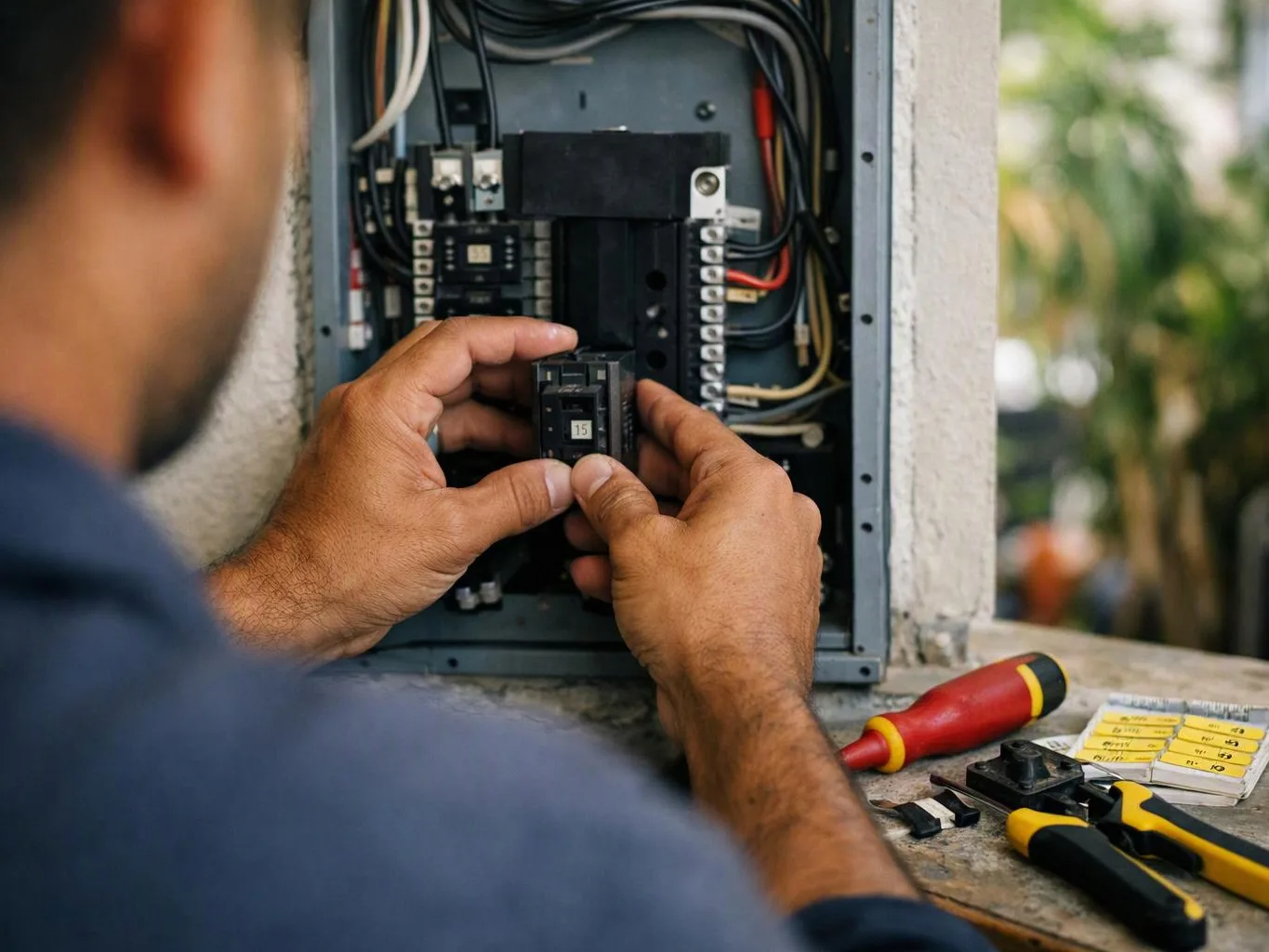
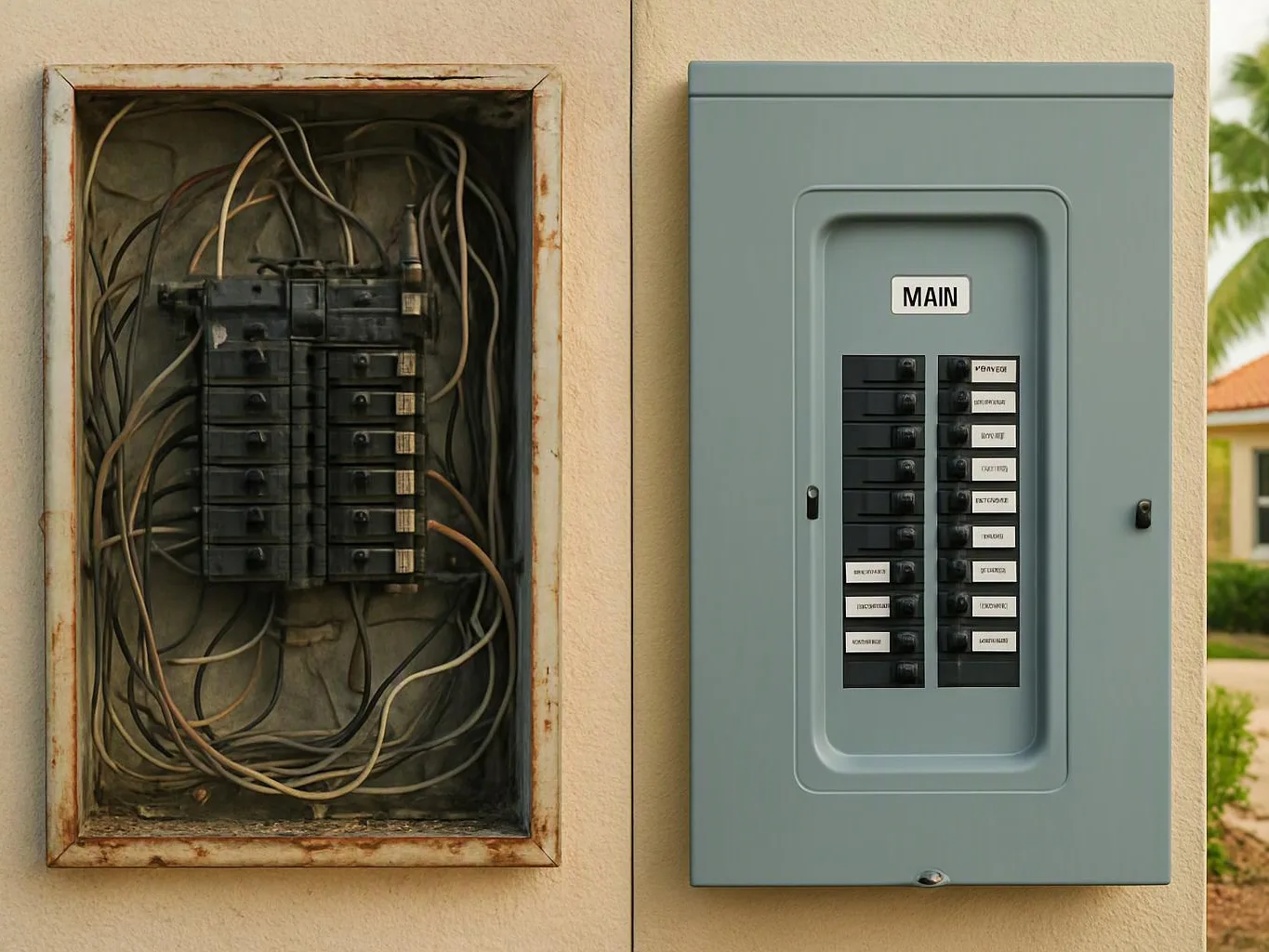
The electrical panel and affected breaker receive the first inspection. We look for burn marks, loose connections, heat damage, and signs that the breaker will not reset. Circuit tracing follows when the connected load is unclear, and we isolate the circuit before removing any part.
How does circuit breaker replacement differ from a panel upgrade?
Circuit breaker replacement changes one failed protective device, while a panel upgrade changes the panel or its capacity. We inspect the panel before choosing between those services. A panel upgrade becomes the better fit when the enclosure, bus, available spaces, or electrical load creates a wider problem.
What happens at each stage of breaker replacement?
The work follows inspection, circuit isolation, replacement, and testing. We first assess the panel and breaker, then trace the circuit when needed. After installation, we test the repaired circuit and explain whether any wiring or panel issue needs separate attention.
Which warning signs make a breaker problem urgent?
Burn marks, a buzzing panel, a burning smell, or repeated trips make the problem urgent. We treat those signs as possible evidence of heat or electrical fault. Turn off the affected circuit if it is safe to do so, keep clear of damaged equipment, and request emergency electrical service.
Why can a breaker keep tripping after replacement?
A breaker can keep tripping when the circuit has a short, overload, damaged wiring, or faulty connected equipment. We trace the circuit and test the load after checking the new breaker. Continued trips need further diagnosis, not repeated resets.