
What is a Bonding?
Bonding is the intentional connection of exposed metal parts, electrical equipment, and conductive paths so they remain at nearly the same electrical potential. This connection gives fault current a low-impedance route back to the source, helping overcurrent devices trip quickly. Bonding works with grounding. But the two terms describe different electrical functions.
Quick Facts About Bonding
Category
Electrical safety and fault-current control
Used for
Connecting conductive equipment and metal systems
Common confusion
Bonding is not the same as grounding
Relevant standard
NFPA 70, National Electrical Code
Also called
Electrical bonding, Equipotential bonding
Often discussed with
Electrical Inspection, Electrical Code Compliance Correction
Key Takeaways About Bonding
- Bonding joins conductive metal parts to reduce dangerous voltage differences during an electrical fault.
- A bonding path must stay whole, secure, and sized for the expected fault current.
- Bonding differs from grounding. But both systems work together for electrical safety.
- Loose connections, paint, corrosion, or small conductors can weaken a bonding path.
- Electrical inspections often check bonding at panels, service equipment, raceways, and metal piping.
Understanding Bonding
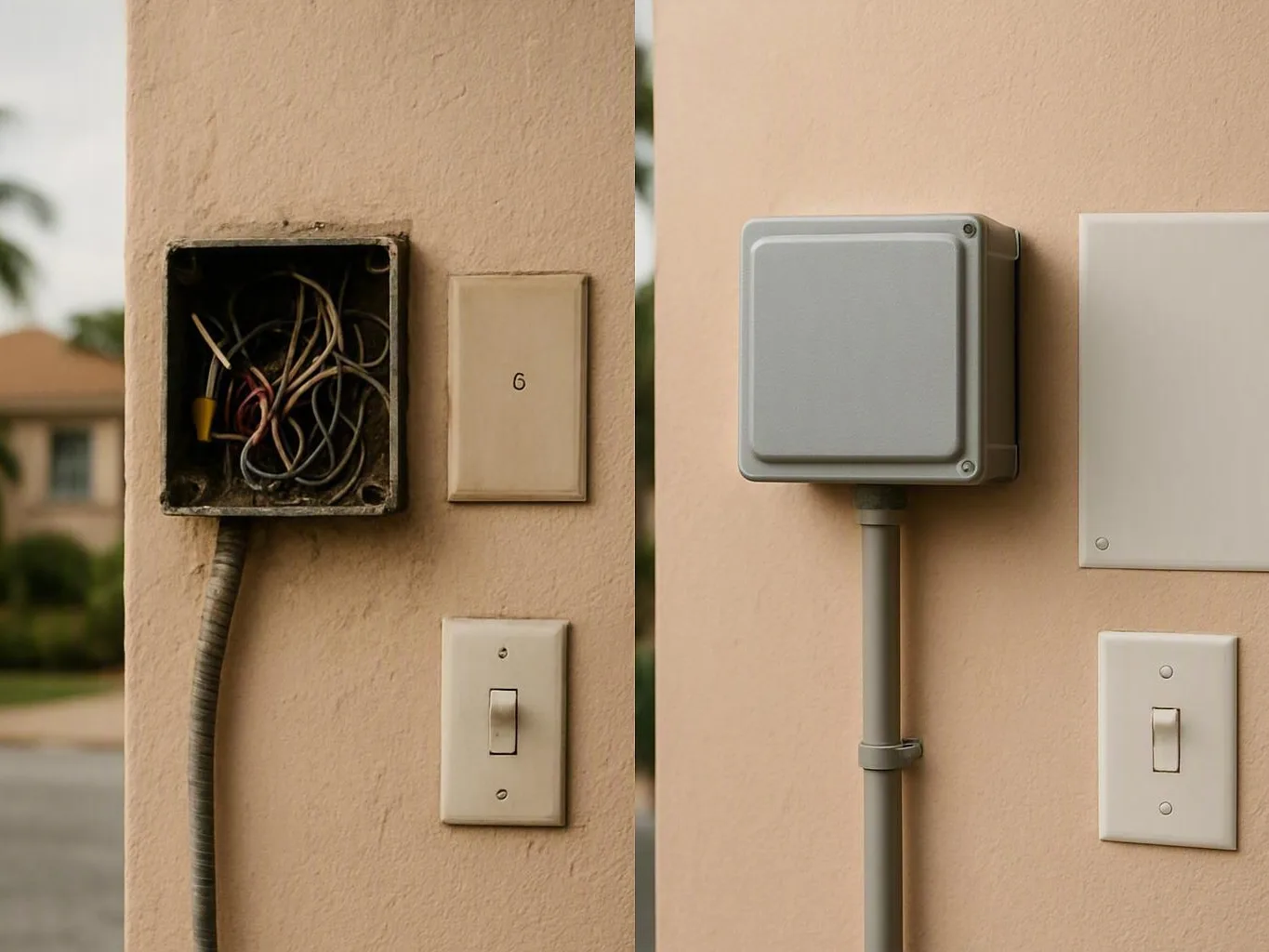
Bonding is the deliberate connection of conductive parts that could carry electricity during a fault. These parts may include metal enclosures, raceways, and service equipment. They may also include grounding conductors and certain metal piping systems. The connections keep these parts near the same voltage. This helps limit shock risk when insulation fails.
Related glossary terms: Grounding Electrode, Equipment Grounding Conductor, Fault Current.
A bonding connection isn't intended to carry normal operating current. Instead, it creates a dependable fault-current path back to the electrical source. That path lets a circuit breaker or fuse open the circuit. This happens when a hot conductor touches metal. Bonding supports grounding, but the two have different roles. Grounding connects an electrical system or equipment to earth. Bonding joins conductive parts together.
How Bonding Works, Is Measured, or Is Used?
During a fault, current should travel through a low-impedance path. It shouldn't travel through a person. A typical path may run from a damaged energized conductor to a metal enclosure. It then passes through.equipment grounding conductor and back to the source. The current must be high enough to operate the protective device. It must operate within the time required by applicable electrical rules.
Electricians evaluate bonding by checking continuity, connection quality, conductor size, and termination strength. A meter can detect resistance or continuity. A simple continuity reading doesn't prove that a path can carry available fault current. Inspection also covers listed bonding hardware, tight terminals, and clean contact surfaces. It checks proper connections between metal sections.
At service equipment, the grounded conductor and bonding connection follow specific code rules. Downstream panels normally keep neutral current separate from equipment grounding paths. Connecting those paths in the wrong location can place normal current on metal parts. This creates an unsafe condition. It may also cause nuisance operation of protective devices.
Why Bonding Matters?
Effective bonding reduces the chance that an accessible metal surface stays energized after wiring fails. It also helps protective devices clear faults. This prevents heat, arcing, or sustained touch voltage from continuing. The safety benefit depends on the entire path. It doesn't depend on one wire or screw.
Bonding also supports dependable operation of ground-fault circuit interrupters and other protective equipment. A damaged, corroded, or disconnected bond can delay fault clearing. It can also leave equipment without a reliable return path. In older installations, later renovations may interrupt metal paths. They may also create improper neutral-to-ground connections.
When Bonding Matters Most?
Bonding deserves close attention during panel replacements, service upgrades, rewiring, and repairs. This includes repairs involving metal raceways or enclosures. It also matters after flooding, corrosion, lightning damage, or construction changes. These events can loosen terminals or damage conductors. They can also leave contaminants between bonding surfaces.
Common warning signs include tingling from metal equipment, repeated breaker trips, and visible corrosion. Other signs include missing bonding jumpers and metal parts with different test voltages. A licensed electrician can trace the fault path and verify conductor sizing. The electrician can compare the installation with the applicable edition.National Electrical Code and local requirements. Don't remove a bonding connection to stop a nuisance trip. That action can hide a dangerous fault.
How to Evaluate Bonding?
- Check whether metal enclosures, raceways, and service equipment have continuous connections back to the source.
- Verify that bonding conductors and jumpers match the required size for the circuit or service.
- Look for loose terminals, corrosion, paint under lugs, damaged hardware, or missing bonding jumpers.
- Confirm that neutral-to-ground bonding occurs only where the applicable code permits it.
- Ask whether continuity testing was paired with an inspection of conductor routing and termination quality.
Related Concepts Compared
Bonding vs. Grounding
Grounding connects an electrical system or equipment to earth through a grounding electrode or related path. Bonding connects conductive parts together so fault current can return to the source.
Bonding vs. Equipment Grounding Conductor
An equipment grounding conductor is a wire or approved conductive path that connects equipment to the source of fault-current return. It is one important part of a complete bonding system.
Bonding vs. Grounded Conductor
The grounded conductor, often called the neutral, normally carries current back to the source. A bonding path should not carry normal neutral current except where specific service rules allow a connection.
Bonding vs. Grounding Electrode
A grounding electrode connects the electrical system to earth, such as through a ground rod or concrete-encased electrode. An electrode does not replace the low-impedance bonding path needed to clear faults.
Expert Note
A continuity beep is only a first check. The connection may still be too small, loose, corroded, or routed through an improper neutral path. A proper evaluation considers the complete fault-current loop, listed hardware, conductor sizing, and the installation rules that apply to the property.
Common Mistakes or Myths About Bonding
- Treating a ground rod as a replacement for equipment bonding.
- Connecting neutral and equipment grounding conductors together in a downstream panel.
- Leaving paint, rust, or corrosion between bonding surfaces.
- Assuming a continuity beep proves that the fault path is correctly sized.
- Removing a bonding jumper because a breaker trips during a fault.
Bonding in Practice: A Real-World Example
A metal junction box holds a damaged wire with failed insulation against the box. A proper bond sends fault current to the panel and trips the breaker. Without that path, the box may stay live until someone touches it.
Sources & Further Reading on Bonding
- OSHA, Electrical Safety Related Work Practices
- Florida Building Code, Electrical Requirements
Related Terms
Grounding Electrode
Grounding Electrode is a conductive object that connects an electrical system to the earth. Common examples…
Equipment Grounding Conductor
Equipment Grounding Conductor is a wire or conductive path that connects non-current-carrying metal parts of electrical…
Fault Current
Fault Current is the electrical current that flows through an unintended path after insulation fails, conductors…
National Electrical Code
National Electrical Code is a set of electrical safety rules published by the National Fire Protection…
Earth Electric
Have Questions About Bonding?
Contact Earth Electric for practical guidance on Bonding and related 24 hour electrician work in Miami.