
What Is an Electrical Short?
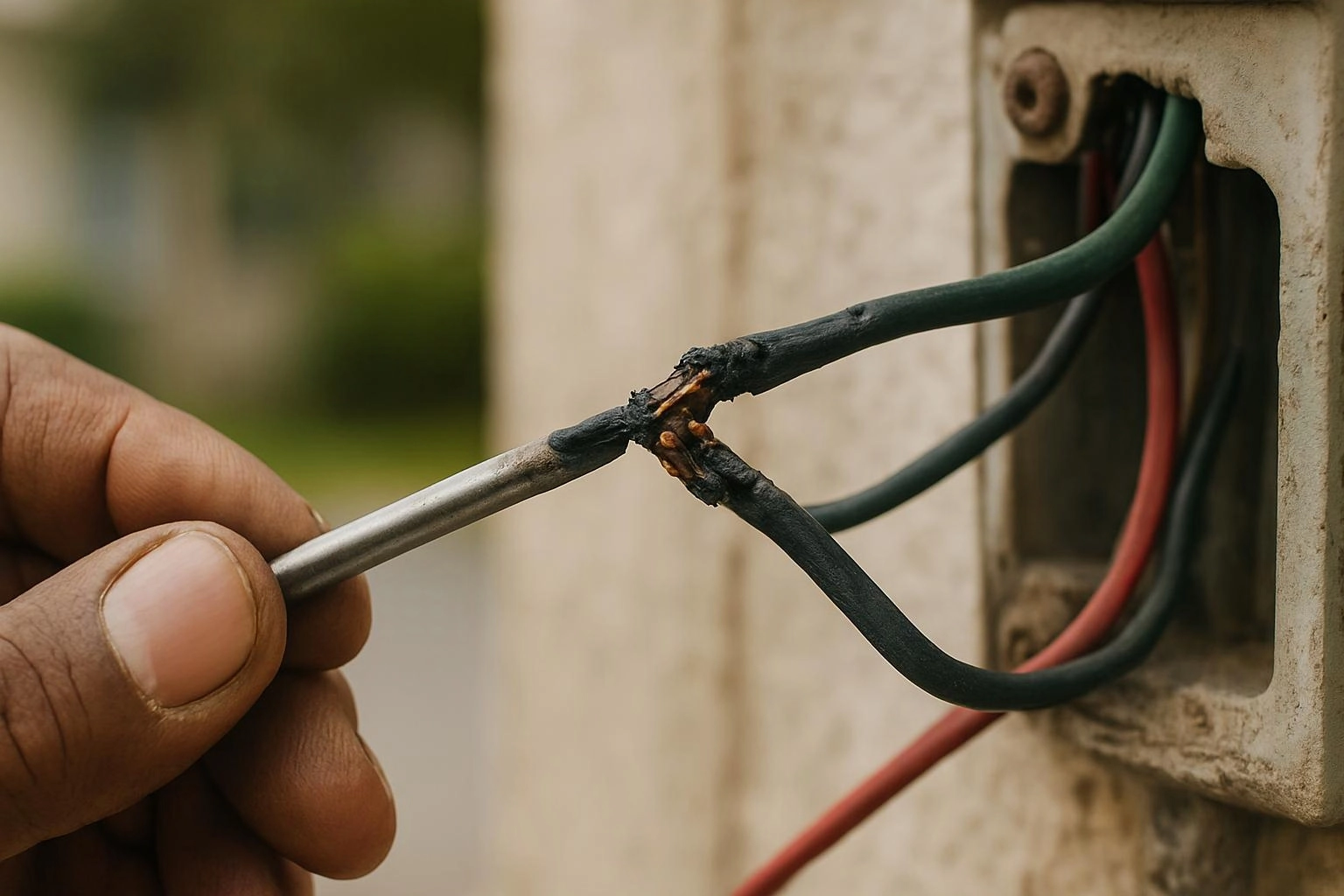
An electrical short is a fault that lets electric current take an unintended path with little resistance. It can happen when damaged wire insulation allows conductors to touch. The resulting current can heat wiring, damage equipment, and trip a circuit breaker or blow a fuse.
Quick Facts About Electrical Short
- Category
- Electrical fault
- Applies to
- Wiring and electrical equipment
- Common confusion
- Circuit overload
- Also called
- Short Circuit
- Often discussed with
- Electrical Wiring Repair, Electrical Troubleshooting
Key Takeaways About Electrical Short
- A short differs from an overloaded circuit.
- Wire damage can be hidden inside a wall.
- A tripped breaker doesn't always mean a short.
How Electrical Short Works

During an electrical short, current bypasses the normal route through a device or fixture. A damaged cable, for example, can let a hot wire touch a neutral wire. The available current rises because the new path offers little resistance.
Related glossary terms: Circuit Overload, Fault Current, Ground Fault.
A circuit breaker may open the circuit when it detects excess current. A fuse serves a similar purpose by melting and breaking the path. Either device stops current through that circuit, but it doesn't fix the damaged wiring.
A short isn't the same as an overload. An overload happens when connected devices draw more current than a circuit is designed to carry. Both problems can trip a breaker, so a trip alone doesn't identify the fault.
From the Earth Electric team
When we investigate a suspected short during electrical wiring repair, we look beyond the tripped breaker. We check the affected circuit and isolate the damaged section before repairing the wiring. The location of the fault guides whether a connection or a length of cable needs repair.
Electrical Short in Practice: A Real-World Example
A homeowner notices that a breaker trips when a wall switch is turned on. An electrician traces the fault to damaged insulation in the switch box and repairs the affected wiring.
Related Terms
Circuit Overload
A circuit overload is a condition that occurs when connected devices draw more electrical current than a circuit is designed to carry.
Fault Current
Fault current is electrical current that flows along an unintended path because of a fault in a circuit.
Ground Fault
A ground fault is an electrical fault that sends current along an unintended path toward ground.
Neutral Wire
A neutral wire is a circuit conductor that carries current back toward the electrical supply during normal operation.
Earth Electric
Have Questions About Electrical Short?
Contact Earth Electric for practical guidance on Electrical Short and related 24 hour electrician work in Miami.