
What Is EV Load Management?
EV Load Management is a control method that balances electric vehicle charging with the available capacity of a home’s electrical system. It monitors electrical demand and adjusts charging power when other equipment needs priority. The method can help coordinate an EV charger with backup power, household circuits, and bidirectional energy flow.
Quick Facts About EV Load Management
Category
Electrical load control
Used for
Coordinating EV charging and home power
Common confusion
Not a charger speed setting
Also called
Electric Vehicle Load Management, EV load control
Often discussed with
Bidirectional EV Home-Backup Integration, EV Charger Installation
Key Takeaways About EV Load Management
- Charging power changes as household demand changes.
- The system can assign priority to essential circuits.
- It is not the same as faster EV charging.
How EV Load Management Works
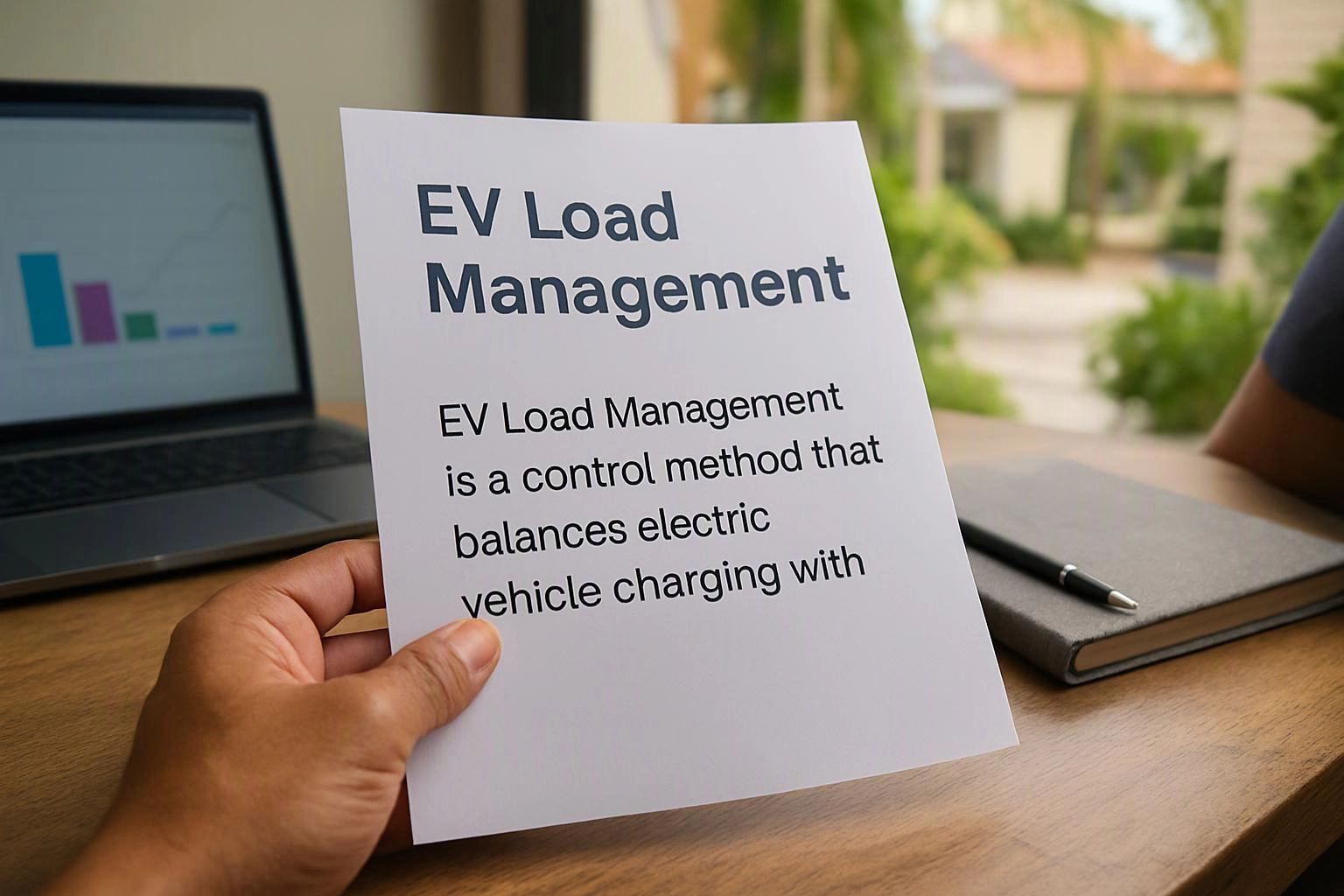
EV Load Management uses electrical measurements and control settings to keep an EV charger within the capacity available at a property. A controller watches demand from selected circuits and can reduce, pause, or restore charging as conditions change. The result is coordinated operation instead of allowing vehicle charging to compete equally with every household load.
Related glossary terms: Level 2 Charging, Load Calculation, Automatic Transfer Switch.
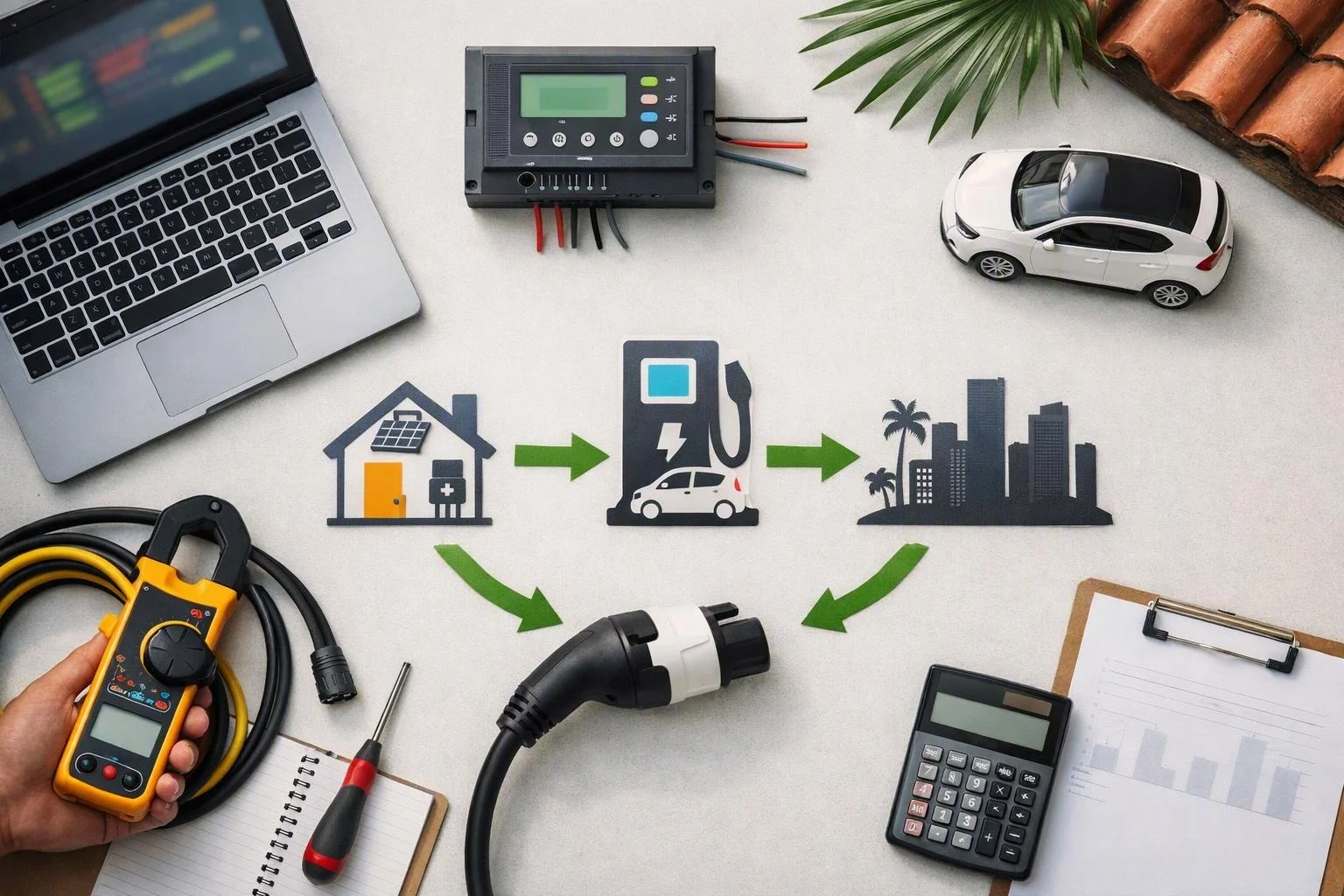
In a bidirectional system, the controller also considers whether energy is moving from the vehicle into the home. Bidirectional charging may support selected loads during an outage when the system is designed for that function. An automatic transfer switch or related control equipment helps separate backup power operation from the utility supply. Load management settings must match the service equipment, charger, backup source, and circuits that the installation is intended to support.
From the Earth Electric team
When we assess EV Load Management, we review the service equipment, charger controls, backup source, and selected household circuits together. We check how the system responds when major loads start or stop. For bidirectional installations, we also verify that charging and home backup functions follow the intended operating sequence.
EV Load Management in Practice: A Real-World Example
A Miami home uses a bidirectional EV charger with selected backup circuits. EV Load Management reduces vehicle charging when those circuits draw more power, then restores charging when capacity becomes available.
Related Terms
Level 2 Charging
Level 2 Charging is a method of electric vehicle charging that uses higher-voltage alternating current than…
Load Calculation
Load Calculation is an engineering assessment that estimates the electrical demand a property places on its…
Automatic Transfer Switch
An Automatic Transfer Switch is an electrical switching device that moves a connected load from normal…
Transfer Switch Interlock
Transfer Switch Interlock is a mechanical or listed electrical device that coordinates a generator connection with…
Earth Electric
Have Questions About EV Load Management?
Contact Earth Electric for practical guidance on EV Load Management and related 24 hour electrician work in Miami.