EV Charger Installation Mistakes That Cause Tripping, Slow Charging, or Damage
EV charger installation mistakes often involve incorrect circuit sizing, poor connections, unsuitable wiring, or inadequate configuration. Earth Electric identifies these problems, explains the risks, and corrects the installation through EV charger installation and dedicated circuit work.
Get a Free EstimateWhich EV Charger Installation Mistakes Create the Biggest Problems?
The most serious EV charger installation mistakes involve circuit capacity, conductor sizing, terminations, grounding, protection, and charger configuration. Each issue can affect the EV charger, dedicated circuit, charging speed, or equipment safety.
We connect the visible symptom to the electrical cause before choosing a correction. The work may involve the circuit breaker, electrical wiring, grounding, or the charger itself.
| Installation issue | Possible symptom | Correction path |
|---|---|---|
| Insufficient circuit capacity | Breaker tripping or limited charging | Review the load and circuit design |
| Incorrect wire size or cable type | Heat buildup or voltage drop | Correct conductor sizing and routing |
| Loose terminal connection | Overheating or charging faults | Inspect and remake the termination |
| Missing grounding or protection | Faults or electrical safety concerns | Correct grounding and protective equipment |
| Mismatched charger settings | Slow charging or repeated faults | Align configuration with the circuit |
The cost of correction depends on the existing panel, circuit route, wiring condition, charger requirements, and protection needed. We inspect those factors so the repair addresses the cause instead of only resetting the breaker.
Using a Circuit That Cannot Support the EV Charger
An EV charger on an overloaded circuit can cause breaker trips because charging is treated as a continuous load. The electrical panel and circuit breaker must match the charger demand and the capacity of the branch circuit.
We check circuit capacity, panel condition, and the charger requirements before recommending a correction. The cost depends on whether the existing circuit can be corrected or whether new dedicated circuit work is needed.
Skipping a Dedicated Circuit for EV Charging
A dedicated circuit prevents household loads on a shared circuit from competing with the EV charger. Sharing a branch circuit with other appliances can cause breaker tripping when those loads operate together.
We trace the circuit, identify connected loads, and design dedicated circuit installation when the existing arrangement is unsuitable. The cost depends on the electrical panel, cable route, access, and required protection.
Choosing the Wrong Wire Size or Cable Type
Incorrect wire size or cable type can create heat buildup, voltage drop, or damage under sustained charging demand. Conductor sizing must account for the circuit rating, installation method, cable rating, and route.
We inspect the wiring and replace unsuitable conductors when needed. The correction cost depends on the cable length, conduit needs, access, and whether damaged wiring also requires repair.
Leaving Loose or Poorly Terminated Connections
A loose connection at a terminal increases resistance and can cause overheating, charging faults, or burn marks. Poor wire termination may also make the charger stop and start during operation.
We inspect terminal connections and check the condition of the conductors and equipment. The cost depends on whether the issue is limited to a termination or has caused heat damage to the wiring or charger.
Ignoring Grounding, Bonding, or Required Protection
Missing or incorrect grounding, bonding, or ground-fault protection can create an electrical safety issue and trigger charging faults. The equipment grounding conductor and protective devices must work with the charger and circuit design.
We test grounding and inspect the protection provided at the charger and electrical panel. The correction cost depends on the existing wiring, panel equipment, and changes required to make the installation safe.
Installing the Charger in an Unsuitable Location
An unsuitable EV charger location can expose equipment to weather, impact, poor clearance, or an unstable mounting surface. Physical damage and moisture can affect the charger and charging cable.
We review the mounting surface, clearances, weather exposure, and cable reach before relocating or remounting the equipment. The cost depends on the new route, surface repairs, conduit, and any wiring changes.
Routing the Cable in a Way That Causes Damage
Improper cable routing can cause abrasion, sharp bends, physical damage, or a trip hazard. A charging cable that rests against rough edges or crosses a walking path may wear before the charger shows an obvious fault.
We inspect the charging cable, conduit, supports, and route, then correct the damaged or unsafe arrangement. The cost depends on the cable condition, conduit work, mounting changes, and access to the route.
Skipping Load Checks Before Adding EV Charging
An electrical load calculation shows whether the service capacity and main panel can support the added charging demand. A subpanel or main panel may need review when existing electrical demand is already high.
We complete a load review before adding the charger or dedicated circuit. The cost depends on the panel condition, available capacity, circuit route, and any panel upgrade or related work required.
Leaving Charger Settings Mismatched to the Circuit
A charger configuration that does not match the circuit rating can cause slow charging, nuisance trips, or a charging fault. The maximum charging current must align with the installed circuit and the vehicle charging settings.
We compare the charger settings with the circuit design and vehicle requirements, then correct the configuration when appropriate. The cost depends on whether settings are the only issue or whether wiring and protection also need work.
How We Diagnose Tripping, Slow Charging, and Damage
Earth Electric diagnoses EV charging problems by checking the charger, circuit capacity, wiring, terminations, protection, grounding, and operating settings as one connected system.
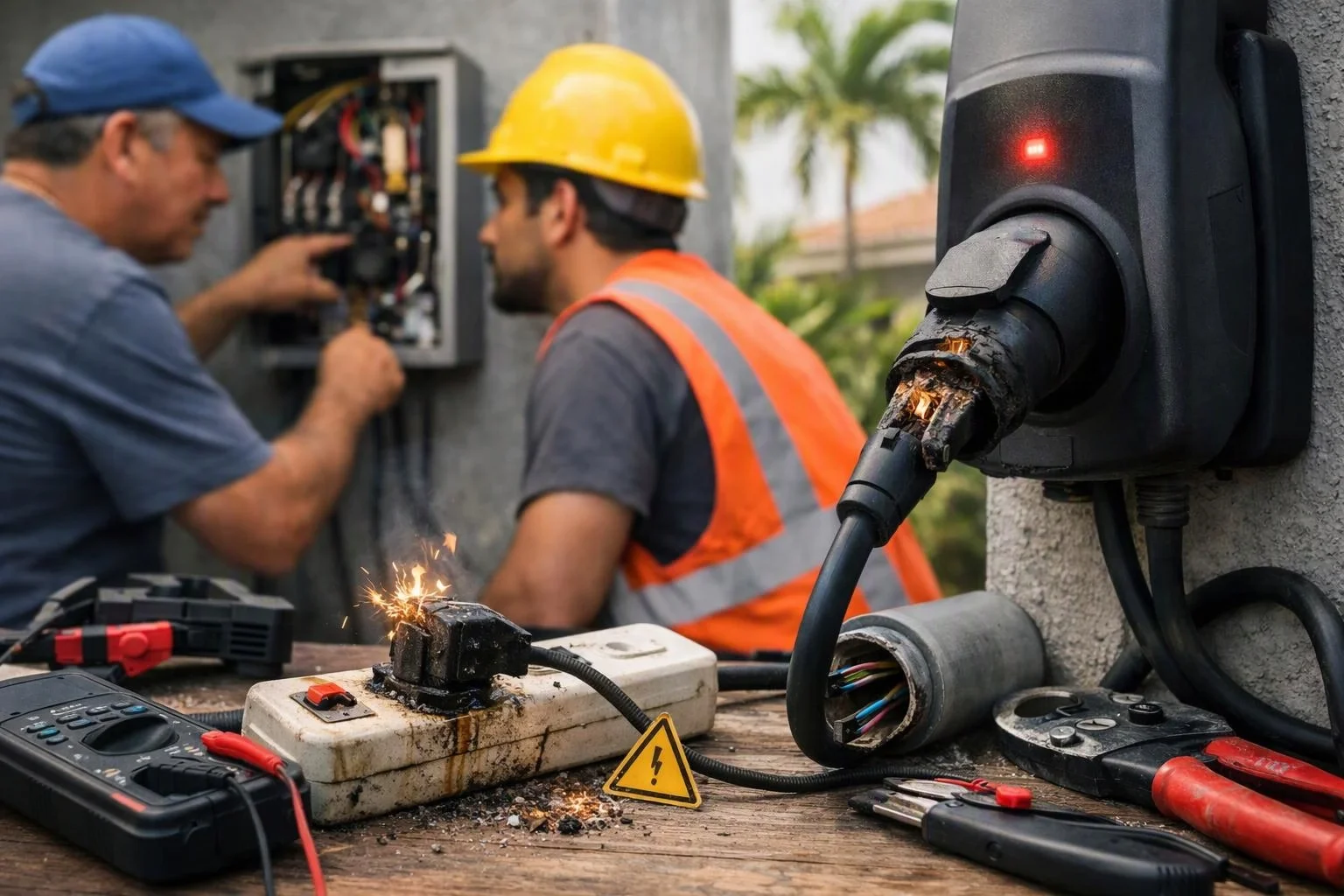
Our EV charger inspection starts with the reported symptom and visible equipment condition. We then use circuit testing and voltage testing to locate abnormal operation.
We inspect connections, the circuit breaker, conduit, charging cable, and electrical panel. Our fault diagnosis identifies whether the problem comes from the charger, the installation, or both.
What Should You Check Before Using an EV Charger Again?
Stop using an EV charger that repeatedly trips, shows damage, becomes unusually hot, or produces an electrical odor until Earth Electric checks the installation.
A visual check can help you recognize warning signs, but energized testing and wiring repairs require our team. Do not reset a breaker repeatedly when the underlying charging fault has not been identified.
We inspect the installation before returning it to service. The correction depends on the cause, from a configuration issue to damaged wiring or inadequate circuit capacity.
When Should You Call Earth Electric About an EV Charger Problem?
Call Earth Electric when an EV charger repeatedly trips, shows heat or damage, charges below its expected capability, or needs a new circuit or home-backup connection.
Some warning signs involve energized equipment and should not be handled through trial and error. We test the installation and explain the correction path before work begins.
We can scope repair, replacement, dedicated circuit installation, or bidirectional EV home-backup integration based on the equipment and electrical system at the property.
How We Scope an EV Charger Installation Repair or Upgrade
Earth Electric scopes the work by reviewing the existing equipment, circuit route, panel capacity, charger requirements, and the correction or upgrade needed before providing a quote.
Our site assessment covers the EV charger, electrical panel, wiring, conduit, protection, grounding, and available circuit capacity. We also review whether the project involves EV charger installation, dedicated circuit installation, or bidirectional EV home-backup integration.
The quote depends on the condition and access of the existing system, the route for new wiring, panel changes, charger requirements, and the correction needed. We explain what the quoted work includes so you can connect the scope to the electrical problem.
Questions About EV Charger Installation Mistakes
Why does my EV charger keep tripping the breaker?
Earth Electric checks for insufficient circuit capacity, a shared circuit, loose connections, wiring problems, grounding faults, and charger settings that exceed the circuit design.
Can an EV charger cause slow charging because of the wiring?
Yes, incorrect wire size, voltage drop, poor terminations, limited circuit capacity, or mismatched charger settings can reduce charging performance.
What should I do if an EV charger or cable feels hot?
Stop charging and disconnect the equipment only if you can do so safely, then contact Earth Electric for an inspection of the charger, cable, connections, and circuit.
Can an EV charger share a circuit with other appliances?
An EV charger should use a circuit designed for its charging demand, because other household loads on a shared circuit can contribute to breaker tripping and slow charging.
How does a dedicated circuit prevent EV charging problems?
A dedicated circuit gives the EV charger a circuit designed around its continuous charging load, which helps reduce conflicts with household appliances and supports proper protection and configuration.
Related Resources
EV-Ready Electrical Installation: Costs, Capacity, and Project Steps
What It CostsEV Charger Installation Cost Factors: Wiring, Dedicated Circuits, and Installation Scope
Compared ToOutlet, GFCI, and Dedicated Circuit Installation: Which Service Do You Need?
Compared ToRepairing and Upgrading Home Outlets Safely