What Flickering or Dimming Lights Could Mean
Flickering or dimming lights can signal an overloaded circuit, loose connection, or bad wiring. They may also point to a failing fixture or voltage change. Lights may dim briefly when a large appliance starts. Repeated or widespread changes need electrical troubleshooting. Burning smells, buzzing, heat, sparks, shocks, or sudden brightness changes raise safety concerns. Turn off the affected circuit if safe. Then contact a qualified electrician. Don't open panels or repair wiring yourself.
Get a Free Estimate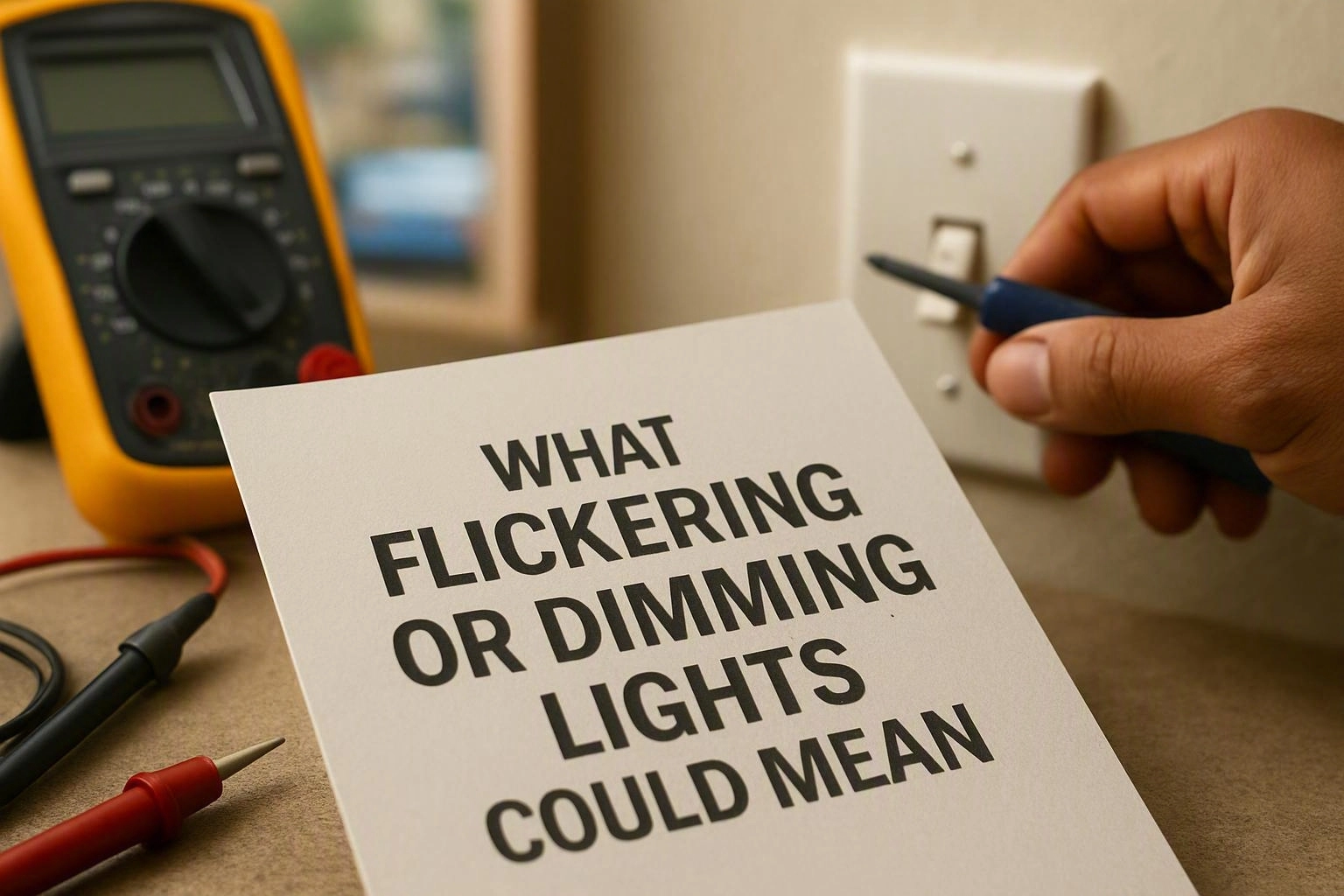
What Do Flickering or Dimming Lights Mean?
Flickering or dimming lights show a change in power reaching a lamp or fixture. Common causes include a loose bulb, bad LED dimmer, or overloaded circuit. A failing appliance, loose connection, or wiring defect can also cause it. One fixture may have a local fault. Several rooms may show a larger circuit, panel, or supply problem.
Flickering lights may pulse, blink, or lose brightness for a moment. Dimming can happen when another load starts. One short change may be harmless. Older appliances and motors can cause it. Lights that change often should not be ignored.
First, note how many lights are affected. One light may have a bulb, socket, switch, or LED issue. Lights in different rooms may share a larger problem. That problem could involve the panel, neutral wire, or incoming power.
Older homes may have worn connections or old wire coating. Remodeling can also reveal problems. New lights or high-load appliances may strain an old circuit. Renters should tell the landlord or property manager quickly. Don't remove covers. Earth Electric can help with Electrical Troubleshooting in Miami.
Common Warning Signs of an Electrical Problem
Flickering becomes more serious with heat, buzzing, burning odors, sparks, shocks, or breaker trips. These signs may point to loose connections, arcing, overloaded wiring, or damaged equipment. Stop using the affected fixture or circuit. Arrange a professional check if symptoms continue.
Don't keep resetting a tripped breaker. Turn off the equipment if you can do so safely. Seek urgent help for smoke, fire, strong odors, exposed wires, or shocks. A 24 Hour Electrician may help with an active electrical hazard.
Why Are My Lights Flickering or Dimming?
Lights flicker or dim when power becomes unstable. A fixture, control, circuit, or connection may also be failing. A loose bulb or bad LED dimmer is one possible cause. Recurring changes may involve loose wiring, an overloaded circuit, or appliance startup. A supply voltage issue may also need electrical troubleshooting.
Note whether one lamp or several lights are affected. Turn the light off before checking a loose bulb. Let it cool first. Don't force the bulb. Don't work on a hot, wet, damaged, or buzzing fixture.
An LED lamp may flicker with an old dimmer switch. Some LED products need a matching control. They may also need special wiring. Replacing parts at random may hide the real cause.
A loose wire can sit at a fixture, switch, outlet, box, or panel. An overloaded circuit may dim when several appliances run. New kitchens, additions, workshops, and large appliances need careful review. An old circuit may not handle the added demand.
Utility power can also vary outside your home. Ask neighbors if they see the same problem. A whole-property issue needs testing by a qualified electrician. The utility company may need to help.
Why Do Lights Dim When an Appliance Turns On?
Lights may dim briefly when a motor appliance starts. The motor needs extra power at startup. This demand can cause a short voltage drop. Air conditioners, refrigerators, and pumps are common examples.
A small change may happen on a properly built circuit. Deep, repeated, or long dimming is different. It may show a weak connection, overloaded circuit, or poor supply voltage. The appliance may also need its own circuit.
Don't use extension cords or power strips for large appliances. Our team can test voltage while the appliance runs. We can inspect connections too. These tests can show if the issue involves the appliance, wiring, or utility.
Are Flickering Lights a Sign of Bad Wiring?
Flickering lights can signal bad wiring. This is more likely with heat, buzzing, odors, or dark marks. A loose terminal may interrupt power or cause arcing. A damaged neutral wire can change brightness across several circuits.
Connections may hide inside a box, fixture, outlet, or panel. Old wire coating may be brittle or damaged. It may not suit later remodeling work. Don't inspect energized equipment yourself.
Our crews use electrical testing to find the fault. We then recommend Electrical Repair when needed. The repair may involve a connection, fixture, circuit, neutral wire, or damaged wiring section.
Why Are Multiple Lights Flickering in My House?
Several flickering lights usually point to more than one bad bulb. Possible causes include a loose neutral, panel connection, shared circuit, service fault, or voltage change. Whole-house symptoms can harm appliances. They can also create fire or shock risks. Schedule an electrician visit soon.
A loose neutral can make lights brighten and dim without warning. The main panel, meter, or service connection may need a check. Don't remove the panel cover. Don't touch electrical wires.
Whole-house flicker may happen when an appliance starts. It may also happen without a clear cause. Write down the rooms affected and the timing. Note any changes in appliance sound or use. These details can help find the source.
Older wiring and recent remodeling need careful review. Several large appliances can also add strain. Reduce nonessential loads when the issue is widespread. Arrange a full electrical inspection. Replacing bulbs alone may not solve it.
When Should Flickering Lights Be Checked by an Electrician?
Call an electrician when flicker repeats or affects several fixtures. You should also call after appliance use. Buzzing, heat, odors, sparks, shocks, and breaker trips also need help. Professional troubleshooting can test voltage and inspect connections. It can show if you need Electrical Repair or a full inspection.
| Factor | DIY | Professional |
|---|---|---|
| One loose bulb | Switch off, cool, and check the bulb fit. | Inspect the socket or fixture if the issue returns. |
| LED and dimmer concern | Check product instructions and stop if flicker continues. | Test LED compatibility and control wiring. |
| Repeated circuit changes | Note affected rooms and operate a breaker only as normally intended. | Perform electrical troubleshooting and inspect the circuit. |
| Whole-house flicker | Reduce nonessential loads and avoid opening equipment. | Check the panel, neutral, service connection, and supply. |
| Smoke, sparks, heat, or shock | Stop using the fixture or circuit if safe. | Treat it as an emergency electrical hazard and seek urgent help. |
Most basic visits take about 30 to 90 minutes. Time depends on access and fault location. A troubleshooting visit suits one clear symptom. Electrical Repair suits a known damaged part or connection. A full inspection helps with repeated or widespread issues. It also helps in older or remodeled homes.
Choose a qualified electrician who explains the test results. Our team can help choose the next step. That may be testing, repair, or a wider electrical inspection.
What Can You Safely Check Before Calling an Electrician?
Homeowners can check a few safe details. See if the bulb fits tightly. Note if one lamp has the problem. Check if an appliance starts the change. You can also check for a tripped breaker during normal use. Don't remove covers or touch wires. Stop using equipment that smells hot or looks damaged.
Write down the time, rooms, appliances, sounds, odors, and breaker activity. Turn off a hot or damaged fixture if safe. Arrange prompt service for sparks or burning smells. Never risk your safety for a quick answer.
Questions About 24 Hour Electrician
Why Are My Lights Flickering?
Lights flicker because of a loose bulb, LED issue, or failing fixture. An overloaded circuit, loose connection, appliance startup, or voltage change can also cause it. Call a qualified electrician when flicker repeats or affects several rooms.
Why Do My Lights Dim When an Appliance Turns On?
A motor appliance can draw extra power when it starts. This can cause a short voltage drop. A mild dip may be normal. Repeated or deep dimming can show an overloaded circuit, weak connection, supply issue, or need for a dedicated circuit. Professional testing can find the cause.
Are Flickering Lights a Sign of Bad Wiring?
They can be. A loose terminal, damaged wire coating, weak neutral, or poor connection may cause flicker. Bad wiring is more likely with buzzing, heat, burning odors, dark marks, shocks, or breaker trips. Don't open energized equipment.
Why Are Multiple Lights Flickering in My House?
Several lights may flicker because of a loose neutral wire, shared circuit, panel connection, service fault, or utility voltage change. Whole-house dimming is larger than one bulb issue. It can affect appliances. Reduce nonessential loads and arrange an electrical inspection soon.
When Should Flickering Lights Be Checked by an Electrician?
Have them checked when flicker repeats or affects several fixtures. Call after appliance use or for buzzing, heat, odors, sparks, shocks, or breaker trips. A professional can test voltage and inspect the circuit. They can then suggest troubleshooting, repair, or a full inspection.
Earth Electric helps homeowners find a safe next step. Contact our team when unstable lighting keeps happening or creates a safety concern.
Related Resources
How Much Does a 24-Hour Emergency Electrician Cost in Miami?
24 hour emergency electrician cost Miami
What It CostsHow Much Does It Cost to Rewire a House in Miami?
house rewiring cost and timeline Miami
How It WorksElectrical Troubleshooting: What the Diagnosis Involves and What It Costs
electrical troubleshooting cost and process
How It WorksElectrical Inspection and Code-Compliance Corrections: Process and Cost Factors
electrical inspection and code compliance correction cost