What It Means If an Outlet, Switch, or Appliance Gives You a Shock
An electric shock from an outlet or appliance usually indicates an electrical fault, exposed energized component, poor grounding, damaged insulation, moisture, or a wiring problem. A mild tingle can still signal unsafe leakage current and should not be ignored. Turn off power at the circuit breaker if it is safe, avoid touching the equipment, and keep others away. Seek emergency medical help for severe symptoms, burns, breathing problems, chest pain, confusion, or loss of consciousness.
Get a Free EstimateWhy Did My Outlet Shock Me or My Light Switch Tingle?
An electrical outlet or light switch can shock or tingle when current escapes its intended path through damaged insulation, loose wiring, moisture, a missing ground, or a defective device. Even a faint sensation can indicate energized metal, reverse polarity, or leakage current, so stop using the device and arrange expert electrical troubleshooting.
A shock from an electrical outlet may come from damaged receptacle contacts, a loose terminal, exposed wiring, or a cover plate that is not properly secured. The outlet may still power a lamp or charger, but normal operation does not prove that the receptacle is safe. A circuit can have power and still have a serious fault.
A light switch tingle may point to a loose wire, a damaged switch, moisture inside the wall box, or current traveling through a metal faceplate. Older homes may also have aging electrical wiring, weak connections, or no reliable grounding system. Do not remove the switch cover to investigate unless the circuit has been isolated and the work is being done by a qualified professional.
Leakage current is electricity taking a unintended path. It can occur when insulation breaks down, a device becomes wet, or an internal component touches a metal case. Electrical grounding is intended to provide a safe path through the grounding conductor so fault current can return to the panel and help protective devices operate. A missing or broken ground removes an important layer of protection.
Other clues include a burning smell, warmth around the device, buzzing, discoloration, sparks, or a circuit breaker trip. Do not keep resetting the breaker to restore power. Repeated trips often mean the affected circuit needs testing for a ground fault, overload, short circuit, or damaged wiring.
Earth Electric treats an outlet shock or light-switch tingle as a household electrical fault, not as a harmless nuisance. A typical first inspection may take about 30 to 90 minutesdepending on access, the number of devices, and whether the fault affects one circuit or several. The equipment should remain out of service until testing is complete.
What Causes an Appliance to Give You an Electric Shock?
An appliance gives an electric shock when electrical current reaches its metal case, controls, or another accessible surface. Common causes include a damaged power cord, failed insulation, internal component failure, moisture, an ungrounded receptacle, or a ground fault. Unplug the appliance only if doing so is safe, and do not use it again until inspected.
An appliance shock is often linked to a fault inside the connected load or along its supply path. A metal case can become energized when the appliance’s insulation fails or when a grounding conductor is loose or absent. Touching the appliance while also touching a grounded surface can allow current to pass through the body.
Do not test a suspicious appliance by touching it again, standing barefoot, or using a voltage tester unless you are trained to do so. Move people and pets away. If the plug or appliance is dry and accessible without contact with a hazardous surface, power may be disconnected at the circuit breaker. Otherwise, wait for expert help.
Recurring shocks from a refrigerator, washing machine, dishwasher, range, computer, tool, or other device may involve the appliance, the receptacle, or the branch circuit. An electrician can separate those possibilities by testing voltage, polarity, grounding continuity, insulation condition, and the affected circuit.
Is a Small Electrical Shock Dangerous?
A small electrical shock can be dangerous because injury depends on current, voltage, contact time, body path, and the person’s health, not just how strong the sensation feels. A mild tingle may reveal an ongoing fault. Treat every shock as a warning, monitor for symptoms, and seek medical care for concerning or persistent effects.
The term mild shock describes the sensation, not the full level of risk. A brief contact may cause little visible injury. While a longer contact can cause a muscle contraction that makes it hard to let go. Current passing across the chest can affect the heart, and a fall caused by a shock can create a separate injury.
Call emergency medical services immediately for breathing problems, chest pain, confusion, severe burns, loss of consciousness, seizures, or serious injury. Do not delay because the person appears calm afterward. Children, older adults, pregnant people, and anyone with a heart condition should receive prompt medical advice after a shock.
For a brief tingle with no symptoms, stop using the source and contact a medical expert if pain, numbness, weakness, palpitations, or other effects develop. Keep notes about the source, duration, body contact, and symptoms. This information can help both medical staff and the electrician understand what happened.
Never touch a shock victim while the person is still in contact with energized equipment. Your body could become part of the same circuit. Power must be disconnected safely before first aid is given. Unless trained responders direct another action.
What Should You Do Immediately After an Electric Shock?
After an electric shock, separate the person from the electrical hazard without touching an energized victim, shut off the circuit breaker when safe, and call emergency medical services for serious symptoms. Keep the outlet, switch, or appliance out of service, document what happened, and arrange an electrician’s inspection before restoring normal use.
Safety comes before diagnosis. Do not grab the person, appliance, cord, or metal surface if power may still be present. If you can reach the electrical panel without crossing a wet area or touching the hazard, switch off the suspected circuit breaker. If the circuit is unclear, turn off the main disconnect only when it is safe and you know how to do so.
Call for emergency medical care when there is a severe symptom, visible burn, breathing difficulty, chest pain, confusion, collapse, or loss of consciousness. A shock victim who is not breathing normally needs immediate emergency assistance and care from trained responders. Do not move the person unless there is an immediate danger such as fire.
Once the hazard is isolated, keep the area closed off. Place a clear warning on the appliance or nearby panel if doing so does not require contact with the equipment. Do not plug the device into another receptacle, replace a fuse, reset a tripping breaker, or remove a cover to perform a home test.
Write down whether the area was wet, whether the breaker tripped, what the person touched, and whether there was a burning smell, spark, or noise. Photos can help if they can be taken from a safe distance. This record gives an electrician useful information without requiring risky testing.
For urgent hazards such as smoke, active sparking, exposed live wiring, fire, or a circuit that cannot be isolated, use 24-Hour Emergency Electrical Service. In some households, a 24 Hour Electrician may be the right choice when the fault creates an immediate danger outside normal appointment hours. In Miami, FL, someone may describe this as calling 24-Hour Emergency Electrical Service in Miami, but the same safety decision applies anywhere.
How Can You Prevent Shocks from Outlets, Switches, and Appliances?
You can prevent electrical shocks by repairing damaged cords, keeping electricity away from water, using properly grounded receptacles, testing GFCI protection, and scheduling an electrical inspection when a device tingles or trips a breaker. Do not bypass grounding prongs, overload outlets, or continue using equipment that has already shocked someone.
Prevention starts with treating small warning signs as useful information. Wet areas, aging wiring, damaged appliance cords, overloaded receptacles, and recurring breaker trips all justify attention before a more serious event occurs.
A ground-fault circuit interrupter, often called a GFCI receptacle, detects a current imbalance and can disconnect power quickly. It is especially important where people may contact water. A GFCI does not repair damaged wiring, guarantee correct polarity, or make a defective appliance safe, so a tripping device should not simply be bypassed.
Use childproof outlet covers where young children may insert objects, but do not rely on covers to correct a wiring fault. Keep cords away from heat, sharp edges, doors, and moving parts. Never remove a grounding prong to fit a two-slot outlet, and do not connect a three-prong appliance to an ungrounded receptacle without proper evaluation.
An inspection is also wise when lights flicker, receptacles feel warm, breakers trip repeatedly, or a home has old wiring. An expert can identify hidden conditions that are not visible from the wall surface. Electrical grounding, GFCI operation, and insulation condition should be checked rather than assumed.
Should I Call an Electrician After an Electric Shock?
You should call an electrician after an electric shock when an outlet, switch, appliance, cord, or circuit caused the incident, even if the sensation was brief. An expert can isolate the hazard, test voltage and grounding, identify leakage or wiring faults, and complete electrical repair. Call emergency services first for serious injury or symptoms.
Routine electrical troubleshooting is appropriate when the source is no longer active, there are no urgent medical symptoms, and the affected equipment can remain safely disconnected. Emergency electrical service is more appropriate when there is smoke, heat, exposed wiring, active arcing, water near energized equipment, a repeated breaker trip, or no safe way to isolate the circuit.
We begin by asking what happened and which device was involved. Our team may inspect the electrical panel, identify the circuit breaker, and confirm that the equipment is de-energized before opening or testing anything. The goal is to find the fault path. Not just replace the part that was touched.
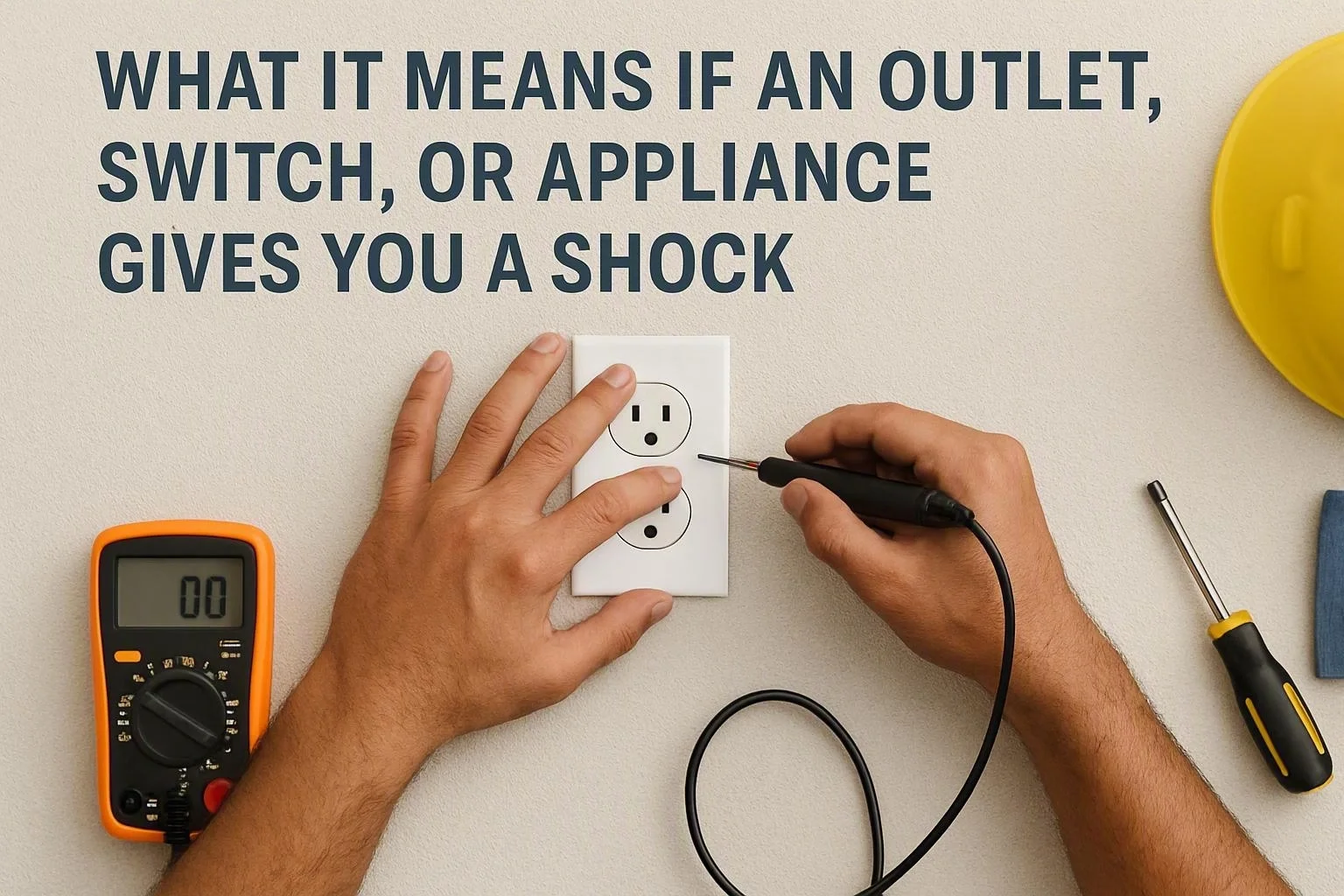
During an electrical inspection, a licensed electrician should consider several tests.
Repair may involve replacing a damaged receptacle, switch, cord, appliance, breaker, or section of wiring. It may also require correcting a missing ground, improving protection in a wet area, or separating an overloaded circuit. Do not approve normal use until the cause has been identified and the repair has been checked.
Our crews can explain whether the situation calls for urgent isolation, emergency electrical service, or a scheduled appointment. Earth Electric can also help document the fault and coordinate electrical repair after medical concerns have been addressed. Use the contact option below to arrange a safe next step.
Questions About 24 Hour Electrician
Why Did My Outlet Shock Me?
Your outlet may have shocked you because of damaged insulation, loose wiring, moisture, reverse polarity, a missing ground, or a defective receptacle. Stop using it, keep people away, and turn off the circuit breaker only if you can do so safely.
Why Do I Feel a Tingle When I Touch a Light Switch?
A light-switch tingle can result from leakage current, a loose connection, damaged insulation, moisture, or a grounding problem. A metal faceplate or switch may become energized even when the light works normally. Stop touching the switch and arrange expert electrical troubleshooting.
Is a Small Electrical Shock Dangerous?
Yes, a small electrical shock can be dangerous because the sensation does not show how current traveled through the body or whether a fault remains active. Seek emergency medical care for chest pain, breathing difficulty, confusion, severe burns, fainting, or loss of consciousness. Arrange an electrical inspection even after a brief tingle.
What Causes an Appliance to Give an Electric Shock?
Common causes include a damaged power cord, failed insulation, moisture, an internal component failure, an ungrounded receptacle, or a ground fault. Disconnect power only if it is safe, keep the appliance out of service, and have an electrician inspect both the appliance connection and the affected circuit.
Should I Call an Electrician After an Electric Shock?
Yes. The electrician can use safe testing methods to check voltage, polarity, grounding continuity, GFCI operation, insulation, and the affected circuit. Call emergency services first for serious symptoms.
Related Resources
How Much Does a 24-Hour Emergency Electrician Cost in Miami?
24 hour emergency electrician cost Miami
What It CostsHow Much Does It Cost to Rewire a House in Miami?
house rewiring cost and timeline Miami
How It WorksElectrical Troubleshooting, What the Diagnosis Involves and What It Costs.
electrical troubleshooting cost and process
How It WorksElectrical Inspection and Code-Compliance Corrections, Process and Cost Factors
electrical inspection and code compliance correction cost