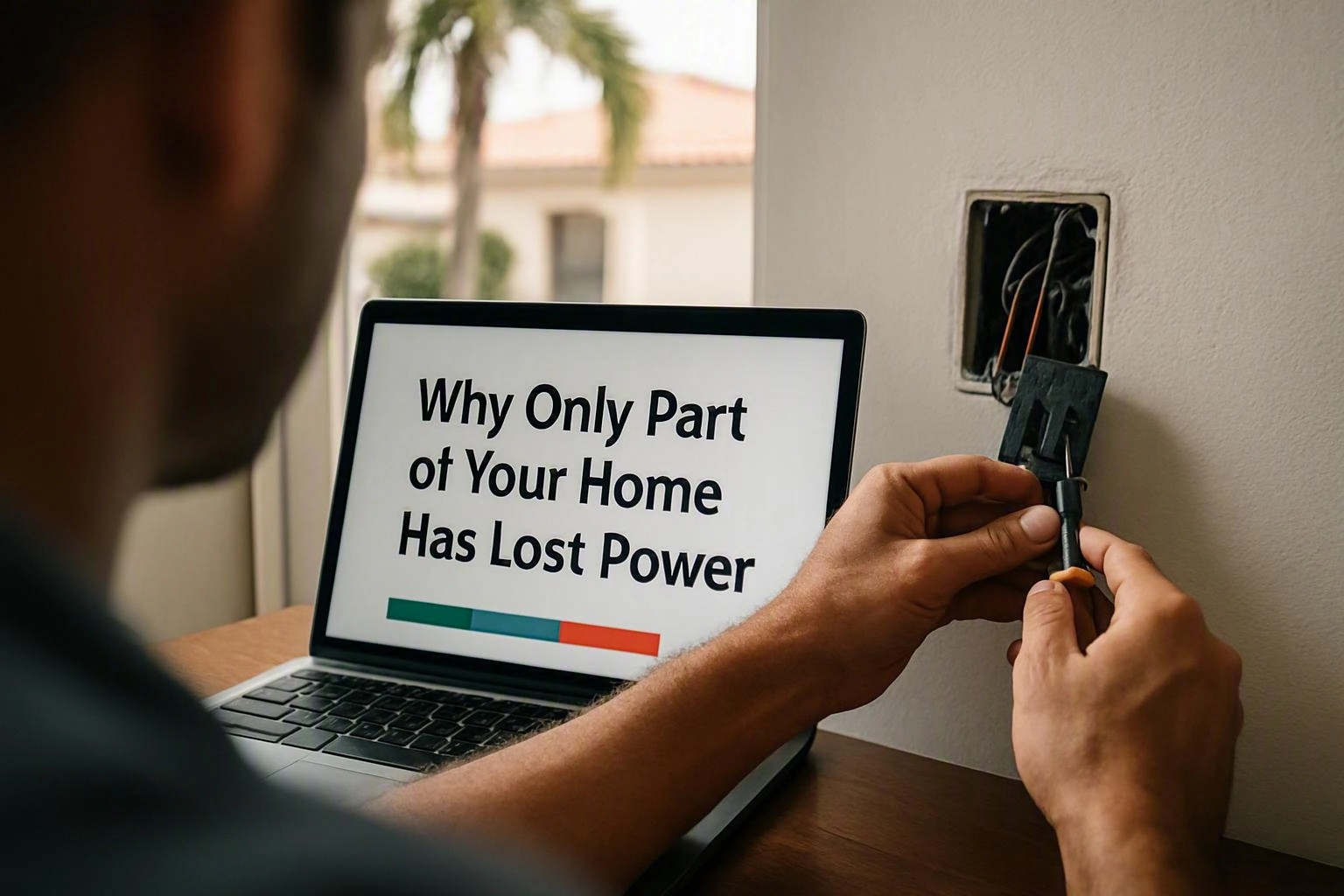
Why Only Part of Your Home Has Lost Power
Partial power loss in a house often starts with a tripped breaker or failed fuse. It may also come from an overloaded circuit, damaged wire, or loose connection. A utility problem can cause it too. Different circuits power different parts of your home. A lost service leg (one side of the power supply) can affect half the home. Turn off appliances and check the panel once. Don't reset it again and again. Burning smells, buzzing, sparks, heat, flickering, or cycling power need fast help. An electrician can find the fault and repair it safely.
Get a Free EstimateWhat Does Partial Power Loss Look Like?
Partial power loss affects some rooms, outlets, lights, or appliances. Other parts of the home still have power. Signs may include dark rooms, dead outlets, flickering lights, or stopped appliances. You may also hear buzzing or smell burning odors.
A single-circuit outage may be simple. Strange signs can point to a larger problem. Protect important items first. Keep the refrigerator closed. Unplug sensitive electronics. Use a safe backup plan for medical equipment. Never connect a generator to a wall outlet.
Write down which areas lost power. Note if the problem changes when appliances run. This helps an electrician find the source faster.
Why Does Half My House Have No Power?
Half a house can lose power when a breaker trips or a service leg fails. A loose connection can also stop power at the panel, meter, or utility line. Homes use many circuits. One fault can shut down several rooms while others still work.
The electrical panel receives power from the utility. It then sends power through separate circuits. Larger homes often use two service legs. A failed leg can shut down many circuits while others stay on. A full utility outage usually affects the whole property.
Check if nearby homes or street lights also lost power. If the area is dark, report a utility outage. If only your home is affected, look at the panel from a safe spot. A breaker may sit between “on” and “off.” Reset it once by moving it fully off, then on. Do this only when there is no smell, heat, water, smoke, buzzing, or damage.
Older homes may have uneven circuit layouts. Additions and remodeled rooms may use separate wiring. One room may work while another room loses power. That pattern doesn't always mean the whole home has a problem.
A lost service leg, bad meter, or loose utility connection isn't a homeowner repair. These faults may create unsafe voltage. Stop using affected appliances. Contact the utility or a qualified electrician.
| Pattern | Possible location | Safe next step |
|---|---|---|
| One room is dark | Branch circuit or GFCI outlet | Stop unsafe loads and check protection once |
| Many rooms on one side are out | Service leg, panel, or meter | Arrange professional testing |
| Power cycles repeatedly | Loose connection, wiring, or utility service | Unplug sensitive equipment and call for help |
As a guide, basic diagnostic visits often take 30 to 90 minutes. Easy-to-reach faults usually take less time. Hidden wires, meter issues, and utility faults may take longer.
Why Do Some Rooms Have Electricity but Others Do Not?
Some rooms have electricity because each area may use a different branch circuit. A branch circuit powers several lights or outlets. Another circuit may serve a kitchen appliance, bedroom, addition, or remodeled room. A fault on one circuit may not affect another.
A GFCI receptacle can shut off outlets farther along the same circuit. Look for “test” and “reset” buttons in kitchens, bathrooms, garages, and outdoor areas. Check laundry rooms and unfinished spaces too. If the outlet is dry and safe, press reset once. A GFCI that won't reset may have a fault or no incoming power.
An AFCI breaker helps stop arcs in circuit wires. It may trip because of damaged cords, loose connections, or wiring faults. Repeated resets won't solve the problem. If it trips again, leave it off and arrange service.
A wall switch may control some outlets. A failed outlet or loose splice may also stop power. Don't remove outlet covers or open an energized panel. A professional can test safe points and trace the circuit.
What Causes Partial Power Loss in a House?
The most common causes include a tripped breaker, overloaded circuit, failed fuse, GFCI trip, or damaged wiring. Loose panel connections can cause trouble too. A bad meter or utility fault may affect many circuits. The repair depends on where power stops.
A breaker trips when current gets too high. Several heating appliances can overload one circuit. A failed fuse has a similar safety role in older homes. Replace it only with the correct type and rating. Never use a larger fuse or force a breaker on.
A loose connection may form at a breaker, neutral bar, splice, outlet, meter, or service point. Loose connections can create heat and sparks. Damaged wires may result from age, pests, water, remodeling, nails, or wear. A qualified electrician must test these faults.
The panel may have a worn breaker, heat damage, rust, poor labels, or an internal fault. The meter or meter socket may also be damaged. Only the utility or an approved electrician should work there. Don't break a meter seal or remove the meter.
Electrical Troubleshooting should find the fault before anyone replaces a part. We test the affected circuit and compare it with working circuits.
Is Partial Power Loss an Electrical Emergency?
Partial power loss is an electrical emergency when it includes burning smells, smoke, sparks, buzzing, heat, or visible damage. Water near electrical equipment also creates danger. Repeated power cycling needs urgent help. Stop using the affected circuits and contact an emergency electrician.
These signs may show a fire hazard or arc fault. A warm outlet, burned panel, crackling sound, or sharp odor means electricity may follow an unsafe path. Leave the home if there is smoke or fire. Call emergency services. Never use water on an electrical fire.
Our 24-Hour Emergency Electrical Service helps with faults that can't wait. A 24 Hour Electrician may shut off the circuit and protect your home. We can also tell you if the utility must repair the connection.
A storm may cause a short outage. Buzzing and flickering after power returns may show connection damage. In Miami, 24-Hour Emergency Electrical Service in Miami may help after heat, storms, or moisture cause damage.
How Can You Prevent Partial Power Loss?
Homeowners can reduce partial power loss by avoiding overloaded outlets and damaged cords. Test safety devices and keep the panel clear. Fix flickering lights quickly. Schedule troubleshooting for repeated trips. These steps can't stop every utility fault or hidden wiring problem.
Start by learning which outlets and appliances share a circuit. Don't connect many power strips together. Don't use extension cords as permanent wiring. Keep high-wattage appliances on circuits made for them.
Older wiring needs extra care, especially after a remodel or addition. Use grounded, tamper-resistant, and weather-safe outlets when needed. Never cover the panel with storage. Don't paint over warning labels.
Routine service can't prevent every outage or bad meter. It can find loose connections, poor labels, worn breakers, and overloaded circuits.
What Should You Do When Power Keeps Going on and Off?
Intermittent power usually indicates a loose connection, failing breaker, damaged wiring, or overloaded circuit. Unstable utility service may also cause it. Unplug sensitive equipment and note affected areas. Check the panel only when it is dry and undamaged. Repeated cycling needs professional electrical troubleshooting.
Protect electronics, refrigeration, medical equipment, and heating or cooling controls first. Use surge protection or an approved backup system when needed. Never run a portable generator indoors or in a garage. Never connect it to a household outlet.
Record the pattern next. Note the time, rooms, weather, appliances, and breaker position. Check if nearby homes also lost power. This helps separate a utility outage from an internal fault. Stay clear of damaged service equipment.
You may look for a clearly tripped breaker. Don't remove the panel cover or tighten terminals. Don't touch the meter or energized wires. Trained workers must repair panels, meters, loose connections, and damaged wiring.
If power keeps cycling, turn off the affected breaker when safe. Leave it off until help arrives. Unplug appliances while voltage remains unstable. Contact our electrical service team for help with recurring or unsafe power loss.
Questions About 24 Hour Electrician
Why Does Half My House Have No Power?
Half a home may lose power when a service leg fails or a connection becomes loose. A panel, meter, or tripped breaker may affect several rooms. Check the panel once if it is dry and safe. Call the utility or an electrician if power stays off.
Why Do Some Rooms Have Electricity but Others Don't?
Different rooms use separate branch circuits. One circuit may have a tripped breaker, GFCI outlet, AFCI device, failed outlet, or wiring fault. Other circuits may keep working. Older homes and additions may have uneven layouts.
What Causes Partial Power Loss in a House?
Common causes include a tripped breaker, overloaded circuit, failed fuse, GFCI or AFCI trip, and loose connection. Damaged wiring, a failed meter, or utility fault can also cause it. Repeated resets are unsafe.
Why Is My Power Going on and Off?
Power cycling may come from a loose connection, failing breaker, damaged wiring, or overloaded circuit. Unstable utility service may also cause it. Unplug sensitive equipment and avoid repeated resets. Arrange testing if the problem returns.
When Is Partial Power Loss an Electrical Emergency?
It is an emergency when power loss includes smoke, sparks, burning smells, buzzing, or heat. Visible damage, nearby water, and repeated cycling also need urgent help. Stop using the circuit and contact an emergency electrician or utility.
Don't guess at a panel, meter, service leg, or damaged circuit. Safe testing can show if the fault is simple or dangerous.
Earth Electric can help with safe electrical troubleshooting and urgent service decisions.
Related Resources
How Much Does a 24-Hour Emergency Electrician Cost in Miami?
24 hour emergency electrician cost Miami
What It CostsElectrical Panel Upgrade Cost in Miami: Options, Price Factors, and Timeline
electrical panel upgrade cost Miami
How It WorksElectrical Troubleshooting: What the Diagnosis Involves and What It Costs
electrical troubleshooting cost and process
How It WorksElectrical Inspection and Code-Compliance Corrections: Process and Cost Factors
electrical inspection and code compliance correction cost