Why Your Generator Fails When the Power Goes Out
A generator may fail because it lacks fuel or has a weak battery. It may also detect a fault or fail to send power indoors. Check the fuel, mode, breakers, battery light, and error codes. Don’t open electrical panels. A running generator may have a tripped breaker, wiring fault, or bad transfer switch. If these checks don’t help, stop and call a qualified electrician. Earth Electric can provide generator repair, transfer-switch help, or emergency electrical service.
Get a Free Estimate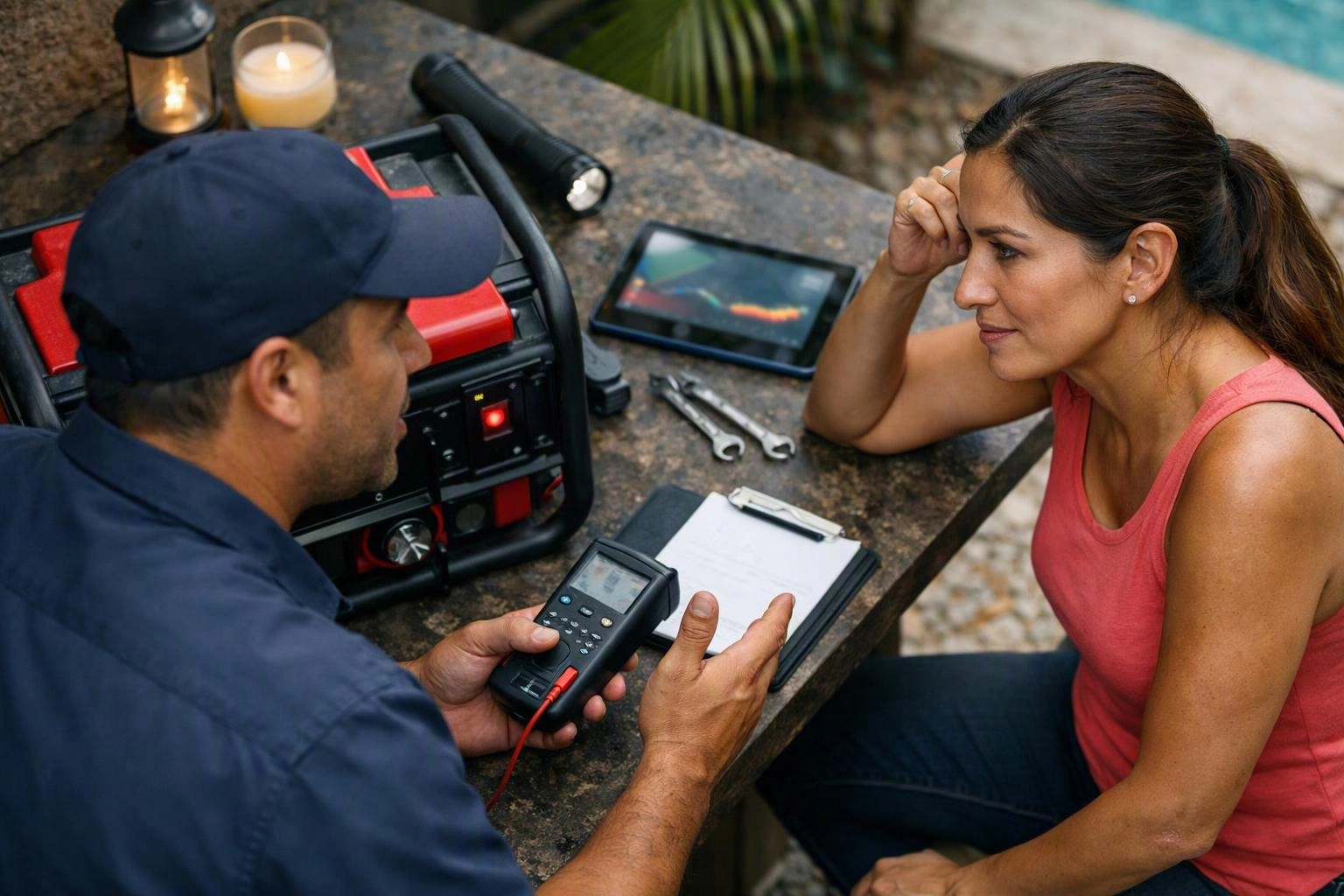
Earth Electric helps homeowners know which checks are safe. A backup power system may have a start problem or output fault. It may also have a transfer problem. Storms can bring water, debris, and long run times. Keep the unit clear and dry. Never approach damaged equipment.
What Signs Show That Your Generator Is Not Working?
A standby generator is not working if it won’t start or shuts down quickly. It may run without powering the home. It may also show an error code or leave some circuits off. These signs can point to the engine, fuel, battery, controls, breaker, or transfer switch.
Write down the exact alarm message. Note if the engine cranks, starts, or keeps running. This information helps our team find the fault faster.
Why Won’t My Generator Start During a Power Outage?
A generator may not start because its battery is weak or its fuel is stale. It may also be in the wrong mode or sense low oil. A control problem can stop the start cycle. Check owner-accessible controls only. Don’t bypass safety parts or open powered equipment.
Storms call for extra care. Water, debris, and long run times can create new faults. Don’t use a flooded or damaged unit. A 24 Hour Electrician may help when the failure affects medical gear, heating, cooling, or safe entry.
Why Is My Generator Running but Not Producing Electricity?
A running generator may have a tripped breaker or a failed alternator. It may also have a bad voltage regulator, damaged wire, or transfer-switch fault. These parts may stay powered. Check visible settings only. A qualified electrician should handle electrical tests.
Look at the generator breaker without removing its cover. Reset it only as the owner’s manual directs. Don’t reset it if you see water, damage, or burning. Leave it off if it trips again.
The alternator makes the generator’s power. A bad alternator, regulator, control board, or connection can stop that output. Don’t touch terminals or use a meter without proper training.
The home may receive power only after the transfer switch completes its cycle. If the engine runs but the home stays dark, wiring or panel connections may be at fault.
Most service visits check the controller, breaker, wiring, transfer equipment, and load center. The work depends on the generator model and setup.
What Should I Check Before Calling for Generator Repair?
Check the fuel, standby setting, alarm message, battery light, and accessible breakers. Follow the owner’s manual. Note what happens and which circuits lose power. Don’t remove covers, test live terminals, or reset a fault again and again.
Stop if you see water, exposed wires, melted insulation, smoke, or sparks. Stop if storm debris touches the unit. Repeated resets can hide a serious fault. Share photos of visible lights only when safe.
Could the Transfer Switch Be Causing Generator Failure?
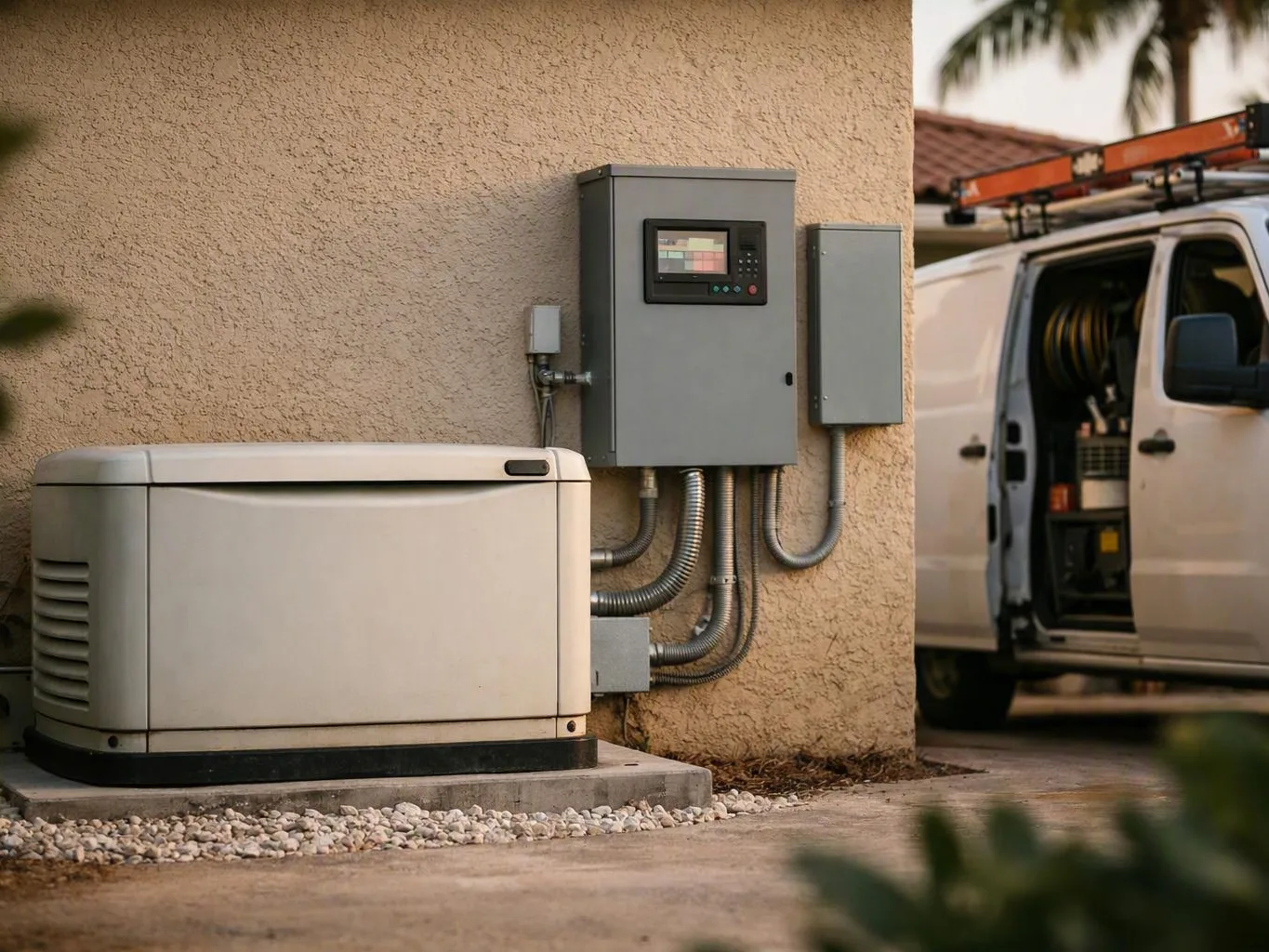
An automatic transfer switch can cause a generator failure. It may not sense the outage or complete the transfer. It may not receive generator voltage or connect approved circuits. The generator can run while the home stays off. A qualified professional should test this switch.
The switch senses when utility power fails. It then starts the generator and waits for steady voltage. Next, it connects the generator to the home. A bad sensor, wire, delay, or switch part can stop this process.
An interlock or panel setup may limit backup power. Whole-home power needs a matching transfer system. The generator must also fit the expected load. A smaller system can power selected essential circuits.
Transfer-switch work must consider generator size, panel fit, service size, grounding, and disconnects. Our crews can discuss whether Generator Transfer Switch Installation fits your home.
Don’t remove the panel cover or force a transfer. If the switch hums, smells hot, or looks damaged, turn off nonessential loads if safe. Then arrange emergency electrical service.
How Can You Prevent Generator Problems During the Next Outage?
Regular maintenance helps prevent generator failures. It keeps the battery, engine, fuel system, controls, and transfer switch ready. Service checks can find faults before an outage.
Follow the maker’s service plan. Keep a written record of the work. Keep the battery charger connected as designed. Test an aging battery before storm season. Check fuel if the unit sits unused.
Keep water away while leaving enough airflow. Never place a unit in a garage, crawl space, or closed area. Choose a raised, firm spot that follows setup rules. Keep it away from likely flood paths.
Our team provides Generator Repair And Maintenance in Miami when a local customer needs help. We check for weak batteries, blocked air paths, loose wires, and transfer-switch faults.
Simple Prevention Steps Homeowners Can Follow
Simple care works best when it’s planned and recorded. These steps help prepare your backup power system safely.
- Schedule preventive maintenance: Follow the maker’s timing for oil, filters, inspections, and control tests.
- Arrange battery testing: Check the charger light. Test an old battery or one with warnings.
- Use fuel stabilization: Keep fuel fresh. Follow the maker’s storage directions.
- Run the approved exercise test. Record odd sounds, alarms, delays, or shutdowns.
- Prepare for storms by clearing debris and checking for moisture. Don’t touch damaged equipment.
If a test fails, don’t wait for the next storm. Planned service is safer than a failure during a long outage.
Questions About 24 Hour Electrician
Why Won't My Generator Start During a Power Outage?
Common causes include a weak battery, stale fuel, or the wrong automatic setting. Low oil or an engine fault can also stop the start. Check visible controls only. Don’t bypass safety devices or open the cabinet.
Why Is My Generator Running but Not Producing Electricity?
A tripped breaker, failed alternator, bad regulator, wiring fault, or transfer switch may stop output. These parts may stay powered. A qualified electrician should handle testing.
Why Didn't My Automatic Generator Turn On?
The unit may not be in automatic mode. Its battery, fuel, controller, or utility sensor may have failed. A transfer-switch fault can also stop the start cycle. Record the panel message and request service if basic checks fail.
What Should I Check Before Calling for Generator Repair?
Check the fuel, automatic setting, panel message, battery light, and breaker positions. Follow the owner’s manual. Note which circuits are affected. Stop if you see water, smoke, exposed wires, burning, or repeated faults.
Could the Transfer Switch Be Causing Generator Failure?
Yes. The generator may run while the home stays off. The switch may not sense the outage, receive voltage, complete transfer, or connect approved circuits. A qualified electrician must test and repair it.
Visible checks may not restore power. Our team can help with generator troubleshooting, transfer-switch diagnosis, and emergency electrical work. Contact us through our service request page to discuss the safest next step.
Related Resources
How Much Does a 24-Hour Emergency Electrician Cost in Miami?
24 hour emergency electrician cost Miami
Compared ToGenerator Repair and Transfer Switch Installation: Costs and Options
generator repair vs transfer switch installation cost
Compared ToWhole-Home Surge Protection: Cost, Benefits, and Installation Options
whole home surge protection cost and options
Compared ToSolar Battery Backup Installation: Costs, Integration, and What to Expect
solar battery backup installation cost and process Miami