
What is an Amperage?
Amperage is the amount of electric current flowing through a circuit or device, measured in amperes, commonly called amps. It describes current flow, not electrical pressure or power. A circuit’s amperage helps determine suitable wire size, overcurrent protection, equipment capacity, and the risk of overheating when the circuit carries more current than designed.
Quick Facts About Amperage
Category
Electrical measurement
Measured by
Amperes, or amps
Formula
Current equals voltage divided by resistance
Used for
Sizing conductors, breakers, and electrical equipment
Common confusion
Amperage is not the same as voltage or wattage
Also called
Current, Amps
Key Takeaways About Amperage
- Amperage measures current flow, while voltage measures electrical pressure.
- Wire size and circuit breaker ratings must match the circuit’s expected current.
- A circuit may draw different amperage depending on the connected load.
- Excessive current can overheat conductors and create fire or equipment hazards.
- A clamp meter measures current without disconnecting the conductor.
Understanding Amperage
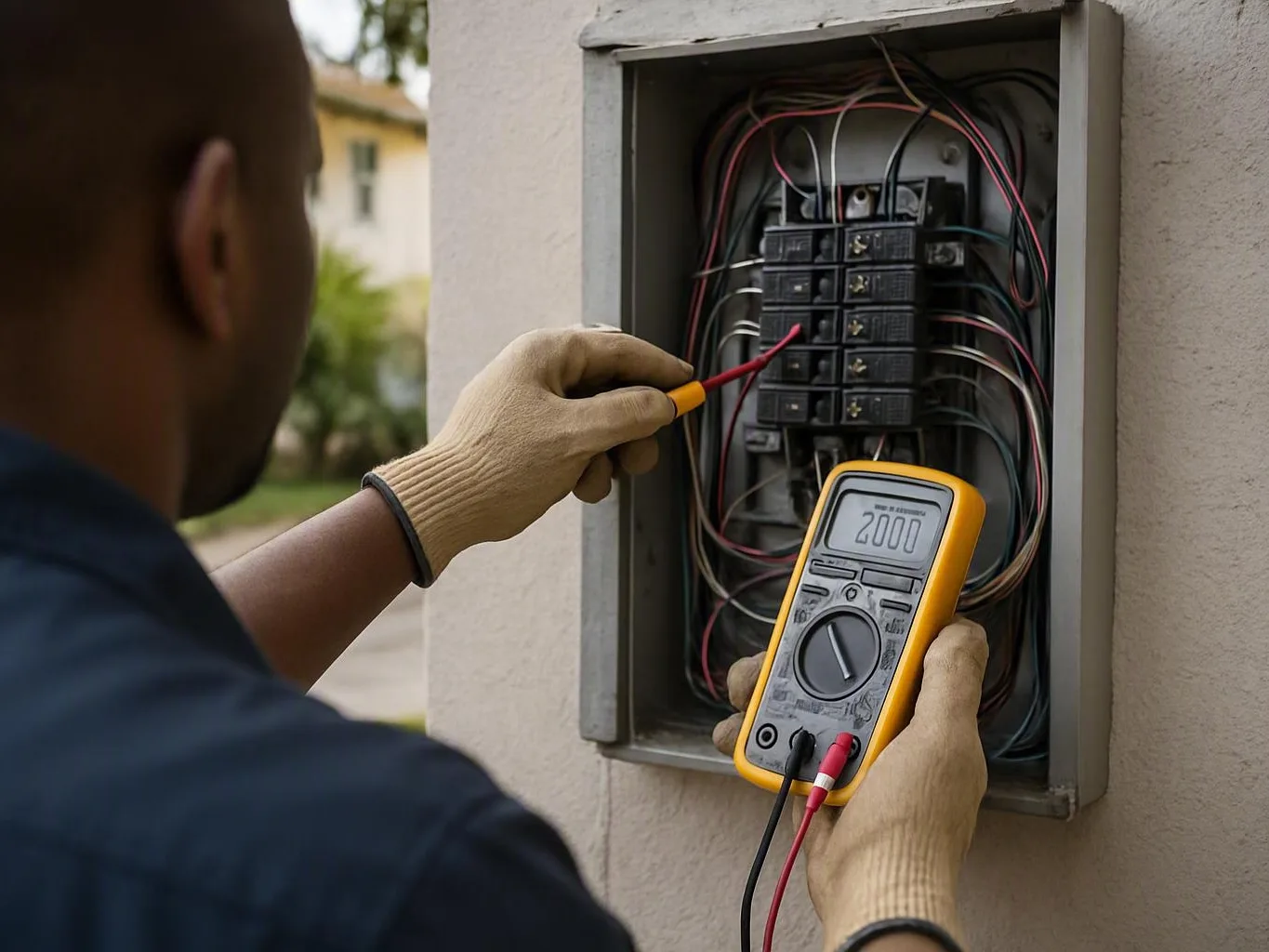
Amperagedescribes the rate of electric charge moving through a circuit. Electricians measure it.amperes, shortened to amps. A higher amp reading means more current flows at that moment. Current moves through conductors such as copper or aluminum wire. It supplies energy to connected equipment.
Related glossary terms: Ampacity, Branch Circuit, Electrical Load Calculation.
Amperage differs from voltage, which describes electrical pressure. It also differs from wattage, which describes power use. A circuit can have fixed voltage but draw different amperage. This happens as loads turn on and off. For example, a motor may draw more current during startup. It may draw less during normal operation. The circuit design must account for expected current and starting demand.
How Amperage Works, Is Measured, or Is Used?
Electric current follows the relationship in Ohm’s Law. Current equals voltage divided by resistance. The formula is written as I = V ÷ R. If voltage rises while resistance stays the same, amperage rises. If resistance rises while voltage stays the same, amperage falls. A loose connection or damaged conductor can create heat. It can also create unsafe conditions.
A clamp meter measures amperage by sensing the magnetic field around one energized conductor. A technician opens the clamp around the conductor. Then, the technician selects the correct current setting and reads the result. The clamp must surround only one conductor. Placing it around both supply and return conductors can cancel the magnetic fields. This can produce an inaccurate reading. A multimeter can also measure current. However, it must connect in the correct configuration.
Amperage helps determine the size of conductors, circuit breakers, and electrical equipment. The expected load is calculated before installation. Then, workers compare it with the equipment rating and electrical rules. A breaker protects the circuit from excessive current. However, it doesn't make an undersized wire safe. The wire, breaker, terminals, and connected equipment must work together.
Why Amperage Matters?

Correct amperage protects people, property, and electrical equipment. Too much current can heat a conductor beyond its safe limit. It can damage insulation, trip a breaker, or start an electrical fire. Repeated trips can point to an overloaded circuit. They can also point to a failing appliance, a short circuit, or another wiring problem.
Amperage readings support practical decisions during load calculations and troubleshooting. A reading below an equipment rating may show normal operation. A reading above the rating needs investigation. A low reading doesn't always prove that a circuit's safe. Loose connections, voltage loss, and faults can produce misleading results.
When Amperage Matters Most?
Amperage becomes especially important during a panel upgrade, new appliance installation, generator connection, or dedicated circuit installation. Electricians compare the service capacity with the calculated demand. This demand comes from air conditioners, water heaters, ranges, pumps, and other large loads. The result helps determine whether existing equipment can support the proposed work. It also helps prevent repeated overloads.
Amperage also matters during an outage or emergency repair. A technician may check current on a branch circuit. The technician may compare readings with the equipment nameplate. The technician may inspect connections for heat or discoloration. Never defeat a breaker or replace it with a higher rating. This change can stop nuisance tripping. It can also allow unsafe current through wiring that wasn't designed for it.
How to Evaluate Amperage?
- Compare measured current with the equipment nameplate rating and expected operating load.
- Confirm that the breaker rating matches the conductor size and circuit design.
- Check whether current changes sharply when motors, compressors, or heating elements start.
- Look for warm outlets, discolored terminals, buzzing, burning smells, or repeated breaker trips.
- Verify that a current measurement was taken around one conductor with a properly rated meter.
Related Concepts Compared
Amperage vs. Ampacity
Ampacity is the maximum current a conductor or equipment can carry safely under stated conditions. Amperage is the current actually flowing at a particular time.
Amperage vs. Voltage
Voltage is the electrical pressure that drives current through a circuit. Amperage measures the amount of current moving through that circuit.
Amperage vs. Wattage
Wattage measures electrical power. In a simple circuit, watts equal volts multiplied by amps, so amperage is one part of the power calculation.
Amperage vs. Electrical Load
An electrical load is a device or system that consumes power. Amperage is the current that the load draws from the circuit.
Expert Note
Nameplate amperage usually reflects rated operation, not every condition. Motors and compressors can draw substantially more current during startup, so circuit design must consider starting behavior, conductor length, voltage drop, and the equipment manufacturer’s instructions.
Common Mistakes or Myths About Amperage
- Treating amperage, voltage, and wattage as interchangeable terms.
- Replacing a tripping breaker with a larger breaker without checking the wiring.
- Measuring around an entire cable instead of one current-carrying conductor.
- Assuming a circuit is safe because its breaker has not tripped.
- Ignoring motor startup current during circuit planning.
Amperage in Practice: A Real-World Example
A 240-volt air conditioner may draw 18 amps while running and more current during startup.
Sources & Further Reading on Amperage
Related Terms
Ampacity
Ampacity is the maximum continuous current, measured in amperes, that a conductor can carry safely under…
Branch Circuit
Branch Circuit is the wiring section that carries electricity from a circuit breaker or fuse to…
Electrical Load Calculation
Electrical Load Calculation is a structured estimate of the electrical demand a building or circuit may…
Overcurrent Protection
Overcurrent Protection is a safety method that limits electrical current when a circuit carries more electricity…
Earth Electric
Have Questions About Amperage?
Contact Earth Electric for practical guidance on Amperage and related 24 hour electrician work in Miami.