
What is Overcurrent Protection?
Overcurrent Protection is a safety method that limits electrical current when a circuit carries more electricity than its conductors or equipment can safely handle. Fuses and circuit breakers provide this protection by opening the circuit during overloads or short circuits. Proper protection helps reduce conductor overheating, equipment damage, fire risk, and electric shock hazards.
Quick Facts About Overcurrent Protection
Category
Electrical safety and circuit protection
Measured by
Amperes and interrupting rating
Used for
Overloads and short circuits
Common confusion
Not the same as surge protection or GFCI protection
Also called
Overcurrent protection device, OCPD
Often discussed with
Circuit Breaker Repair, Circuit Breaker Replacement
Key Takeaways About Overcurrent Protection
- Circuit breakers and fuses cut power when current passes a safe level.
- Overloads grow slowly, but short circuits can create very high current at once.
- Protection must match conductor ampacity, equipment ratings, and available fault current.
- A tripped breaker shows a problem that needs review before you reset it.
- Overcurrent protection does not replace grounding or ground-fault protection.
Understanding Overcurrent Protection
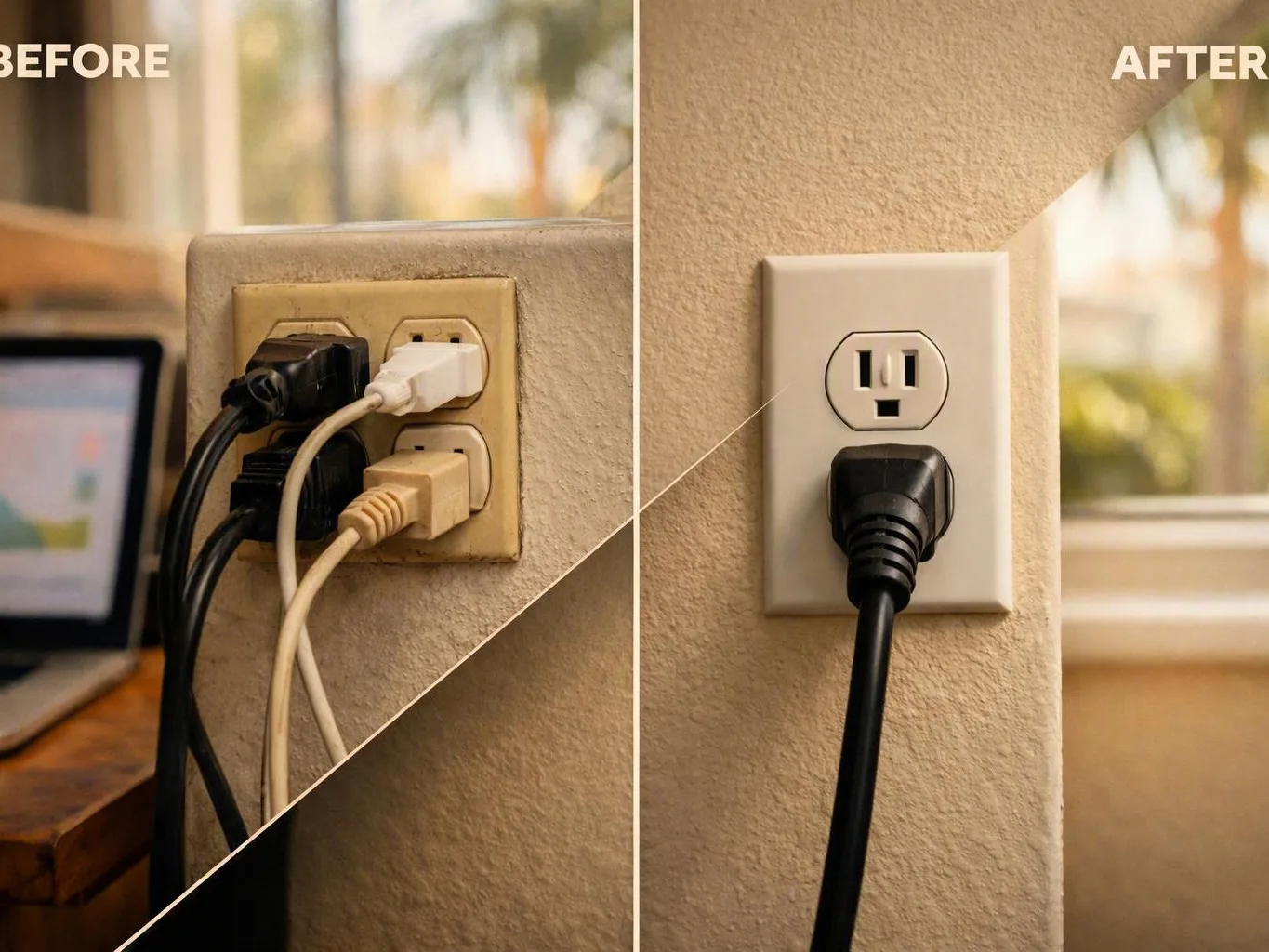
Overcurrent Protection uses a fuse or circuit breaker. It stops current above a circuit's safe design limit. Electrical conductors heat as current rises. If heat continues, wire insulation can deteriorate. Connections can fail, and nearby materials can ignite. The protective device opens the circuit before damage becomes dangerous.
Related glossary terms: Ampacity, Amperage, Arc-Fault Circuit Interrupter.
An overloadoccurs when equipment draws too much current. This happens over an extended period.short circuit creates an unintended low-resistance path. It can cause a sharp rise in current. A breaker or fuse responds to these conditions. Response time depends on current level and device design.
How Overcurrent Protection Works, Is Measured, or Is Used?
Electricians select protection by comparing the device rating with circuit ampacity. Ampacity means the maximum safe current for a conductor. This rating applies under stated conditions. A 20-ampere breaker doesn't make undersized wire safe. The conductor, terminals, equipment, and protective device must work together. They must follow the electrical code and site conditions.
A circuit breaker can be reset after it opens. A fuse must be replaced after it operates. Breakers often use a thermal element for long overloads. They use a magnetic element for rapid fault current. The device also has.interrupting rating. This rating is measured in amperes. It must meet or exceed.available fault current at its installation point.
During design or troubleshooting, an electrician reviews the load and conductor size. They also review the breaker or fuse rating. They check the panel condition and connection quality. A load calculation estimates expected demand in amperes. Ohm's Law explains why low resistance can cause very high current. It states that current equals voltage divided by resistance. Code rules and maker instructions control the actual installation.
Why Overcurrent Protection Matters?
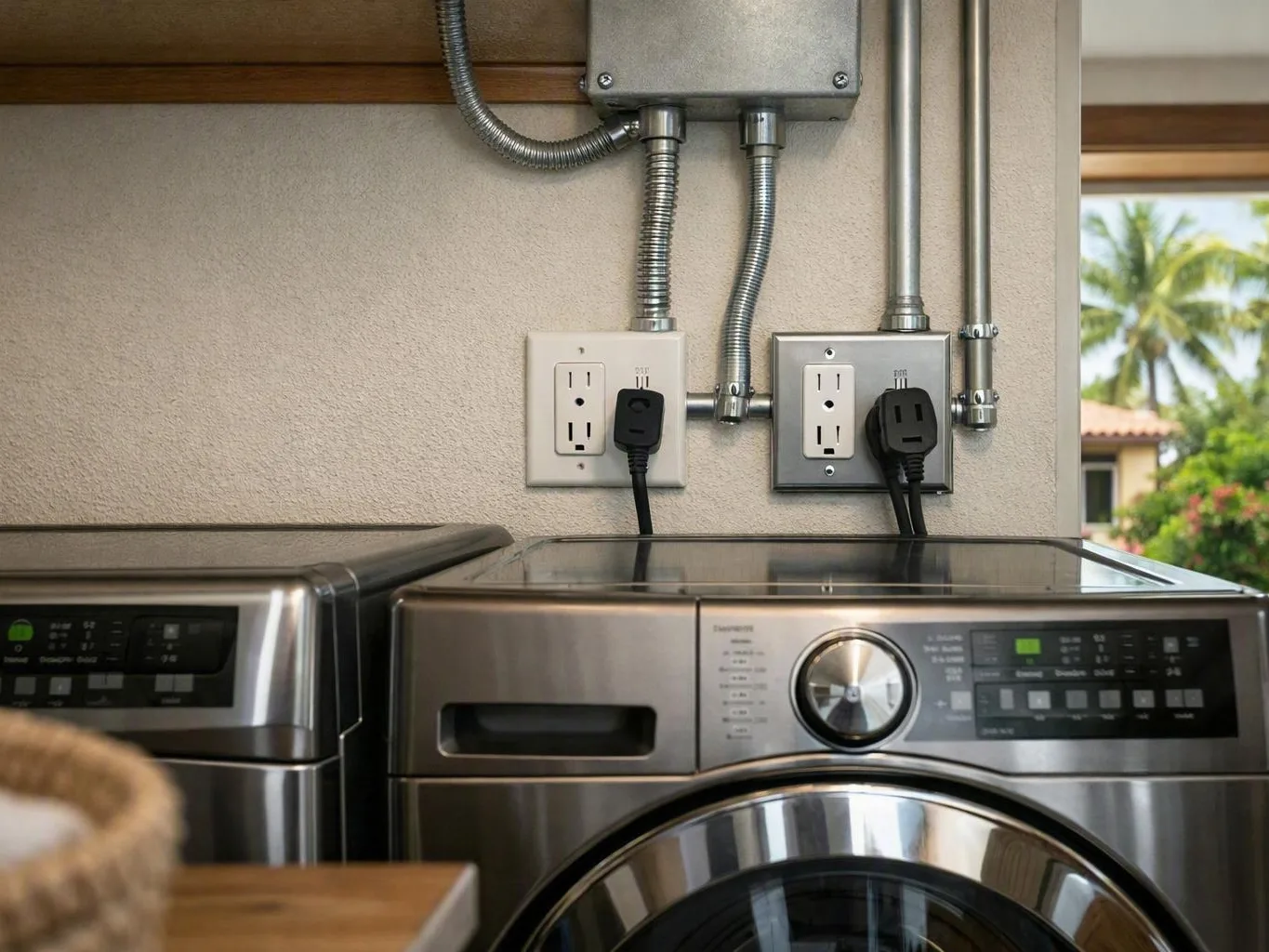
Correct protection limits heat in branch circuits, feeders, and service conductors. It also protects motors, appliances, and other equipment. It helps preserve a circuit's intended function during a fault. A breaker that trips repeatedly shouldn't be treated as a nuisance. Repeated operation may show an overloaded circuit or damaged wiring. It may also show failing equipment or a loose connection.
Overcurrent protection supports safe design and inspection decisions. It can't prevent every electrical hazard. A standard breaker may not detect small leakage through a person. It doesn't provide the same function.ground-fault circuit interrupter. Proper grounding, bonding, and enclosure protection may also apply. Arc-fault protection may also apply to the installation.
When Overcurrent Protection Matters Most?
Protection deserves close review after a panel replacement or remodel. It also needs review after a service upgrade or equipment change. Review protection after repeated breaker trips. Miami properties may need attention after water intrusion or flooding. Storm damage or corrosion near electrical equipment may also need attention. Moisture and corrosion can damage terminals and insulation. This damage may change how a protective device performs.
Useful checks include the following.
- Confirm that the breaker or fuse rating matches conductor ampacity and equipment needs.
- Check the device interrupting rating against the available fault current.
- Look for heat marks, melted insulation, buzzing, loose connections, or repeated trips.
- Verify that replacement breakers are listed for the specific panelboard.
How to Evaluate Overcurrent Protection?
- Compare the protective device rating with the conductor ampacity and equipment nameplate requirements.
- Check the breaker or fuse interrupting rating against the available fault current.
- Ask whether repeated trips result from an overload, short circuit, loose connection, or failing appliance.
- Inspect for discoloration, melted insulation, buzzing, odor, or heat around the panel and terminations.
- Confirm that replacement devices are listed and approved for the installed panelboard.
Related Concepts Compared
Overcurrent Protection vs. Ground-Fault Circuit Interrupter
A GFCI responds to an imbalance between outgoing and returning current, which can indicate current leaving the intended circuit path. Overcurrent protection responds mainly to excessive current from overloads and faults.
Overcurrent Protection vs. Arc-Fault Circuit Interrupter
An AFCI detects electrical arcing patterns that may start a fire. A standard breaker may not trip on every arc because the total current can remain below its overcurrent setting.
Overcurrent Protection vs. Surge Protection
Surge protection limits short voltage spikes from events such as lightning or switching. It does not replace a breaker or fuse that protects conductors from excessive current.
Overcurrent Protection vs. Ampacity
Ampacity is the safe current-carrying capacity of a conductor under stated conditions. Overcurrent protection is the device and method used to prevent current from exceeding safe circuit limits.
Expert Note
A breaker rating alone does not prove that a circuit is safe. Professionals also verify conductor ampacity, terminal temperature ratings, panel compatibility, fault-current levels, and equipment instructions. A larger breaker installed to stop nuisance trips can create a serious wiring hazard.
Common Mistakes or Myths About Overcurrent Protection
- Installing a larger breaker to stop repeated trips without checking conductor size.
- Assuming a tripped breaker is defective before testing the connected load and wiring.
- Confusing overcurrent protection with GFCI, AFCI, or surge protection.
- Using a replacement breaker that is not listed for the panelboard.
- Ignoring heat, odor, buzzing, or discoloration near a protective device.
Overcurrent Protection in Practice: A Real-World Example
A kitchen circuit has a 20-ampere breaker. A portable heater and several appliances draw more power than the circuit can carry. The breaker trips after the wiring warms. A larger breaker is unsafe unless the conductors and entire circuit support that rating.
Sources & Further Reading on Overcurrent Protection
Related Terms
Ampacity
Ampacity is the maximum continuous current, measured in amperes, that a conductor can carry safely under…
Amperage
Amperage is the amount of electric current flowing through a circuit or device, measured in amperes…
Arc-Fault Circuit Interrupter
Arc-Fault Circuit Interrupter is a protective device that detects dangerous electrical arcing and disconnects power before…
Branch Circuit
Branch Circuit is the wiring section that carries electricity from a circuit breaker or fuse to…
Earth Electric
Have Questions About Overcurrent Protection?
Contact Earth Electric for practical guidance on Overcurrent Protection and related 24 hour electrician work in Miami.