
What is a Busbar?
Busbar is a rigid conductor, usually made from copper or aluminum, that distributes electrical power to several circuits within equipment. A busbar may appear in a switchboard, panelboard, switchgear assembly, or busway system. Its size, insulation, spacing, and support must match the system voltage, expected current, and available fault current.
Quick Facts About Busbar
Category
Electrical power distribution component
Used for
Feeding multiple circuits from one power source
Common materials
Copper or aluminum
Common confusion
A busbar is not automatically a neutral or grounding bar.
Also called
Bus bar, Electrical bus
Often discussed with
Electrical Panel Repair, Electrical Panel Upgrade
Key Takeaways About Busbar
- Busbars distribute power more efficiently than multiple separate wires inside electrical equipment.
- Copper and aluminum are common busbar materials, with different weight, cost, and connection requirements.
- Ampacity, temperature, spacing, and fault-current ratings determine whether a busbar is suitable.
- Loose, damaged, or overheated busbar connections can create serious fire and shock hazards.
- A busbar is not the same as a neutral bar or grounding bar. Although all may appear inside a panel.
Understanding Busbar

Busbar is a solid or hollow metal conductor. It carries and distributes power inside equipment. Copper and aluminum are the most common materials. Unlike flexible cable, a busbar follows a fixed path. It connects breakers, switches, terminals, or conductors at one point.
Related glossary terms: Ampacity, Electrical Panel, Load Center.
A busbar may sit inside an electrical panel, switchboard, switchgear, transformer, or busway system. Protective covers and barriers may shield energized sections from contact. The design accounts for voltage, current, heat, support, insulation, and fault current.
How Busbar Works, Is Measured, or Is Used?
Power enters a busbar from a service conductor, feeder, transformer, or generator. The metal bar provides a low-impedance path to several outgoing circuits. In a panelboard, circuit breakers attach to the bus structure. Each breaker can receive power from this structure. Separate conductors carry power to branch circuits.
Engineers select a busbar by checking its ampacityvoltage rating, size, material, heat rise, and short-circuit withstand rating. Ampacity describes the continuous current a conductor can carry. This rating applies under stated conditions. Available fault current also matters. A short circuit can create intense heat and force. This can happen before a protective device opens. Manufacturers publish ratings for listed equipment.National Electrical Code provides installation rules.
Why Busbar Matters?
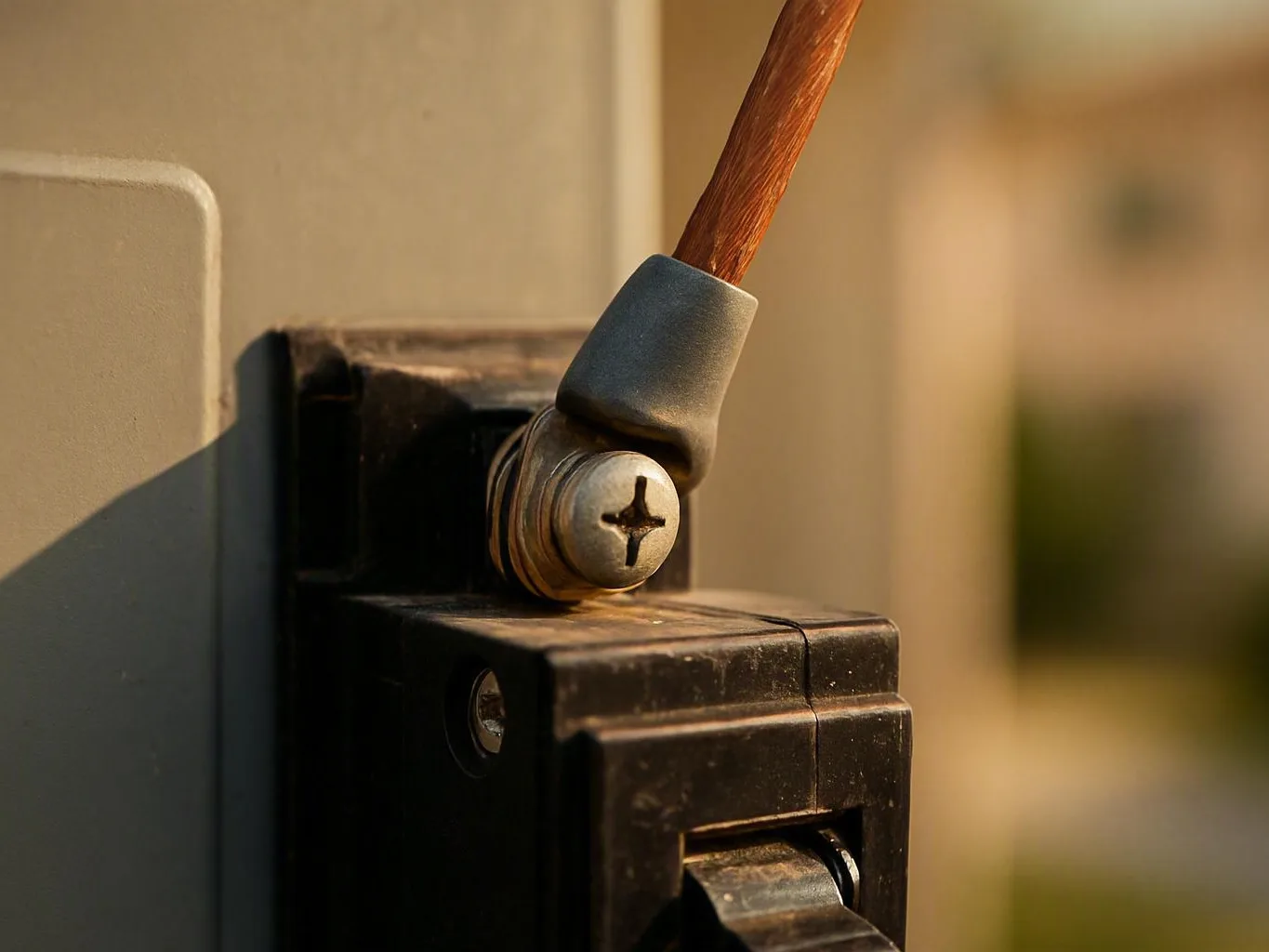
A properly designed busbar reduces clutter inside power equipment. It creates consistent connection points. Its compact layout can save space compared with large conductors. This matters in high-current switchboards and distribution systems. Good design also makes inspection, breaker replacement, and circuit expansion more orderly.
Busbar condition affects safety and reliability. A loose terminal, corroded surface, or undersized conductor can increase resistance. A blocked ventilation path can also produce heat. Infrared inspection may reveal a hot connection. A qualified person must de-energize equipment first. This must happen before tightening, cleaning, or replacing parts.
When Busbar Matters Most?
Busbar selection matters during a panel upgrade, service increase, or generator installation. It also matters during a commercial remodel or equipment replacement. A new breaker must fit the listed bus structure. The structure must come from the panel manufacturer. The breaker must not only match its label's voltage and amperage. The enclosure, breaker type, conductor size, and interrupting rating must work together.
Moisture and salt air can make inspection more important in coastal areas such as Miami. Signs needing prompt attention include discoloration, melted insulation, buzzing, and repeated breaker trips. Other signs include burning odor, visible corrosion, and unexplained heat near a panel. Don't remove panel covers or touch exposed busbars while energized. The metal may remain live even when branch breakers are off.
How to Evaluate Busbar?
- Confirm the busbar ampacity equals or exceeds the calculated continuous and noncontinuous load.
- Check that the panel or switchgear has a suitable short-circuit current rating for the available fault current.
- Verify every breaker is listed and compatible with the equipment manufacturer’s busbar assembly.
- Look for discoloration, pitting, corrosion, loose hardware, melted insulation, or heat damage during a qualified inspection.
- Compare the installation with the National Electrical Code and the equipment manufacturer’s instructions.
Related Concepts Compared
Busbar vs. Neutral Bar
A neutral bar connects grounded circuit conductors to the system neutral. A busbar is a broader term for a power distribution conductor, and a neutral bar is one possible type.
Busbar vs. Grounding Bar
A grounding bar connects equipment grounding conductors and bonding jumpers. It normally does not serve as a current-carrying power path during normal operation.
Busbar vs. Busway
Busway is an enclosed, manufactured wiring system that contains one or more busbars. A busbar is the conductive metal component, while busway includes the housing, insulation, joints, and fittings.
Busbar vs. Wire
Wire usually has a flexible stranded or solid conductor with insulation. A busbar is generally rigid and is selected for organized, high-current distribution inside equipment.
Expert Note
A busbar can look intact while a connection behind a breaker has overheated. Heat discoloration, altered plating, and loosened hardware can reduce reliability even when the panel still operates. Inspection should include torque verification against the manufacturer’s specification. Not only a visual check.
Common Mistakes or Myths About Busbar
- Assuming any breaker will fit a panel because the breaker has the correct amperage.
- Treating a neutral bar and a grounding bar as interchangeable in every panel location.
- Ignoring corrosion or discoloration on a busbar because the circuits still work.
- Installing a replacement busbar without checking the equipment listing and manufacturer instructions.
Busbar in Practice: A Real-World Example
A 200-amp panel receives power from the service conductors through its main breaker. If one breaker connection becomes loose. Heat can build at that point and damage the bus assembly.
Sources & Further Reading on Busbar
- OSHA Electrical Safety
- NEMA Electrical Standards and Products
Related Services
Related Terms
Ampacity
Ampacity is the maximum continuous current, measured in amperes, that a conductor can carry safely under…
Electrical Panel
Electrical Panel is the enclosure that receives electrical power from a utility service or other source…
Load Center
Load Center is an electrical distribution enclosure that receives power from a service entrance or feeder…
Fault Current
Fault Current is the electrical current that flows through a unintended path after insulation fails, conductors…
Earth Electric
Have Questions About Busbar?
Contact Earth Electric for practical guidance on Busbar and related 24 hour electrician work in Miami.