
What is Wire Gauge?
Wire Gauge is a standardized way to describe a conductor’s diameter and cross-sectional area. In the American Wire Gauge system, a smaller gauge number means a larger wire. Larger conductors usually carry more current with less voltage drop. But the correct size also depends on insulation, installation conditions, circuit length, and overcurrent protection.
Quick Facts About Wire Gauge
Category
Electrical measurement
Measured by
Conductor diameter or cross-sectional area
Used for
Selecting conductors for electrical circuits
Common confusion
Lower gauge numbers mean thicker wire
Also called
American Wire Gauge, AWG
Often discussed with
Electrical Wiring Installation, Electrical Inspection
Key Takeaways About Wire Gauge
- Lower American Wire Gauge numbers indicate larger conductors with greater current-carrying capacity.
- Wire size affects ampacity, voltage drop, heat production, and safe circuit operation.
- The correct gauge depends on load current, circuit length, insulation, temperature, and installation method.
- A wire gauge number alone does not prove that a circuit is safe or code-compliant.
- American Wire Gauge applies mainly to solid and stranded copper or aluminum conductors in North America.
Understanding Wire Gauge

Wire gauge describes the size of an electrical conductor. In North America, electricians commonly use American Wire Gauge, or AWG. It applies to copper and aluminum conductors. The number works in reverse compared with many measurements. A 12 AWG conductor is larger than a 14 AWG conductor. A 10 AWG conductor is larger than both.
Related glossary terms: Ampacity, Branch Circuit, Electrical Load Calculation.
Conductor size affects how much current a wire can carry. It also affects electrical resistance. A larger conductor generally creates less resistance and produces less heat. It also loses less voltage over the same distance. Wire gauge doesn't describe the complete cable, however. The insulation rating, conductor material, temperature, and installation method also affect the correct choice.
How Wire Gauge Works, Is Measured, or Is Used?
AWG is based on a geometric size scale. It isn't a simple whole-number measurement. Each increase of three AWG sizes roughly doubles or halves the conductor’s cross-sectional area. The direction of comparison determines which change occurs. For example, 12 AWG copper has a larger conducting area than 14 AWG copper. Manufacturers may list diameter, area, and resistance in product specifications. This helps you compare conductors accurately.
An electrician starts with the circuit’s expected electrical load. The electrician then checks the conductor material and insulation temperature rating. The electrician also checks ambient temperature and current-carrying conductors. The electrician considers voltage drop when a circuit travels a long distance. The selected wire must work with the circuit breaker or fuse. Overcurrent protection must limit current before the conductor overheats.
Common residential branch circuits often use 14 AWG, 12 AWG, or 10 AWG copper conductors. These examples aren't universal sizing rules. A circuit with a motor, heating equipment, electric vehicle supply equipment, or a long cable run may need another size. Aluminum conductors also require separate evaluation. Aluminum and copper have different resistance and termination requirements.
Why Wire Gauge Matters?
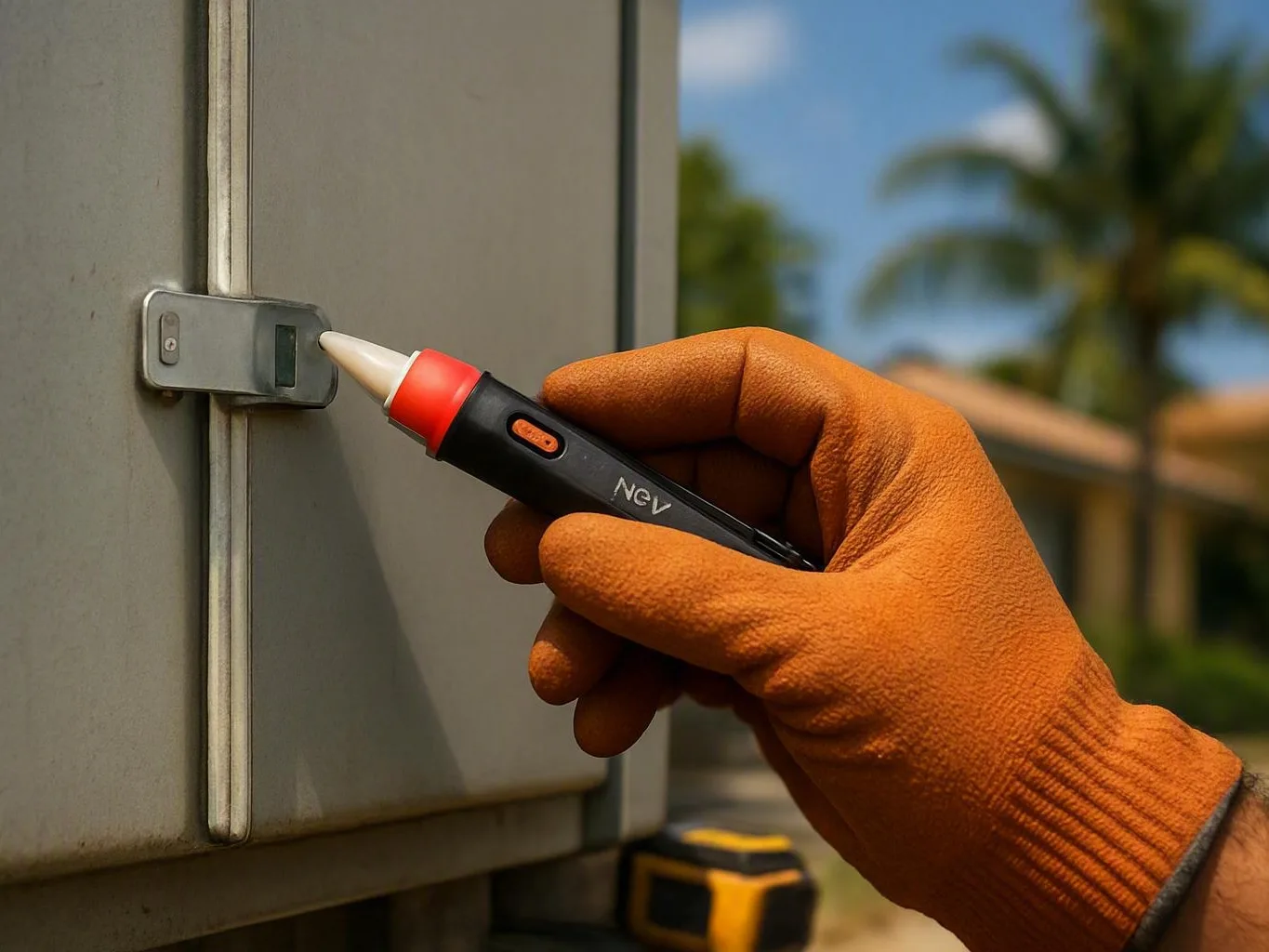
Incorrect sizing can create heat inside a conductor, terminal, junction box, or electrical panel. A wire that's too small for its load may cause voltage drop. It may also cause dim lights, equipment problems, insulation damage, or fire risk. A wire larger than needed isn't automatically dangerous. Its terminals, breaker, conduit, boxes, and installation method must still match the circuit design.
Wire gauge also affects performance. A long run to an air-conditioning unit or detached structure can lose enough voltage. This loss can affect motor starting and operation, even when the circuit doesn't trip. Correct sizing balances ampacity, voltage drop, equipment instructions, and overcurrent protection. The National Electrical Code provides rules for these decisions. Local authorities may apply adopted editions and amendments.
When Wire Gauge Matters Most?
Gauge becomes especially important during new wiring, rewiring, panel changes, and circuit additions. It matters when you replace a fuse or breaker. It also matters when you install a dedicated circuit. Gauge matters when you extend a branch circuit or connect equipment with high starting current. The existing wire must be identified before changing a protective device. A larger breaker on smaller wire can remove needed protection.
Long distances, hot spaces, packed conduits, and outdoor installations deserve extra attention. Miami installations may face high ambient temperatures, moisture, corrosion, and storm-related damage. These conditions can affect equipment selection and installation details. Before work begins, check the conductor marking and measure the circuit length. Confirm the load, inspect terminations, and compare the design with the adopted electrical code.
How to Evaluate Wire Gauge?
- Read the conductor jacket or cable marking and confirm the AWG size, material, insulation type, and temperature rating.
- Compare the expected load with the conductor ampacity after applying temperature and installation adjustments.
- Check whether the circuit breaker or fuse matches the conductor size and equipment instructions.
- Estimate voltage drop on long runs, especially for motors, air-conditioning equipment, pumps, and electric vehicle equipment.
- Inspect terminals and splices for compatibility with copper, aluminum, conductor size, and approved connectors.
Related Concepts Compared
Wire Gauge vs. Ampacity
Wire gauge describes conductor size. Ampacity describes the maximum current a conductor can carry under stated conditions.
Wire Gauge vs. Cable Size
Wire gauge usually identifies one conductor. Cable size may describe a complete cable, including conductor count, gauge, insulation, and grounding wire.
Wire Gauge vs. Voltage Drop
Wire gauge affects voltage drop, but voltage drop is the reduction in voltage along a circuit. It is not another name for conductor size.
Wire Gauge vs. Circuit Breaker Rating
A breaker rating states how much current the protective device allows before opening. The breaker does not determine wire gauge by itself.
Expert Note
The printed AWG number is only one part of conductor selection. Check the conductor material, insulation temperature, terminal ratings, ambient heat, conduit fill, and circuit length before matching a breaker or fuse.
Common Mistakes or Myths About Wire Gauge
- Assuming a higher AWG number means a thicker conductor.
- Replacing a breaker with a larger one without checking the existing wire.
- Ignoring voltage drop on long circuits.
- Treating cable gauge as proof that the entire installation meets code.
- Mixing copper and aluminum conductors without approved connectors and installation methods.
Wire Gauge in Practice: A Real-World Example
A 20-amp kitchen branch circuit may use 12 AWG copper conductors when the installation conditions support that choice. If the same circuit serves equipment far from the panel, the electrician may review voltage drop and select a larger conductor. The breaker, terminals, boxes, and cable must remain compatible with the final design.
Sources & Further Reading on Wire Gauge
Related Terms
Ampacity
Ampacity is the maximum continuous current, measured in amperes, that a conductor can carry safely under…
Branch Circuit
Branch Circuit is the wiring section that carries electricity from a circuit breaker or fuse to…
Electrical Load Calculation
Electrical Load Calculation is a structured estimate of the electrical demand a building or circuit may…
Overcurrent Protection
Overcurrent Protection is a safety method that limits electrical current when a circuit carries more electricity…
Earth Electric
Have Questions About Wire Gauge?
Contact Earth Electric for practical guidance on Wire Gauge and related 24 hour electrician work in Miami.