
What is a Kilowatt?
Kilowatt is a unit of power equal to 1,000 watts. Electrical power describes how quickly a device uses or transfers energy. A kilowatt measures the operating rate of appliances, motors, heaters, generators, and electrical services. Energy consumption is commonly recorded in kilowatt-hours. Which represent one kilowatt operating for one hour.
Quick Facts About Kilowatt
Category
Electrical power unit
Formula
Power equals voltage multiplied by current
Measured by
Wattmeter or electrical meter
Common confusion
Kilowatt measures power, not accumulated energy
Also called
kW
Often discussed with
Electrical Service Upgrade
Key Takeaways About Kilowatt
- One kilowatt equals 1,000 watts of electrical power.
- Power ratings show how quickly equipment uses or produces energy.
- A kilowatt-hour measures energy use over a period of time.
- Voltage and current combine to determine electrical power.
- Load calculations use kilowatts to size circuits and electrical services.
Understanding Kilowatt

Kilowatt is a unit of power that equals 1,000 watts. Power describes the rate at which electrical energy is used, transferred, or produced. A space heater rated at 1.5 kilowatts draws power faster than a 0.8-kilowatt heater. Both operate under their stated conditions.
Related glossary terms: kW, Voltage, Amperage.
The term appears on appliance labels, generator specifications, solar equipment, and utility documents. A kilowatt is written as kW, with a lowercase k and uppercase W. Kilowatts describe the size of an electrical load. Kilowatt-hours describe the amount of energy consumed over time.
How Kilowatt Works, Is Measured, or Is Used?
For a direct-current circuit, calculate power in kilowatts this way. Multiply voltage by current in amperes, then divide the result by 1,000. A 120-volt load drawing 10 amperes uses 1.2 kilowatts. Alternating-current equipment may also require a power factor adjustment. This applies especially to motors, compressors, and other inductive loads.
An electrical meter measures power or records energy use, depending on the meter type. To find energy consumption, multiply the equipment's kilowatt rating by its operating hours. For example, a 2-kilowatt heater operating for three hours uses 6 kilowatt-hours. Thermostatic controls may cycle the heater and reduce actual use.
- Power in kilowatts equals watts divided by 1,000.
- Energy in kilowatt-hours equals kilowatts multiplied by operating hours.
- Multiple loads may operate at different times. A load calculation must consider demand and operating conditions.
Why Kilowatt Matters?
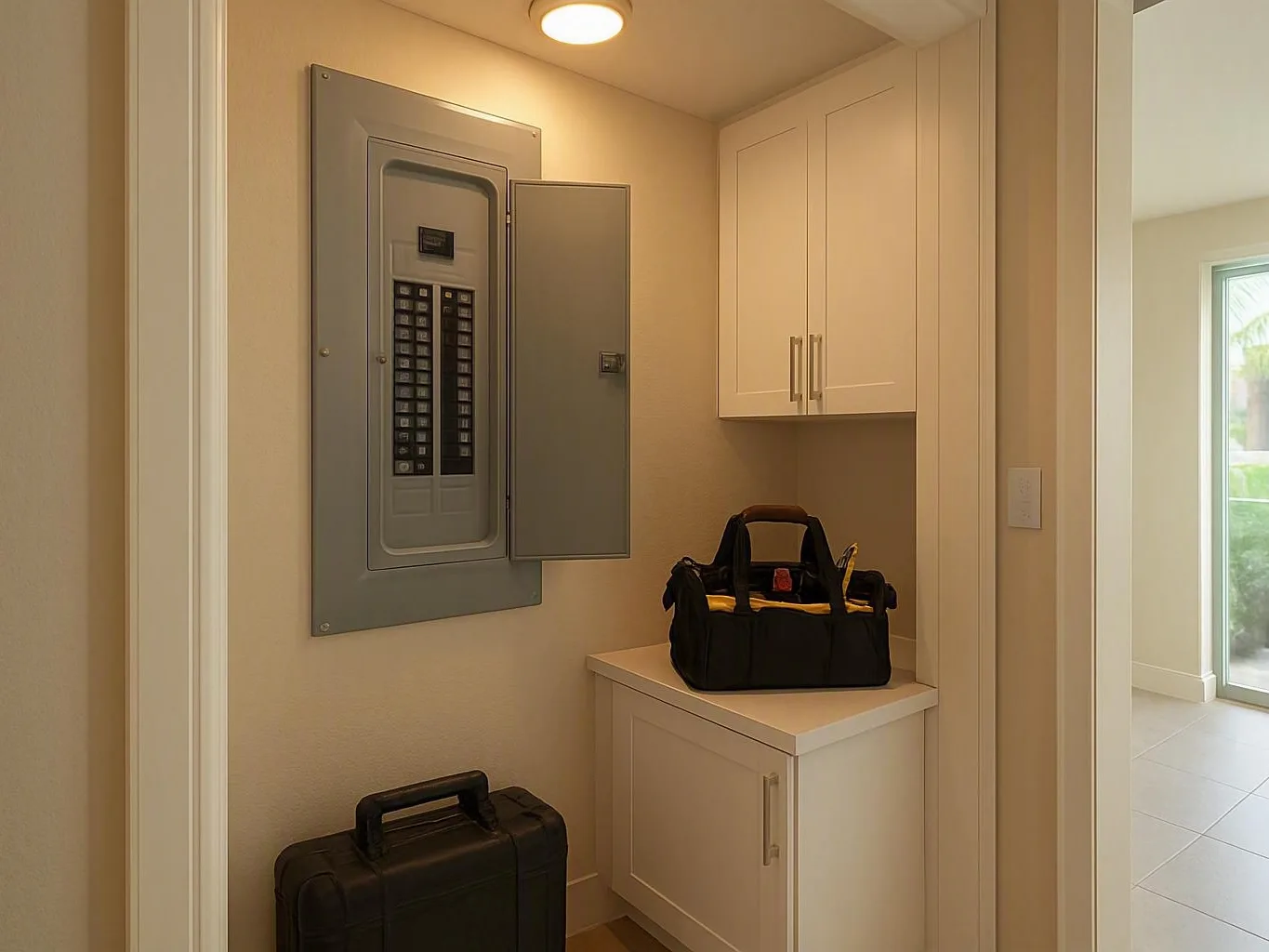
Kilowatt ratings help determine if a branch circuit, panelgenerator, or service can support equipment. They also help assess safe operation. A load that exceeds circuit capacity can trip.overcurrent protection device. It can also overheat wiring if protection is missing or incorrectly sized. The rating also helps compare equipment capacity and expected operating cost.
Electrical planning depends on the difference between connected load and actual demand. A residence may have many appliances with kilowatt ratings. Those appliances don't always run at the same time. Electricians use equipment data and measured conditions to assess the expected load. They also use applicable electrical code rules before installing or modifying circuits.
When Kilowatt Matters Most?
Kilowatt becomes especially important when you add an air conditioner, electric water heater, or range. It also matters for a pool pump, EV charger, generator, or solar system. These loads may require a dedicated circuit, larger conductors, new overcurrent protection, or a service capacity review. Equipment with motors can also draw more power during startup than during normal operation.
Check the nameplate rating before selecting a generator or planning an electrical upgrade. Compare the starting and running requirements. Confirm the available voltage. Account for other equipment that may operate at the same time. In Miami, local permitting and inspection requirements may apply to service changes, generator connections, and other electrical work. The load calculation should match the installed equipment and the approved design.
How to Evaluate Kilowatt?
- Read the equipment nameplate and record its rated kilowatts, voltage, and current.
- Compare the calculated load with the circuit rating and overcurrent protection.
- Check whether motors or compressors have higher starting requirements.
- For energy use, multiply the kilowatt rating by actual operating hours.
- Confirm that generator or service sizing accounts for simultaneous loads.
Related Concepts Compared
Kilowatt vs. Watt
A watt is the basic unit of electrical power. One kilowatt equals 1,000 watts.
Kilowatt vs. Kilowatt-hour
A kilowatt-hour measures energy used over time. Not the rate of power use. A 1-kilowatt load running for two hours consumes 2 kilowatt-hours.
Kilowatt vs. Kilovolt-ampere
A kilovolt-ampere measures apparent power in alternating-current systems. Kilowatts measure real power, and the two values differ when power factor is below one.
Kilowatt vs. Ampere
An ampere measures electrical current. Current and voltage combine to determine power in a circuit.
Expert Note
Nameplate kilowatts describe rated operation, not always actual consumption. Motors and compressors may draw higher current during startup. While thermostats and variable-speed controls reduce average demand. Generator sizing should account for both running load and starting load.
Common Mistakes or Myths About Kilowatt
- Treating kilowatts and kilowatt-hours as interchangeable terms.
- Sizing a generator from running watts without checking motor starting demand.
- Assuming an appliance always uses its full nameplate kilowatt rating.
- Ignoring voltage and power factor when estimating alternating-current load.
Kilowatt in Practice: A Real-World Example
A 1.5-kilowatt portable heater operating continuously for four hours uses 6 kilowatt-hours. If the heater cycles on and off through a thermostat. Its actual energy use may be lower than that full-time estimate.
Sources & Further Reading on Kilowatt
- National Institute of Standards and Technology, SI Units
- U.S. Energy Information Administration, Measuring Electricity
Related Services
Related Terms
kW
KW is a unit of power equal to 1,000 watts. It measures how quickly electrical energy…
Voltage
Voltage is the electrical force that pushes current through a circuit. Measured in volts, voltage represents…
Amperage
Amperage is the amount of electric current flowing through a circuit or device, measured in amperes…
Electrical Load Calculation
Electrical Load Calculation is a simple estimate of the electrical demand a building or circuit may…
Earth Electric
Have Questions About Kilowatt?
Contact Earth Electric for practical guidance on Kilowatt and related 24 hour electrician work in Miami.