
What is a Voltage?
Voltage is the electrical force that pushes current through a circuit. Measured in volts, voltage represents the difference in electric potential between two points. A source such as a utility service, battery, or generator supplies voltage.
Quick Facts About Voltage
Category
Electrical measurement
Measured by
Volts, symbol V
Formula
V = I × R
Used for
Moving current through electrical circuits
Common confusion
Voltage is not the same as amperage
Also called
Electrical potential difference, Electric potential
Key Takeaways About Voltage
- Voltage measures electrical potential difference between two points in a circuit.
- The volt is the standard unit used to measure voltage.
- Higher voltage can move the same current through greater resistance.
- Equipment must receive its rated voltage to operate safely and correctly.
- A multimeter measures voltage between two selected points.
Understanding Voltage

Voltage is the difference in electrical potential between two points. This difference creates the force that moves electric current through a circuit. The standard unit's the volt, represented by the letter V. A battery, generator, utility service, or other power source can create voltage.
Related glossary terms: Amperage, Ohm's Law, Line Voltage.
Voltage needs a complete path before current can flow. A household receptacle may have voltage between its hot and neutral conductors. This can happen when no appliance is connected. A device draws current only after it forms a working circuit. The amount of current depends on voltage, resistance, and the device’s design.
How Voltage Works, Is Measured, or Is Used?
Electricians measure voltage with a multimeter or another rated test instrument. The meter probes touch two points. These points may be hot and neutral, hot and ground, or within equipment. The reading shows the potential difference between those points. You must interpret voltage readings with the circuit type and expected rating. You must also consider the test conditions.
Ohm’s law describes a basic relationship between voltage, current, and resistance. The formula is V = I × R. In this formula, V is voltage. I is current in amperes. R is resistance in ohms. A 120-volt load with 12 ohms of resistance would draw 10 amperes. This applies under ideal conditions. Real circuits also experience voltage drop in conductors and connections.
Electrical systems may use different voltage arrangements. A typical North American dwelling has nominal 120-volt circuits. It also has 120/240-volt service. The actual measured value changes with load and utility conditions. Motors, air-conditioning systems, water heaters, and other equipment may require specific voltage. A dedicated circuit supplies this voltage. The equipment nameplate and installation instructions identify the required value.
Why Voltage Matters?
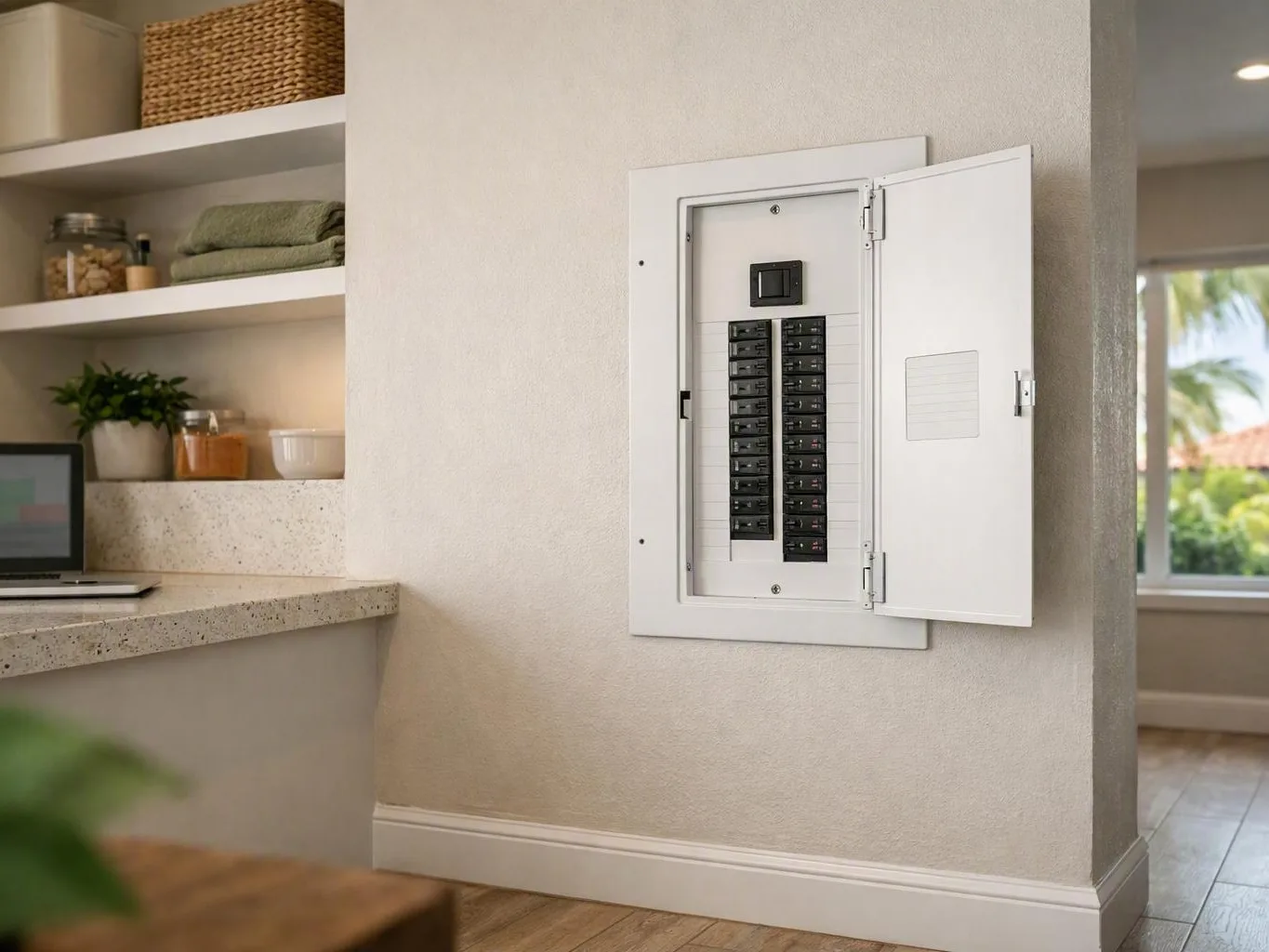
Correct voltage helps equipment start, run, and control heat as designed. Low voltage can cause dim lights, motor overheating, nuisance shutdowns, or poor performance. Excess voltage can damage insulation, electronics, heating elements, and motors. Loose connections, overloaded conductors, utility problems, and damaged equipment can cause abnormal readings.
Voltage also affects safety decisions. A circuit may show voltage even when a switch is off. The switch may interrupt only one conductor. Another energized path may remain. A qualified person must identify the circuit and isolate the energy source. That person must verify no voltage exists before working on exposed parts. Test instruments must have suitable ratings for the system being checked.
When Voltage Matters Most?
Voltage becomes especially important during electrical troubleshooting, equipment installation, and service changes. A technician may compare readings at the panel, receptacle, disconnect, and equipment terminals. These readings can help locate voltage drop or an open connection. Differences between hot-to-neutral and hot-to-ground readings can reveal wiring faults. They can also reveal neutral problems or grounding issues.
Voltage also matters during generator installation, panel work, and inspections. The source, circuit conductors, overcurrent protection, and connected equipment must be compatible. In Miami, storm damage and water intrusion can affect connections and equipment. Testing may need to cover normal operation after an outage. It may also need to check equipment condition. Never treat a voltage reading as proof that a circuit is safe to touch. Always follow proper isolation procedures.
How to Evaluate Voltage?
- Compare the measured voltage with the equipment nameplate and circuit rating.
- Check whether voltage is stable under load, not only when the circuit is idle.
- Measure hot-to-neutral and hot-to-ground where the circuit design allows.
- Inspect for voltage drop, heat, flickering, loose connections, or repeated breaker trips.
- Confirm that the meter and test leads have ratings suitable for the electrical system.
Related Concepts Compared
Voltage vs. Amperage
Amperage measures the amount of current flowing through a circuit. Voltage provides the electrical pressure that helps move that current.
Voltage vs. Wattage
Wattage measures electrical power, or the rate of energy use. For a simple load, power equals voltage multiplied by current.
Voltage vs. Resistance
Resistance opposes current flow and is measured in ohms. Voltage, current, and resistance are linked by Ohm’s law.
Voltage vs. Line Voltage
Line voltage usually means the voltage supplied by a utility or distribution system. Voltage is the broader term for potential difference in any electrical circuit.
Expert Note
A voltage reading is meaningful only when you know where the probes are placed and what the circuit should provide. A normal reading at a receptacle does not rule out a loose neutral, voltage drop under load, or a fault farther downstream.
Common Mistakes or Myths About Voltage
- Confusing voltage with amperage, which measures current flow.
- Assuming a dead-looking device has no voltage present.
- Testing only without a load when voltage drop is suspected.
- Using a meter on the wrong function or voltage range.
- Replacing a breaker without finding the cause of abnormal voltage.
Voltage in Practice: A Real-World Example
A 120-volt receptacle may read close to its expected value with a small lamp connected. If the reading falls sharply when an air compressor starts, the circuit may have excessive voltage drop, a weak connection, or an undersized supply. Further testing under load can help identify the cause.
Sources & Further Reading on Voltage
Related Services
Related Terms
Amperage
Amperage is the amount of electric current flowing through a circuit or device, measured in amperes…
Ohm's Law
Ohm's Law is the relationship between voltage, current, and resistance in an electrical circuit. The law…
Line Voltage
Line Voltage is the electrical potential supplied to a building, circuit, or device from a power…
Fault Current
Fault Current is the electrical current that flows through an unintended path after insulation fails, conductors…
Earth Electric
Have Questions About Voltage?
Contact Earth Electric for practical guidance on Voltage and related 24 hour electrician work in Miami.