
What is Ohm's Law?
Ohm's Law is the relationship between voltage, current, and resistance in an electrical circuit. The law states that current equals voltage divided by resistance, written as I = V/R. Voltage is measured in volts, current in amperes, and resistance in ohms. The relationship helps predict circuit behavior and select suitable electrical components.
Quick Facts About Ohm's Law
Category
Electrical measurement principle
Formula
V = I × R
Measured by
Digital multimeter
Used for
Circuit analysis and troubleshooting
Common confusion
Voltage is not the same as current
Also called
V = I × R, I = V/R
Key Takeaways About Ohm's Law
- Ohm's Law connects voltage, current, and resistance in a circuit.
- The three common forms are V = I × R, I = V/R, and R = V/I.
- Higher resistance reduces current when voltage stays constant.
- A multimeter can measure voltage, current, or resistance during testing.
- The relationship applies best to ohmic materials under stable conditions.
Understanding Ohm's Law
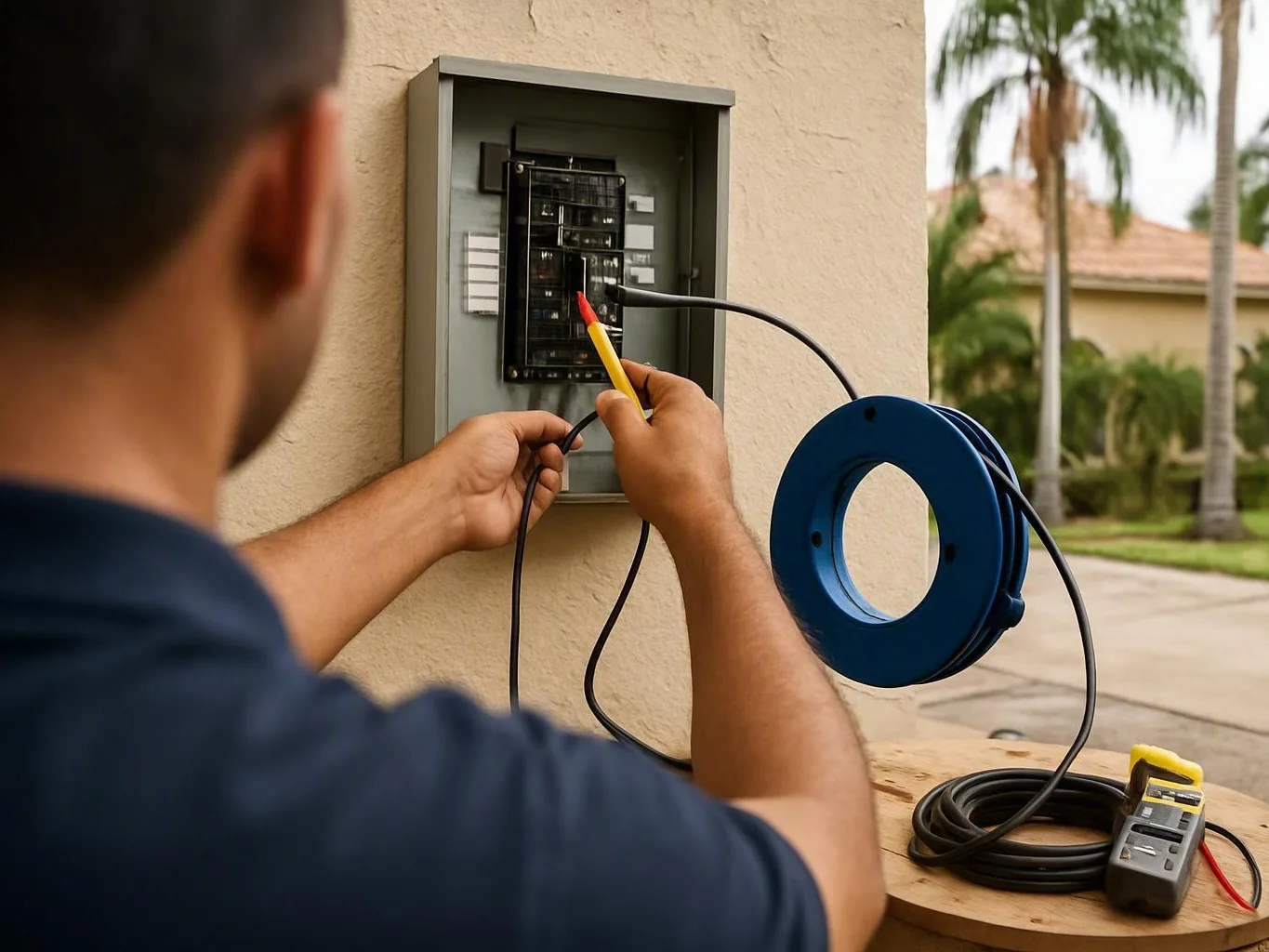
Ohm's Law describes the connection between voltage, current, and resistance in an electrical circuit. Voltage provides the electrical pressure that moves charge. Current describes the rate of charge flow. Resistance opposes that flow.
Related glossary terms: Voltage, Amperage, Ohm.
The basic equation is V = I × R. V represents voltage in volts. I represents current in amperes. R represents resistance in ohms. The same relationship can be rearranged to find current, I = V/R, or resistance, R = V/I. These forms describe the same electrical relationship from different starting points.
How Ohm's Law Works, Is Measured, or Is Used?
To apply the law, identify two known values and calculate the third. For example, a 120-volt source connects to a 24-ohm load. It produces 5 amperes because 120 divided by 24 equals 5. If resistance rises to 48 ohms, voltage remains 120 volts. Current falls to 2.5 amperes.
A digital multimeter measures voltage, resistance, or current. Each setting requires a different connection method. Voltage is measured across two points. Resistance is measured with power turned off. Current is measured through the circuit. A technician also considers temperature, conductor length, and the load's rated values. These factors can change resistance or affect safe operation.
- Use V = I × R when voltage, current, and resistance must be compared.
- Use I = V/R to estimate current before selecting circuit conductors or protection.
- Use R = V/I to identify unexpected resistance during troubleshooting.
Why Ohm's Law Matters?
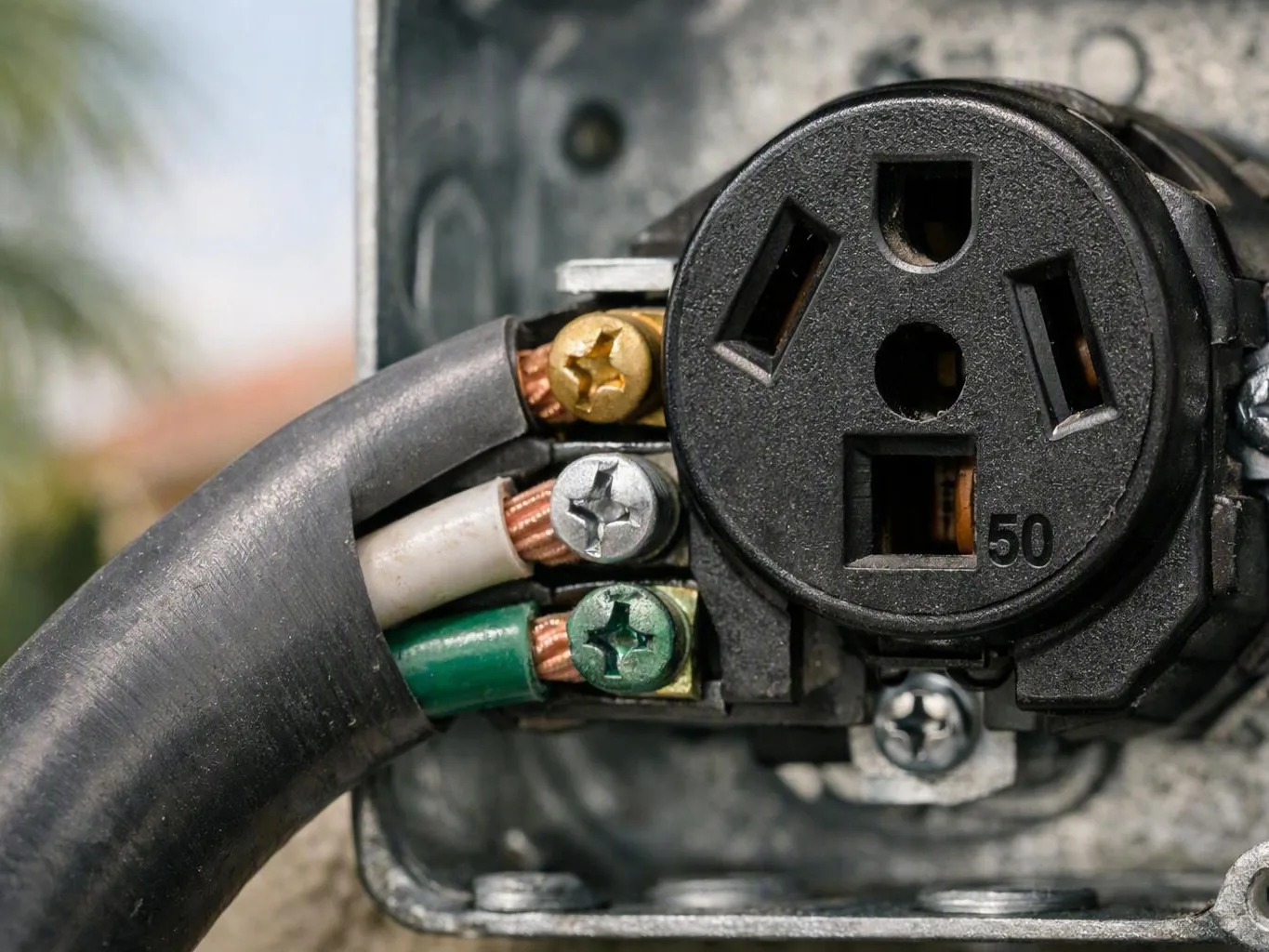
Ohm's Law helps explain why a circuit may draw too much current. It can also explain low voltage or low output. A damaged conductor, loose connection, or failing load can change resistance. These problems can create abnormal readings. Comparing calculated values with measured values gives a technician a clear way to locate the problem.
The law also supports decisions about wire size, overcurrent protection, and equipment ratings. For example, a heater with lower resistance can draw more current. The supply voltage stays the same. That current must stay within the circuit's capacity. This includes the conductors and protective devices.
When Ohm's Law Matters Most?
Ohm's Law becomes especially useful during electrical troubleshooting, new circuit design, and equipment testing. It can help identify an open circuit, a short circuit, or an unexpected load. This can happen before a component is replaced. The calculation is simple. The measurement must be taken safely with the correct meter setting.
The law doesn't describe every device perfectly. Incandescent lamps, motors, electronic power supplies, and other non-ohmic loads may change resistance. Temperature, speed, or operating conditions can cause these changes. In those cases, a single resistance value may not predict the device's behavior. This applies across its full operating range.
How to Evaluate Ohm's Law?
- Check whether the voltage, current, and resistance values use compatible units.
- Compare calculated current with the circuit conductor and breaker ratings.
- Confirm that resistance measurements are taken with the circuit de-energized.
- Look for a large difference between expected and measured values.
- Ask whether the device changes resistance during heating, starting, or normal operation.
Related Concepts Compared
Ohm's Law vs. Electrical Resistance
Resistance is one part of Ohm's Law, not a synonym for the whole relationship. Resistance describes opposition to current and is measured in ohms.
Ohm's Law vs. Power Law
Power law calculations use watts, voltage, and current, such as P = V × I. Ohm's Law focuses on voltage, current, and resistance.
Ohm's Law vs. Kirchhoff's Laws
Kirchhoff's laws describe how current and voltage behave at circuit junctions and around loops. Ohm's Law describes the relationship within a component or load.
Expert Note
A resistance reading does not always predict operating current. Motors, lamps, and electronic equipment can change their electrical behavior during startup or heating, so compare measurements with the device's rated data and operating state.
Common Mistakes or Myths About Ohm's Law
- Confusing voltage with current.
- Measuring resistance while circuit power remains on.
- Connecting a current meter across a voltage source.
- Assuming every electrical device has constant resistance.
- Ignoring wire and protective-device ratings after calculating current.
Ohm's Law in Practice: A Real-World Example
A 120-volt lighting circuit contains a 60-ohm resistive load. Ohm's Law gives a current of 2 amperes because 120 divided by 60 equals 2. A technician can compare that result with the circuit's measured current and protective-device rating.
Sources & Further Reading on Ohm's Law
- OpenStax, College Physics 2e, Ohm's Law, Resistance, and Resistors
Related Services
Related Terms
Voltage
Voltage is the electrical force that pushes current through a circuit. Measured in volts, voltage represents…
Amperage
Amperage is the amount of electric current flowing through a circuit or device, measured in amperes…
Ohm
Ohm is the SI unit of electrical resistance, identified by the symbol Ω. It measures how…
Electrical Load Calculation
Electrical Load Calculation is a structured estimate of the electrical demand a building or circuit may…
Earth Electric
Have Questions About Ohm's Law?
Contact Earth Electric for practical guidance on Ohm's Law and related 24 hour electrician work in Miami.