What to Do About Water-Damaged Electrical Wiring After a Storm or Flood
A water-damaged electrical system needs fast shutoff, expert checks, and safe repairs. Never restore power before an electrician checks the system. If water reaches an outlet, panel, wire, appliance, or generator connection, stay away. Don’t reset breakers or touch standing water. An electrician should test the wiring and replace damaged parts. They’ll check the grounding, insulation, connections, and transfer switch. Never use a generator in wet conditions. Never connect one without a proper transfer switch. Take photos for insurance from a safe place. Follow utility directions and arrange emergency electrical service before restoring power.
Get a Free Estimate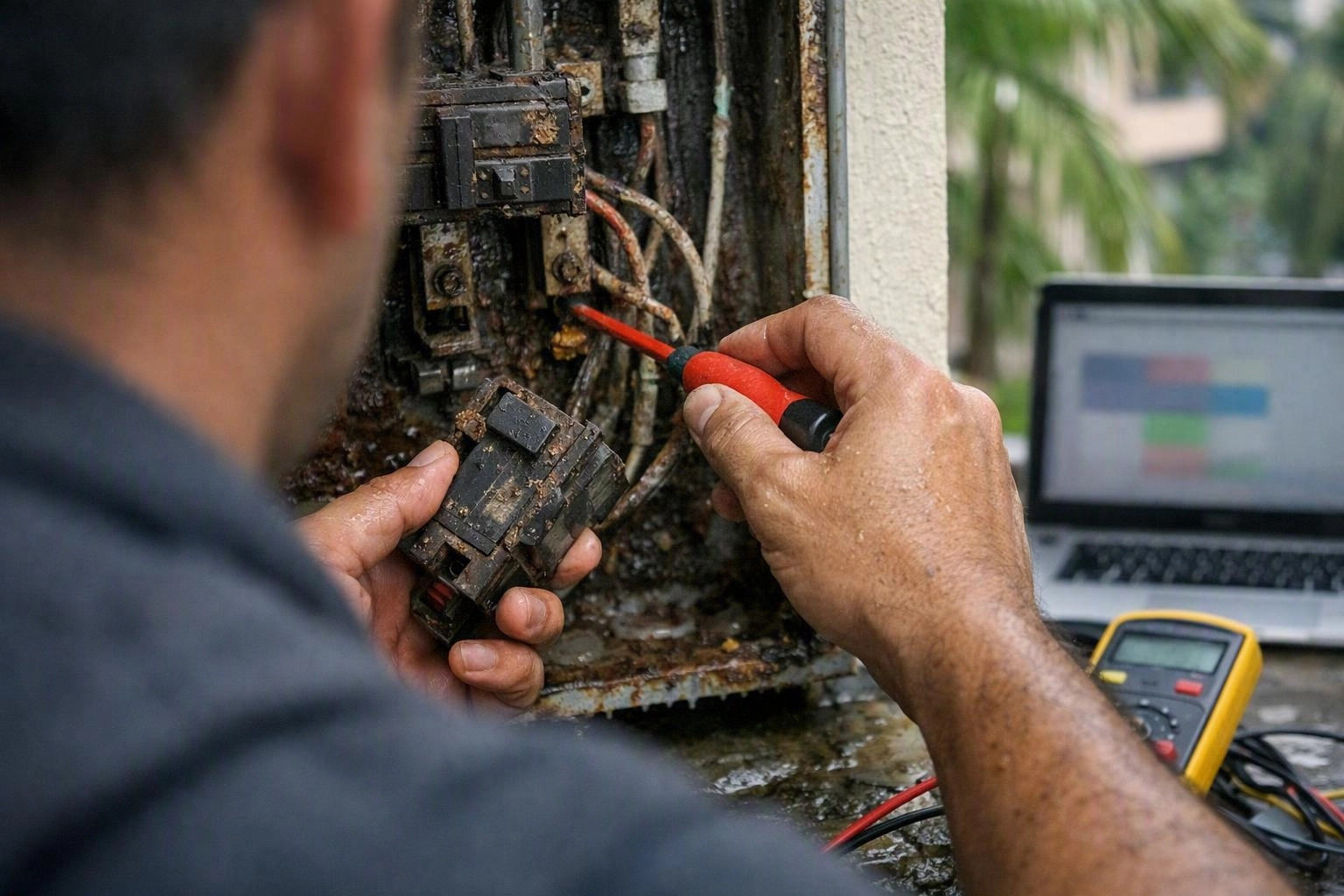
What Should You Do When Water Reaches an Electrical Outlet?
An outlet exposed to water creates a shock and fire hazard. Don’t touch the outlet, appliance, breaker, or standing water. Leave the area and keep others away. Call emergency electrical service. Only a qualified electrician or utility worker should decide when power is safe.
Never assume a dry-looking outlet is safe. Water can travel inside the box, wires, and appliances. A breaker may trip, but that doesn’t prove the whole system is safe. A main disconnect may isolate only part of the system.
Earth Electric helps Miamihouseholds after storms. We first isolate unsafe areas. Then we arrange.electrical inspection before repairs or power restoration.
Signs of Water Damage in Electrical Wiring and Equipment
Water-damaged wiring may show stains, rust, burning smells, buzzing, or flickering lights. Breakers may trip again and again. Outlets may feel warm or show moisture. These signs can mean damaged insulation, short circuits, or hidden sparks. Stop using the circuit and arrange.electrical inspection.
Some damage is easy to see. Other damage stays hidden inside wires and connections. Saltwater, mud, chemicals, and sewage can make flood damage worse.
Checks often start at the outlet, switch, appliance, or panel. Then they move through the connected circuits. Don’t reset breakers as a test. A qualified electrician can find the full problem.
How to Check Electrical Damage After a Storm?
An electrical inspection checks the service entrance, panel, circuits, outlets, switches, grounding, wiring, and equipment. It looks for water, rust, dirt, and surge damage. Homeowners should only look from a dry place. An electrician must test and approve repairs.
Follow utility directions first. Confirm that the property is safe to enter. From a dry place, look for water lines, loose covers, broken conduit, or damaged service equipment. Don’t remove a panel cover or reach behind equipment.
The electrician traces each affected circuit from the panel to outlets, lights, appliances, and outdoor devices. Tests may check wire paths, insulation, polarity, grounding, and ground faults.
Lightning and power surges can damage equipment without flood marks. The check should include electronics, motors, HVAC equipment, disconnects, and generator controls. Rust can keep growing after surfaces dry.
Recovery may take one day or several weeks. The time depends on access, utility approval, drying, parts, and circuit damage. This is only an estimate. Keep the property without power until tests show it’s safe.
Good records include photos, water depth, water type, rooms affected, equipment labels, test results, and removed items. These records help with insurance, cleanup, utility work, and repairs.
When a Professional Electrical Evaluation Is Necessary?
A professional check is needed when water reaches wiring, an outlet, panel, service equipment, appliance, generator, or ground part.
You also need a check after a breaker trip, burning smell, flickering, rust, or heat damage. Heat can weaken wires and terminals. Our team sorts parts that may be cleaned from parts that need replacement.
Don’t use a moisture meter, hair dryer, or household tester to approve power. These tools can’t check hidden wires, ground paths, service lines, or dirty parts.
Can a Flooded Electrical Panel Be Repaired or Must It Be Replaced?
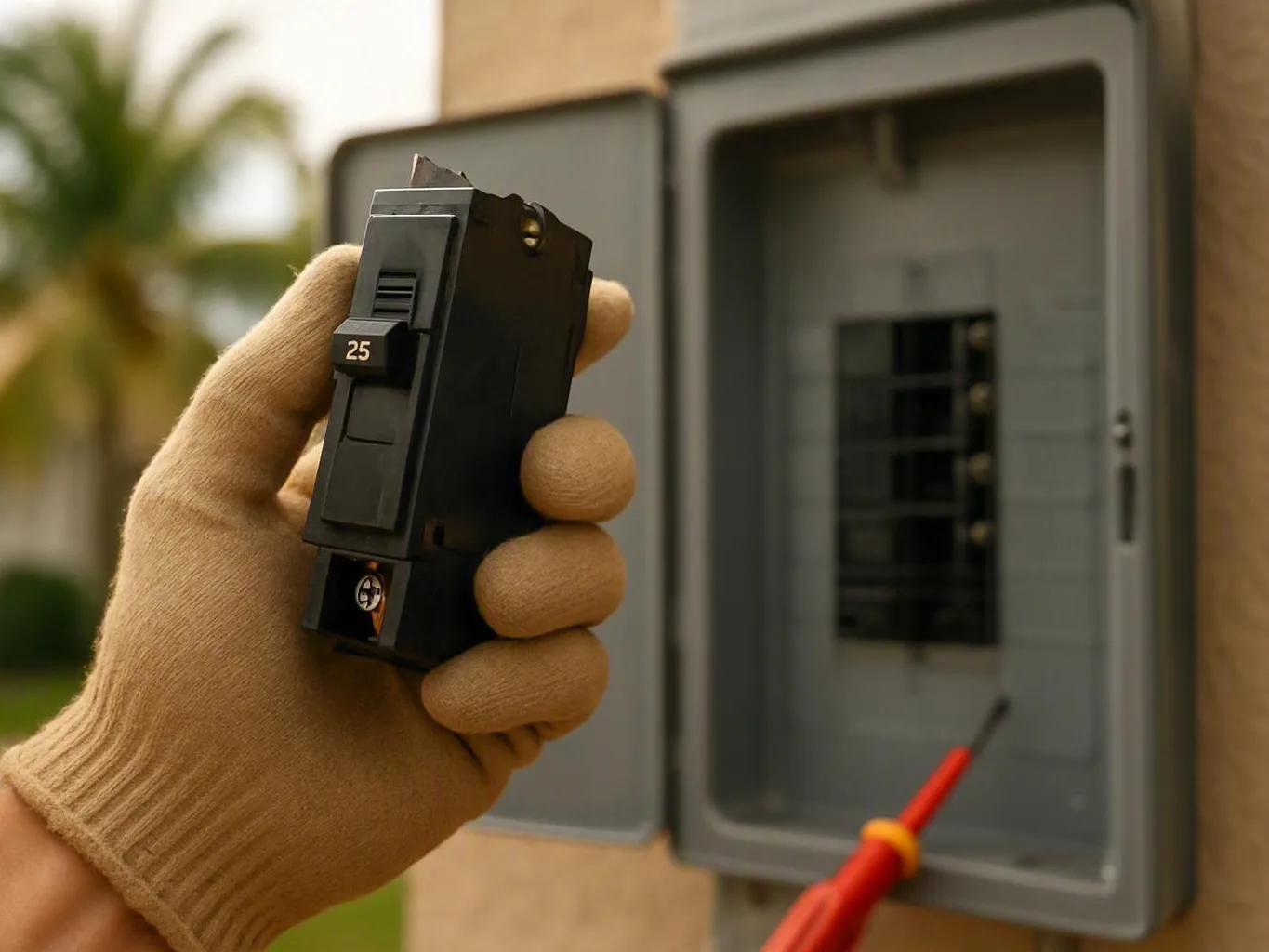
A flooded electrical panel often needs replacement. Water, mud, salt, and other dirt can damage breakers, busbars, terminals, and insulation. Drying alone doesn’t make the panel reliable. An electrician should inspect it and replace unsafe service equipment.
A panel isn’t safe just because it looks dry. Water may remain behind breakers or inside the panel. Dirt can harm contact points. Rust may later cause heat, trips, ground faults, or fire.
The decision depends on several factors:
Some parts may be cleaned and checked. Replacement is common when floodwater enters service equipment. A professional works with the utility to shut off power. They check wire condition, ratings, breakers, grounding, and connections.
Replacing the panel alone may leave hidden damage. The work should include connected circuits, wet boxes, outdoor equipment, and submerged appliances.
Don’t open the panel, brush away mud, or install new breakers as a test. Panel work needs controlled electrical service and expert review.
Is It Safe to Use a Generator After Water Damage?
A generator is safe only when it’s dry, undamaged, outdoors, and connected through a checked transfer switch. Never use one in a flood or closed space. Never power wet wiring or feed power through an outlet. A technician should check the generator first.
Keep a portable generator outdoors in a dry, open area. Place it away from doors, windows, vents, and places where gas can collect. Never use it in a garage, basement, shed, porch, or flooded area. Carbon monoxide is invisible and deadly.
A standby generator also needs a check if water reached its case, controls, fuel system, battery, wires, or connection point. Moisture can damage controls even when the engine starts.
The transfer switch keeps generator power separate from utility power. It must match the generator, service, and loads. This prevents backfeeding, which can send power into utility lines.
Never plug a generator into a wall outlet. Don’t connect it to wet wires, a flooded panel, or damaged cords. Don’t use a generator until the home passes inspection.
Our team checks the generator, inlet, wires, grounding, protection, and transfer switch. We explain safe refueling, care, shutdown, and load limits.
Emergency power may support a fridge, medical device, pump, or lights. Use a safe plan and approved equipment. Don’t restore every circuit at once.
Why Storms and Floods Damage Electrical Systems—and How to Prevent It?
Storms and floods damage systems through water, debris, rust, lightning, and power surges. Prevention may include raised equipment, sealed openings, outdoor-rated cases, surge protection, and generator care. A flood-compliance retrofit (an upgrade for flood safety) can reduce risk.
Wind-driven rain can enter roofs, walls, service openings, and loose conduit. Floodwater adds mud, salt, sewage, chemicals, and debris. Lightning and power surges can also damage equipment. These hazards can weaken insulation and cause ground faults.
Common causes include:
Prevention should fit the building, flood risk, equipment, and backup power plan:
Maintenance helps prevent damage. Test emergency equipment as directed. Check outdoor cases and replace broken covers. Keep repair records. Don’t seal equipment in ways that trap heat.
A retrofit can’t prevent all damage. Service rules, building limits, and access needs may restrict changes. The goal is to reduce risk and support safe repairs.
Our crews can review weak spots before the next storm. Earth Electric can also coordinate emergency electrical service and an Electrical Inspection after property damage.
Questions About 24 Hour Electrician
What Should I Do if Water Reaches an Electrical Outlet?
Move away from the outlet and standing water. Don’t touch the outlet, appliance, breaker, or main disconnect in a wet area. Keep people away, follow utility directions, and call emergency electrical service.
Can I Turn on Power After an Electrical Flood?
No. Don’t turn on power after an electrical flood. A qualified electrician or utility worker must isolate damage, test the system, and approve restoration.
Does a Flooded Electrical Panel Need Replacement?
Often, yes. Water, mud, salt, and dirt can damage breakers, busbars, terminals, and insulation. Drying doesn’t prove safety. An electrician should decide if replacement is needed.
How Do I Check Electrical Damage After a Storm?
Only look from a dry, safe place. Watch for water, stains, rust, odors, damaged covers, and tripped breakers. Don’t touch equipment.
Is It Safe to Use a Generator After Water Damage?
Only if the generator is dry, undamaged, and outdoors. It must connect through a checked transfer switch. Never use it in a flood or closed space. Have all equipment checked first.
Keep people away from unsafe circuits after storm or flood damage. Our team can coordinate an electrical inspection, shutoff, generator review, and electrical repair.
Request emergency electrical service
Get a Free EstimateRelated Resources
How Much Does a 24-Hour Emergency Electrician Cost in Miami?
24 hour emergency electrician cost Miami
What It CostsHow Much Does It Cost to Rewire a House in Miami?
house rewiring cost and timeline Miami
How It WorksElectrical Troubleshooting: What the Diagnosis Involves and What It Costs
electrical troubleshooting cost and process
How It WorksElectrical Inspection and Code-Compliance Corrections: Process and Cost Factors
electrical inspection and code compliance correction cost