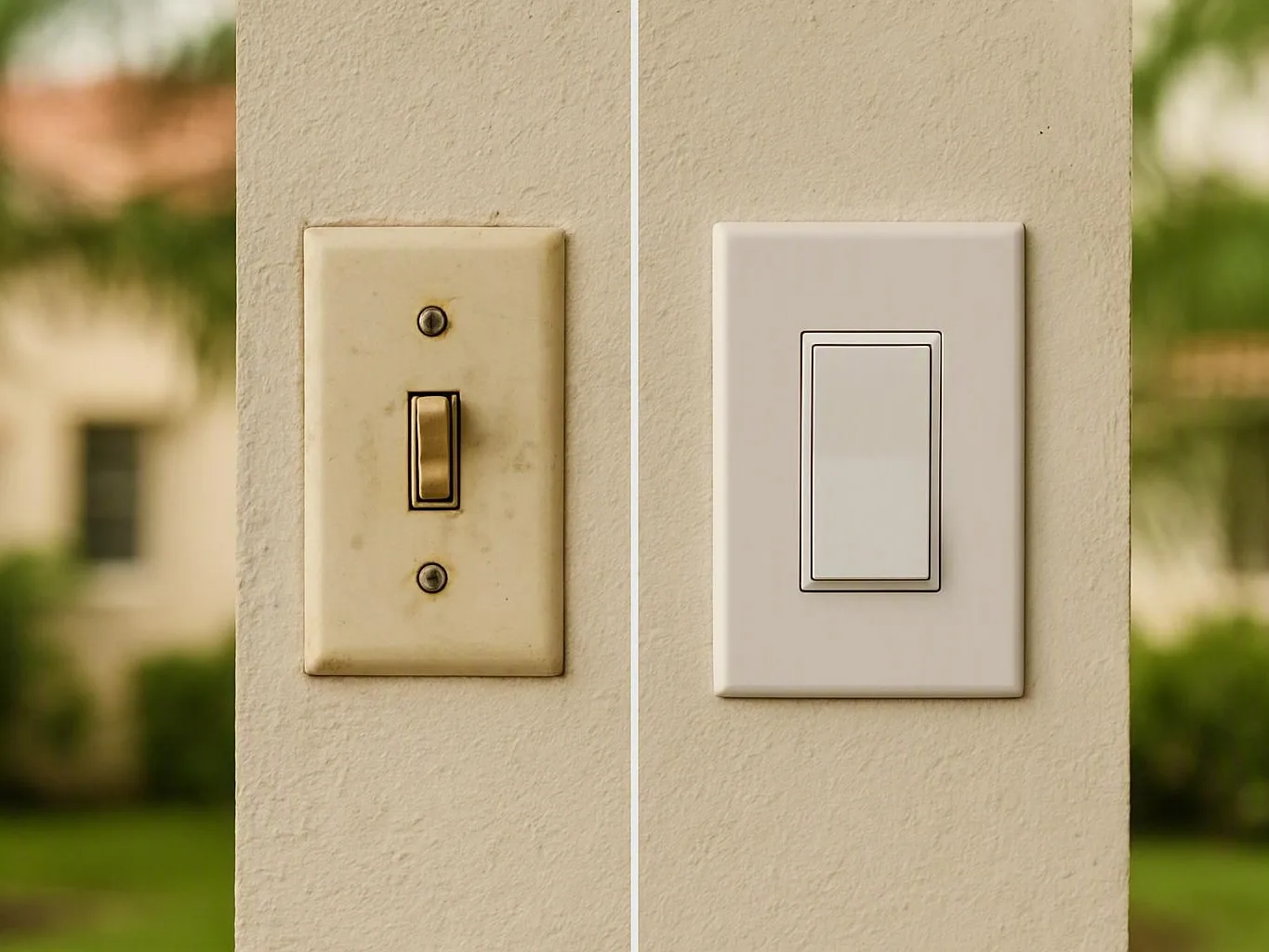
Why an Outlet Is Dead Even When the Breaker Isn’t Tripped
A dead outlet often has a tripped upstream GFCI, a bad receptacle, or loose wiring. The circuit may also have a broken connection. Check nearby GFCI outlets first. Test the outlet with a working device. Look at the panel without removing covers. Stop if you see heat, burning, buzzing, sparks, or damage. Call an electrician if the outlet stays dead. Get help for odd voltage or wiring repairs. The circuit may still hold dangerous electrical energy.
Get a Free Estimate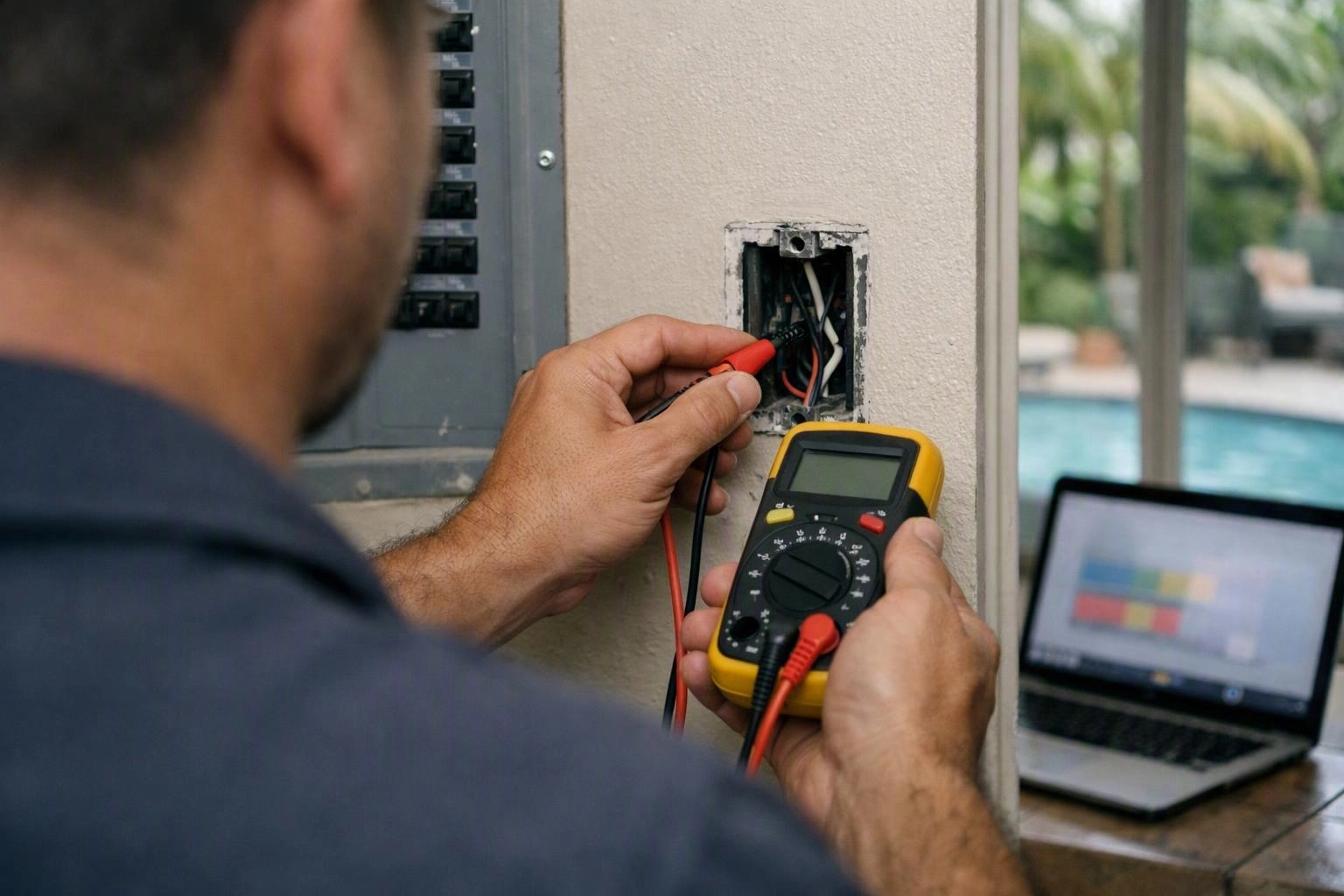
Earth Electric helps homeowners find simple reset issues. We also find faults that need expert care.
One dead outlet may seem simple. Hidden wires can still carry power behind it.
Why Is My Outlet Not Working but the Breaker Isn’t Tripped?
A dead electrical outlet may have no power while the breaker stays on. Common causes include a tripped upstream GFCI, a failed receptacle, or loose wiring. The breaker protects against some overloads and short circuits. It doesn't prove that every outlet has power.
The breaker is only one part of the circuit. Power may pass through several outlets before reaching yours. An earlier failed connection can leave the last outlet dead.
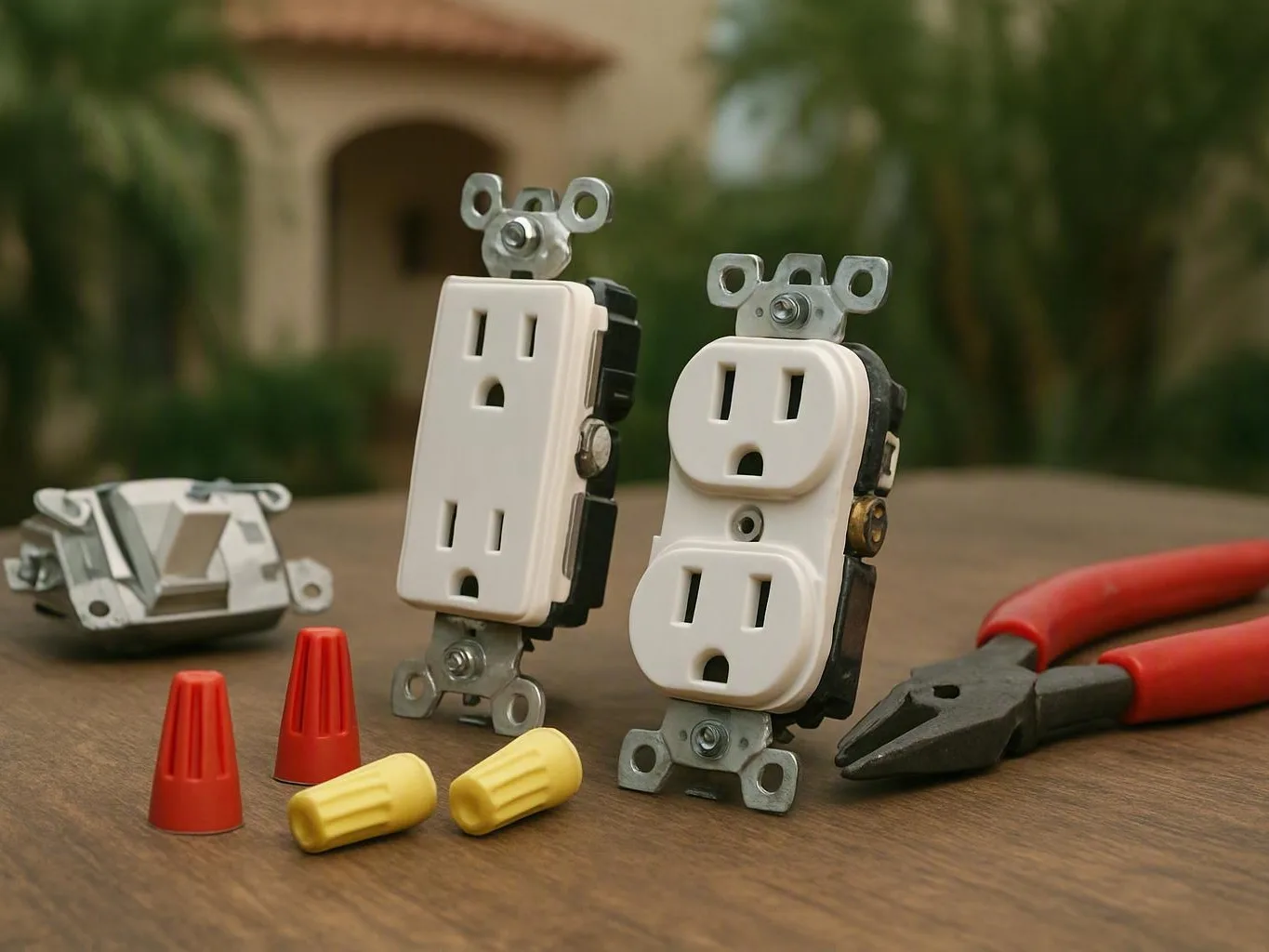
An electrical receptacle is the outlet that powers a plug. Its contacts, screws, and wire connections can wear out. A duplex receptacle may lose power on one side or both sides.
A GFCI outlet can stop power farther along the circuit. GFCI means ground-fault protection. Bathrooms, kitchens, garages, laundry areas, and outdoor spaces often use it.
One GFCI can control an outlet in another room. Moisture increases the risk of electrical shock. GFCI protection helps lower that risk.
An open circuit means electricity can't finish its path. A broken wire, loose connection, or failed receptacle can cause one. An open neutral can cause one too.
The breaker may not trip during an open circuit. No overload or short circuit may exist for it to detect.
Old outlets, heat, moisture, vibration, and heavy use can cause faults. Frequent plugging can wear parts down.
Only one dead outlet often points to that outlet or a nearby connection. Several dead outlets may point to a GFCI or shared circuit problem.
Keep homeowner checks visual and simple. Don't pull the outlet from the wall. Don't remove covers, tighten terminals, or touch exposed wires.
Electrical Troubleshooting is safer with trained help. A professional can find the first failed connection.
What Should I Check When One Outlet Is Dead?
First, test the device and check the panel. Then reset nearby GFCI outlets. Look for visible outlet damage. Don't remove the cover or touch wires. Arrange professional Electrical Troubleshooting if power stays off.
These steps are for checking, not repair. A basic check often takes 5 to 15 minutes. Several rooms on one circuit may take longer to assess.
If an important appliance loses power, move it only when safe. This includes refrigerators, microwaves, sump pumps, and medical devices. Don't use an extension cord as a permanent fix.
Repeated resets can hide a growing fault. They don't fix the cause.
Could Another GFCI Outlet Make My Outlet Stop Working?
Yes. An upstream GFCI outlet can stop a downstream receptacle. The downstream outlet may not have its own reset button. The GFCI watches for a ground fault. It opens the circuit when it finds a harmful power imbalance.
Check nearby bathrooms, kitchens, garages, laundry rooms, utility spaces, and outdoor areas. Press each likely reset button once. Don't force a button that won't reset. Don't use a damaged device.
GFCI protection can reach outlets in different rooms. A kitchen GFCI may control an outlet across the wall. A bathroom GFCI may control one farther along the circuit. Stop if a reset doesn't restore power.
Common Causes of a Dead Outlet with No Tripped Breaker
The main causes include a tripped upstream GFCI, a failed receptacle, loose wiring, and damaged wires. An open neutral can also stop power. One failed connection may affect several outlets while the breaker stays on.
A loose wire can create heat before the breaker reacts. Watch for burn marks, a warm cover, color changes, or a plastic smell.
Don't assume a dead outlet is safe to open. Other wires in the box may still carry voltage. Electrical Repair should trace the circuit and fix the cause.
Replacing only the visible outlet may not solve the problem.
Can a Bad Outlet Have Power at the Breaker?
Yes, a bad outlet can have power at the breaker. A failed receptacle or broken wire may block power at the outlet. Testing live wiring needs proper tools and training.
| Observation | Possible meaning | Safe next step |
|---|---|---|
| Breaker appears on | The breaker may supply the circuit. This doesn't prove outlet power. | Check for a GFCI. Don't open the panel or outlet. |
| Tester gives an unusual reading | A loose neutral, open wire, or other fault may exist. | Stop using the outlet. Request professional testing. |
| Voltage reaches the load side but not contacts | The receptacle or its contacts may have failed. | Have an electrician inspect and replace it if needed. |
| No voltage at the receptacle | An open circuit, GFCI issue, or damaged wire may be upstream. | Use Electrical Troubleshooting. Don't guess at the fault. |
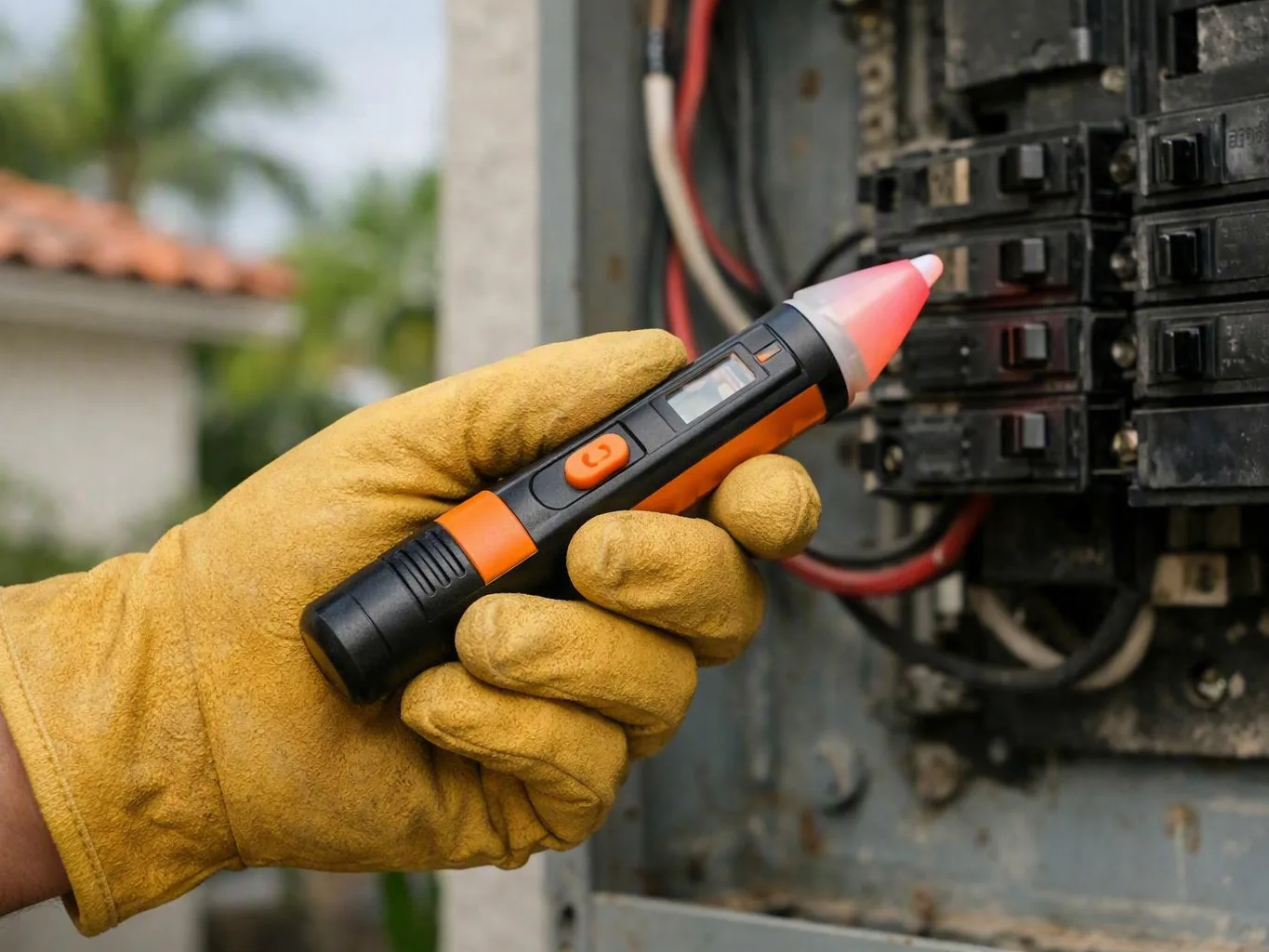
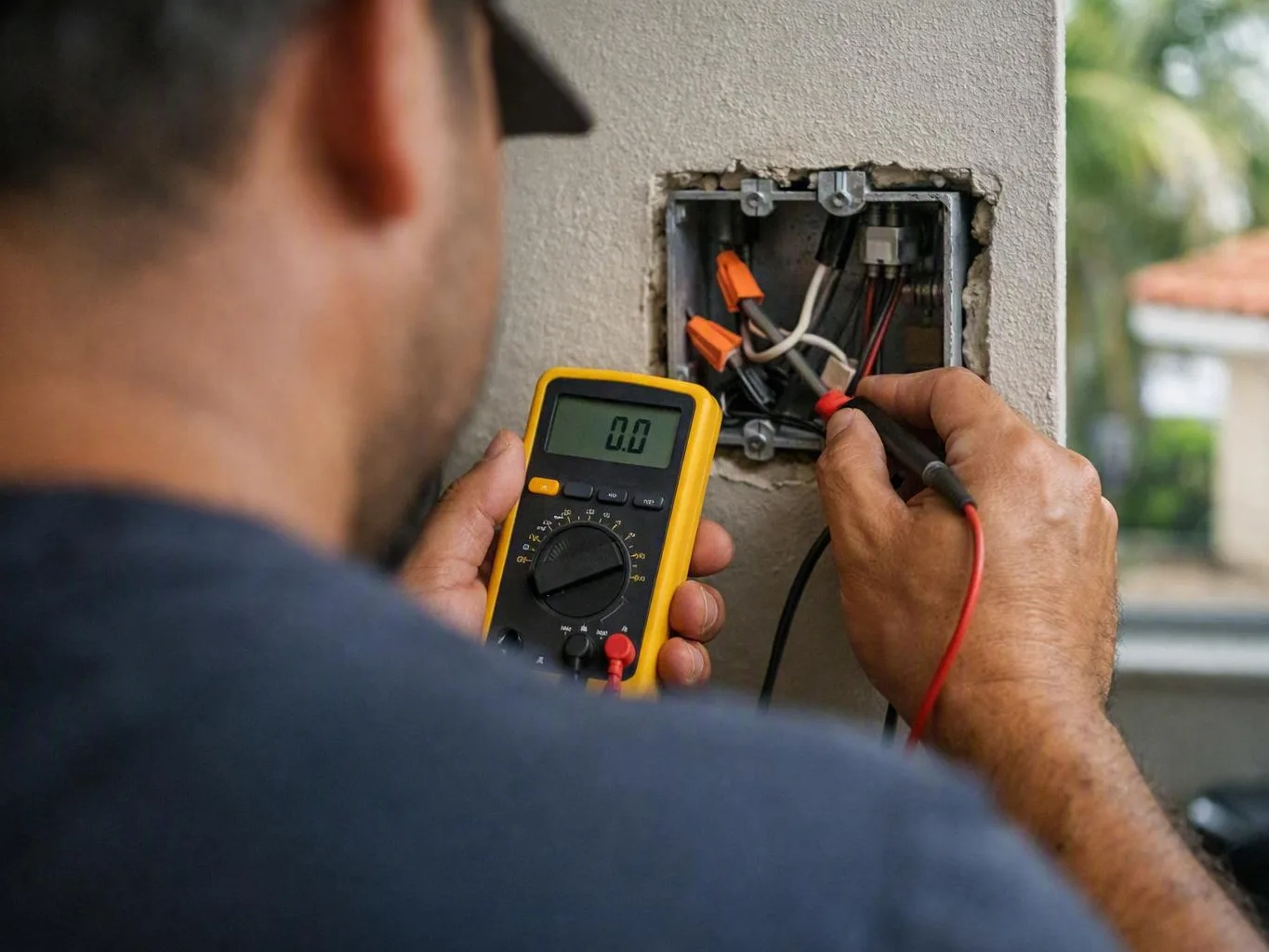
A voltage tester can show power at an outlet. It must be used correctly. Plug-in testers don't replace full circuit testing.
Some faults can cause false or incomplete readings. Never rely on one test alone.
A circuit may include live wires, neutral wires, grounds, and hidden junctions. Our team may handle Electrical Troubleshooting in Miami. The same safety rules apply everywhere.
How Can You Prevent Outlet Failures?
You can lower the risk of outlet failure with simple care. Test GFCI protection often. Avoid overloaded outlets. Replace damaged outlets. Have repeat problems checked.
Prevention can't stop every fault. Old wires, moisture, heat, and hidden damage can still cause trouble.
Cord safety matters too. A loose plug can heat the contacts. A frayed cord can cause a ground fault or short circuit.
Keep furniture away from plugs. Don't run damaged cords under rugs.
Our 24 Hour Electrician service can help with urgent power loss. This includes outages affecting key appliances. It also includes heat, smoke, or problems after normal hours.
Stay cautious during any outage. Turn off equipment if safe. Keep away from damaged areas. Call emergency services if there's a fire.
When Does a Dead Outlet Need an Electrician?
A dead outlet needs an electrician when safe checks don't restore power. Call for heat, burn marks, buzzing, sparks, damage, or repeat trips. A professional can find hidden wiring faults and repair the outlet safely.
Call a licensed electrician if a GFCI reset fails. Call if several outlets are dead. Call if a plug-in tester shows an odd result.
Electrical Troubleshooting is needed for shared circuits and damaged branch wiring.
Stop using the circuit if you see melting, smoke, sparks, a hot cover, buzzing, crackling, moisture, or a burning smell. These signs may point to an arc fault or bad connection.
Don't remove the outlet cover to investigate.
We can inspect the circuit and find an open circuit or loose electrical connection. We can also advise on outlet installation or replacement.
The visible outlet may only show a problem farther upstream.
When safety is unclear, leave the area clear. Arrange qualified help. Leave the home during active smoke or fire. Contact emergency services.
A dead outlet doesn't prove nearby wiring is safe.
Questions About 24 Hour Electrician
Why Is My Outlet Not Working but the Breaker Isn't Tripped?
The usual causes are a tripped upstream GFCI, failed receptacle, loose wire, or open neutral. Check a working device, nearby GFCI buttons, and the panel. Don't remove covers. Call an electrician if power doesn't return.
Could Another GFCI Outlet Make My Outlet Stop Working?
Yes. An upstream GFCI can stop one or more downstream outlets. Check bathrooms, kitchens, garages, laundry areas, and outdoor spaces. Stop if the reset fails or trips again.
What Should I Check When One Outlet Is Dead?
Test the device elsewhere. Try both outlet openings. Check the breaker and reset nearby GFCI outlets. Look for heat, cracks, moisture, or burn marks. Don't touch wires. Persistent faults need professional help.
Can a Bad Outlet Have Power at the Breaker?
Yes. The breaker can supply power while a failed receptacle, broken wire, loose connection, or open neutral blocks it. Testing live wiring needs proper tools and training.
When Does a Dead Outlet Need an Electrician?
Call an electrician when safe checks don't restore power. Call for dead outlets, heat, burn marks, sparks, buzzing, moisture, damage, or repeat trips. Professional help is needed for hidden wiring faults, outlet replacement, and GFCI repairs.
If your receptacle stays dead or shows warning signs, our team can help find the fault.
We'll explain the safest next step.
Contact our electrical teamRelated Resources
How Much Does a 24-Hour Emergency Electrician Cost in Miami?
24 hour emergency electrician cost Miami
How It WorksElectrical Troubleshooting: What the Diagnosis Involves and What It Costs
electrical troubleshooting cost and process
How It WorksElectrical Inspection and Code-Compliance Corrections: Process and Cost Factors
electrical inspection and code compliance correction cost
Compared ToCircuit Breaker Repair or Replacement: Cost, Causes, and What to Expect
circuit breaker repair vs replacement cost