Why Does My Circuit Breaker Keep Tripping?
A circuit breaker keeps tripping because it senses a power problem. Common causes include overloads, short circuits, ground faults, faulty appliances, or damaged wiring. An overloaded circuit may trip after several minutes. A short circuit or ground fault may trip the breaker right after reset. Unplug appliances and reduce the load first. Reset the breaker only once if there’s no smoke, heat, burning smell, or visible damage. Repeated trips show that a problem remains. Stop resetting the breaker. Arrange electrical troubleshooting to find the cause. You may need circuit breaker repair, replacement, or wiring repair.
Get a Free Estimate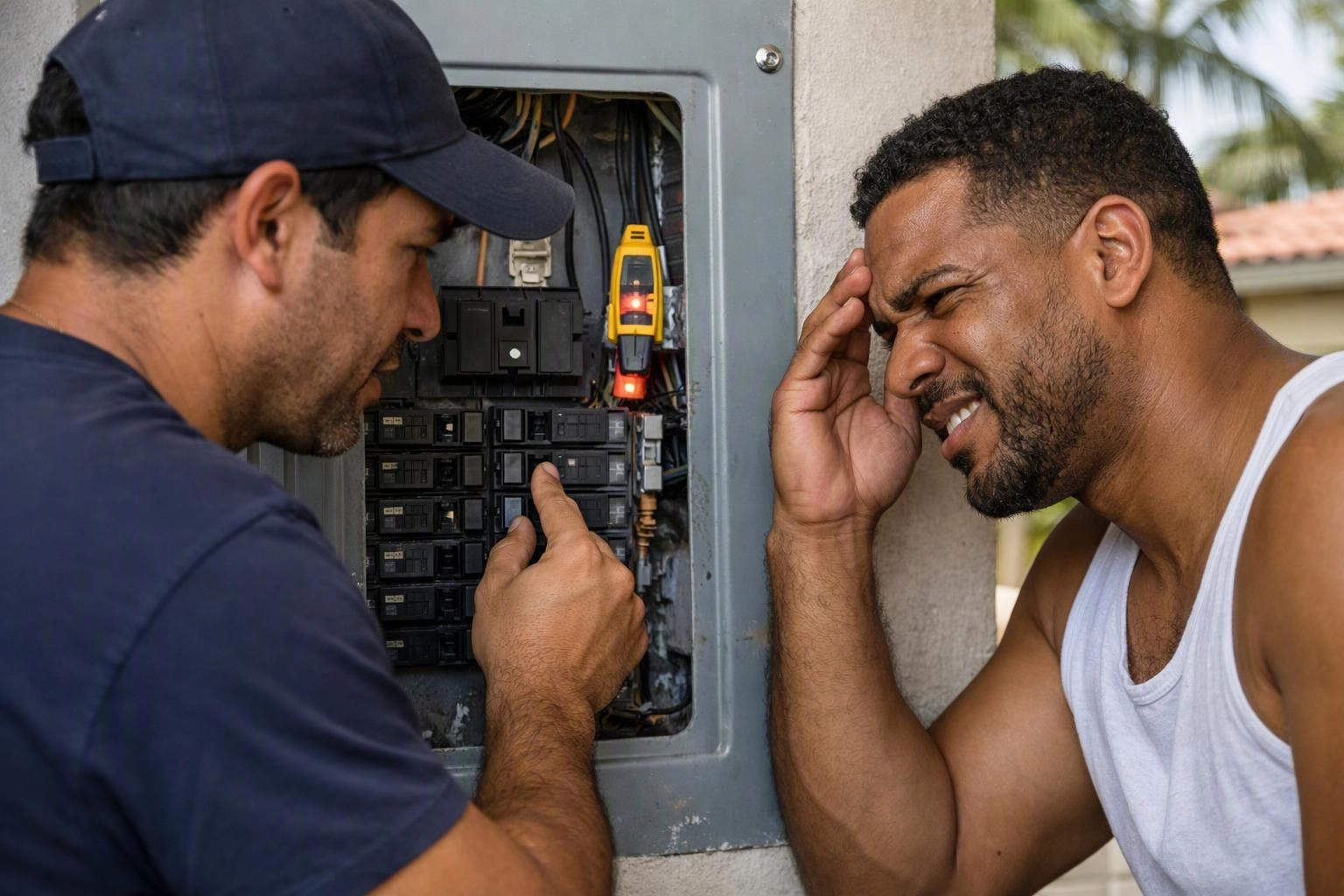
Earth Electric helps homeowners choose a safe next step. A breaker shouldn’t stay on at any cost. Its job is to stop unsafe power.
What Causes a Circuit Breaker to Keep Tripping?
Circuit breaker trips happen when current gets too high. They also happen when power takes an unsafe path. Common causes include overloads, short circuits, ground faults, damaged wires, loose connections, and bad appliances. The breaker cuts power to lower fire and shock risks.
An overloaded circuit has more demand than it can safely carry. Several high-use devices may share one circuit. Air conditioners, water heaters, kitchen tools, and laundry machines use lots of power. Motors and heating parts can draw extra power when they start. Older homes may have less circuit capacity. Their labels may also be unclear.
A short circuit happens when separate wires touch. Damaged insulation, crushed cords, loose wires, and bad appliance parts can cause this. Current rises fast, so the breaker may trip at once. A ground fault is different. Power takes an unwanted path to ground. Moisture, damaged insulation, and faulty devices can cause this problem.
Wiring problems can include loose connections, worn insulation, and hot terminals. These problems may cause heat before you see damage. A thermal-magnetic circuit breaker has two trip methods. The thermal trip responds to a lasting overload. The magnetic trip responds to a sudden fault. Both actions protect your home.
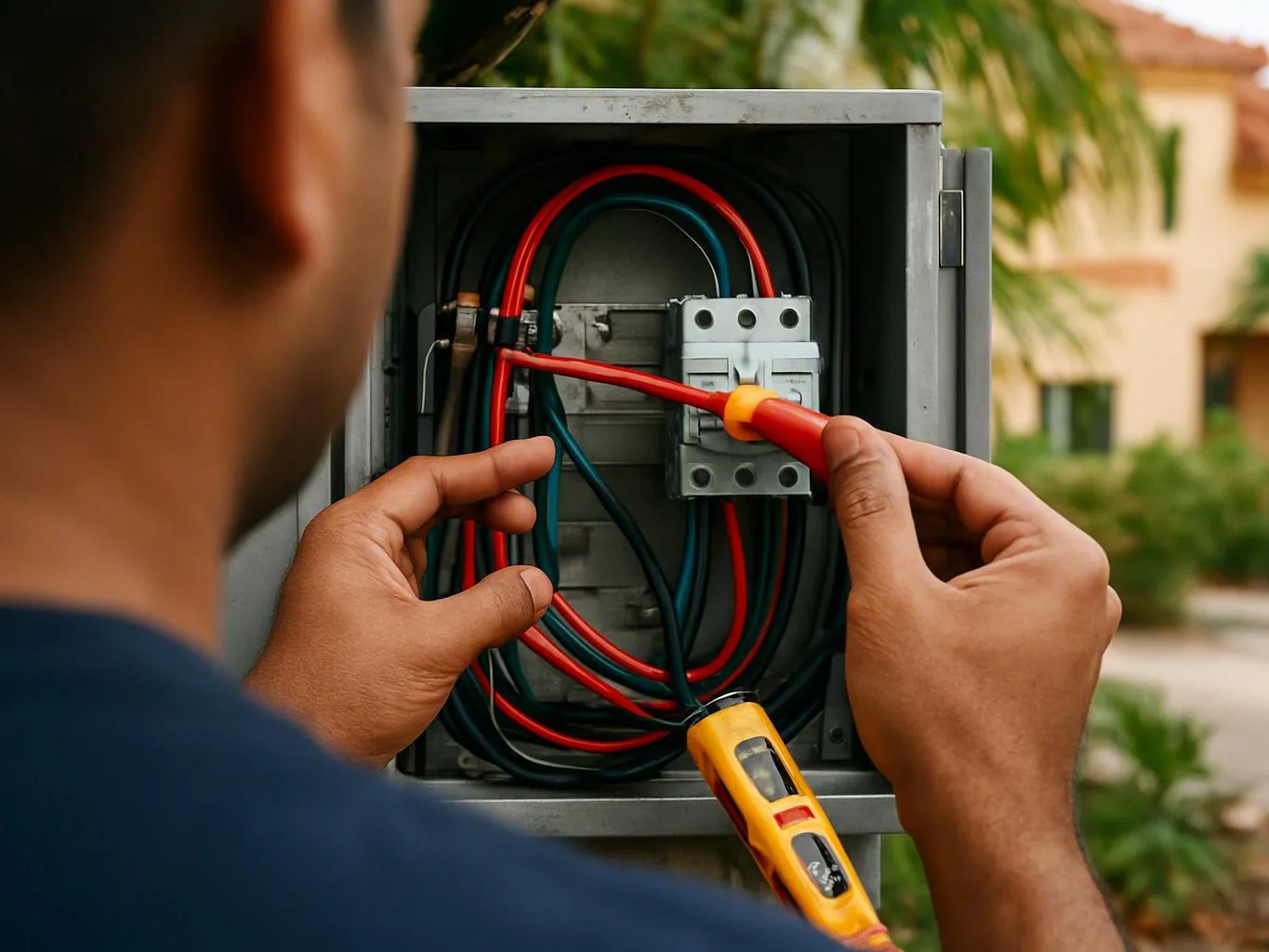
Our team also checks the electrical panel. A weak trip part or poor panel connection can stop power. The breaker must also match the panel. Don’t remove the panel cover or tighten terminals yourself. Live parts may still carry power.
How an Overloaded Circuit Differs from a Short Circuit?
An overloaded circuit draws too much power over time. A short circuit creates a sudden surge. This difference explains when the breaker trips.
A circuit’s load includes every device using it. The total demand may rise as devices run. Heat builds during a lasting overload. A portable heater, microwave, toaster, and coffee maker may overload one circuit. Each device may work fine by itself.
A short circuit skips the normal power path. The breaker reacts to the sudden surge. Damaged cords, outlets, loose wires, and bad appliance parts can cause this. Turning off some devices may not fix a wiring fault.
Timing offers one useful clue. A trip after use may point to load or heat. Immediate tripping may point to a short circuit or ground fault. It may also show an arc fault or failed equipment. Timing alone can’t confirm the cause.
Why Does My Breaker Trip Immediately After I Reset It?
Immediate tripping usually means the breaker senses an active fault. Possible causes include a short circuit, ground fault, arc fault, major overload, or bad breaker. Turn off and unplug devices on that circuit. Reset it once only if conditions are safe. If it trips again, leave it off. Arrange professional electrical troubleshooting.
A short circuit may remain after you unplug some devices. The fault may be inside an outlet, switch, light, box, or hidden wire. A ground-fault circuit interrupter can trip when power leaks from its normal path. This often happens near sinks, garages, outdoor outlets, and laundry areas.
An arc-fault circuit interrupter trips when it senses an unsafe arc. Loose terminals and damaged wires can create arcs. Pinched wires and old connections can also cause them. Don’t replace this device with an ordinary breaker. Its safety feature serves an important purpose.
If the breaker trips with every device unplugged, the fault may be in the circuit. It may also be in the panel or breaker. Leave the handle off. Our team can test the circuit and find the problem safely.
Can a Faulty Appliance Cause a Breaker to Trip?
A faulty appliance can trip a breaker. Its motor, heating part, cord, plug, or wiring may draw too much power. It may also create a fault. Unplug the appliance and see if the breaker stays on. Don’t use an appliance that smells burned, sparks, shocks, or trips the circuit.
Air conditioners, fridges, washers, and pumps use motors. Motors may draw extra power when starting. Ovens, dryers, dishwashers, and water heaters use heating parts. A failing part can cause a trip. A worn cord may hide damage near the plug. A loose outlet may heat up under load.
Use a simple unplug-and-observe check only when conditions are safe. Don’t proceed with smoke, heat, burning smells, sparks, shocks, or damage. Unplug the suspected appliance. Restore power once. Watch the circuit during normal use. If it stays on, don’t reconnect the device. Have it checked or fixed first.
If several appliances cause trips, the circuit may have a problem. A circuit may also trip with nothing connected. The cause could be the circuit, outlet, or wiring. A 24 Hour Electrician may help with urgent safety issues after normal hours.
Signs a Constantly Tripping Breaker May Be Dangerous
A constantly tripping breaker may be dangerous with heat, smoke, or burning smells. Buzzing, sparks, scorch marks, melted plastic, and shocks also signal danger. These signs may show damaged wires or a failing breaker. Stop using the circuit. Don’t keep resetting it. Seek qualified electrical repair.
Don’t open the panel to look for loose wires. Leave the home if there’s active smoke or fire. Contact emergency services. Otherwise, keep people away from the circuit. Arrange qualified electrical troubleshooting.
What to Do Before Calling for Electrical Troubleshooting?
Make the area safe before you call. Gather basic details without touching wires or removing covers. This information can help the electrician.
- Look at the panel from outside. Note which breaker moved. Check for heat, water, damage, or odors.
- Turn off and unplug devices on the affected circuit. Include heaters, kitchen tools, washers, and motor devices.
- Reset the breaker once if there’s no smoke, heat, smell, sparks, shock, or damage. Leave it off if it trips again.
- Write down what was running and how fast power stopped. Note which outlets or lights lost power.
- Check the circuit labels from a safe place. Shared circuits and unclear labels are common in older homes.
Don’t bypass the breaker or hold its handle in place. Don’t install a larger breaker. Don’t use an extension cord as a lasting fix. Tell the electrician if panel access is blocked. Don’t take risks to inspect it.
Common Causes and Prevention Steps for Repeated Tripping
Repeated trips often come from overloads, bad appliances, short circuits, or ground faults. Loose connections and old wires can also cause them. Match each device to the right circuit. Treat every unexplained trip as a warning.
Common causes
Prevention steps
Simple overload checks may take a few minutes. A wiring fault may need more testing. Fix the cause instead of restoring power again and again. Moving a plug may only move the load. Both outlets may share one circuit.
Do I Need Circuit Breaker Repair or Replacement?
Circuit breaker repair or replacement depends on the cause. A professional may suggest replacement for heat damage, physical damage, reset failure, repeated trips, or poor fit. If the breaker works correctly, the real problem may be the wiring or load.
A breaker is a safety switch inside the panel. Its handle and inner parts must work together. A loose handle may show a failed part. A breaker that won’t stay on may also be bad. Heat marks and rust can make it unsafe.
Don’t choose a breaker with a higher amp rating. The new breaker must match the panel and wires. It must also meet the equipment needs. An incorrect breaker may not trip as planned.
| Observed condition | Likely direction | Why testing matters |
|---|---|---|
| Trips only when several devices run | Load or circuit-capacity review | The breaker may be working correctly |
| Trips with one appliance connected | Appliance or receptacle inspection | The connected load may contain a fault |
| Trips with all loads disconnected | Wiring or breaker diagnosis | The fault may be inside the circuit or panel |
| Heat, scorching, or failed reset | Urgent repair or circuit breaker replacement | Damage can worsen when energized |
| Breaker type does not match the panel | Compatibility review and correction | The protective function must suit the equipment |
When the breaker is bad, our team can explain if Circuit Breaker Replacement is right. A loose wire or high load needs a different fix. Homeowners may call this breaker repair. Testing decides the safe remedy.
When Professional Electrical Repair Is the Safer Choice?
Professional electrical repair is safer when trips repeat. It’s also safer when the cause isn’t clear. Heat, arcs, shocks, smoke, and damaged wires need expert help. An electrical contractor can test the circuit without guesswork.
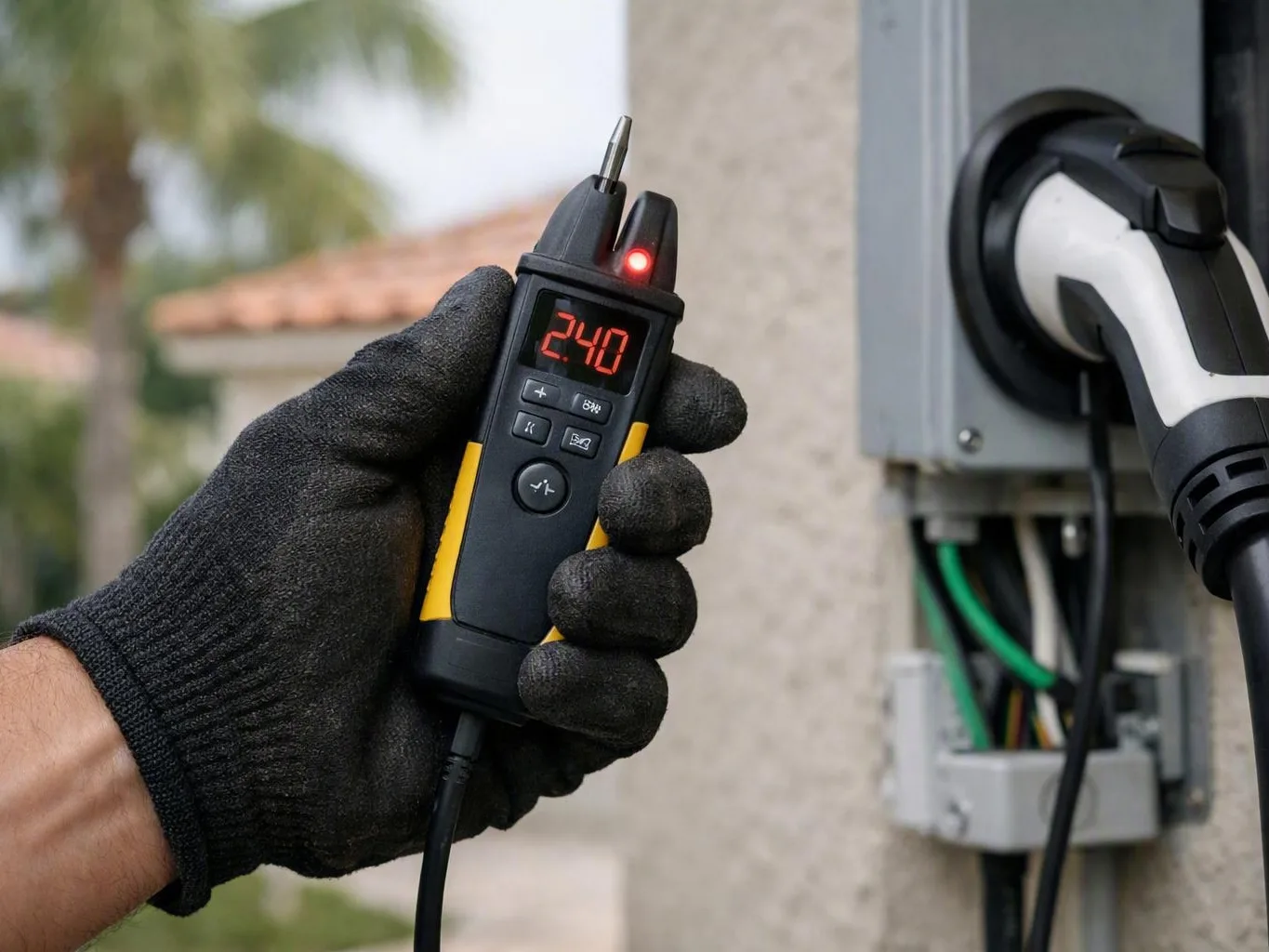
Our team may start with circuit testing. Voltage checks can find abnormal power. Continuity testing checks wires after power is off. Other tests may find leaks, arc faults, bad outlets, or appliance problems.
Contact us through our service request page when the breaker won’t reset or trips at once. Contact us for dangerous signs, too. We can discuss Circuit Breaker Repair in Miami. The safe choice is to find the fault. Don’t keep forcing the breaker on.
Questions About 24 Hour Electrician
Why Does My Circuit Breaker Keep Tripping?
Common causes include overloads, short circuits, ground faults, faulty appliances, loose connections, damaged wiring, and bad breakers. Unplug devices and reduce demand. Reset the breaker once if there are no danger signs. Repeated trips need electrical troubleshooting.
Why Does My Breaker Trip Immediately After I Reset It?
Immediate trips often show a short circuit, ground fault, arc fault, major overload, or bad breaker. Turn off and unplug connected devices if safe. Reset it once only. Leave it off if it trips again. Arrange professional circuit testing.
Can a Faulty Appliance Cause a Breaker to Trip?
Yes. A damaged cord, plug, motor, heating part, or wire can draw too much power. Unplug the appliance and watch the circuit. Don’t reuse a device that sparks, shocks, smells burned, or causes repeated trips.
Is a Constantly Tripping Breaker Dangerous?
It can be dangerous with burning smells, a warm panel, smoke, sparks, buzzing, shock, scorching, or melted plastic. Stop using the circuit. Don’t keep resetting it. Seek qualified electrical repair.
How Do I Know if I Need Circuit Breaker Repair or Replacement?
A professional inspection can show if the breaker is bad. It can also show if the breaker responds to a wiring, load, or appliance fault. Replacement may be needed for heat damage, physical damage, reset failure, repeated trips, or poor fit. Fixing the circuit may solve the issue instead.
Repeated trips can affect safety and daily life. Our team can find the cause and explain your repair choices.
Related Resources
How Much Does a 24-Hour Emergency Electrician Cost in Miami?
24 hour emergency electrician cost Miami
How It WorksElectrical Troubleshooting: What the Diagnosis Involves and What It Costs
electrical troubleshooting cost and process
How It WorksElectrical Inspection and Code-Compliance Corrections: Process and Cost Factors
electrical inspection and code compliance correction cost
Compared ToCircuit Breaker Repair or Replacement: Cost, Causes, and What to Expect
circuit breaker repair vs replacement cost