
What is Open Circuit?
Open Circuit is an electrical path with a break that stops current from flowing through the circuit. The break may come from an open switch, loose connection, damaged wire, failed component, or tripped protective device. Voltage can still exist across the opening. But the circuit carries little or no continuous current.
Quick Facts About Open Circuit
Category
Electrical circuit condition
Measured by
Continuity test and voltage test
Used for
Switching, isolation, and fault diagnosis
Common confusion
An open circuit is not the same as a short circuit
Also called
Open electrical circuit, Broken circuit
Often discussed with
Electrical Troubleshooting, Electrical Repair
Key Takeaways About Open Circuit
- A break anywhere in a circuit can stop current from reaching a load.
- Voltage may be present on one or both sides of an open point.
- An open switch creates an intentional open circuit during normal operation.
- Loose terminals, damaged wires, and failed components can create unwanted openings.
- Testing continuity requires de-energizing the circuit before using an ohmmeter.
Understanding Open Circuit
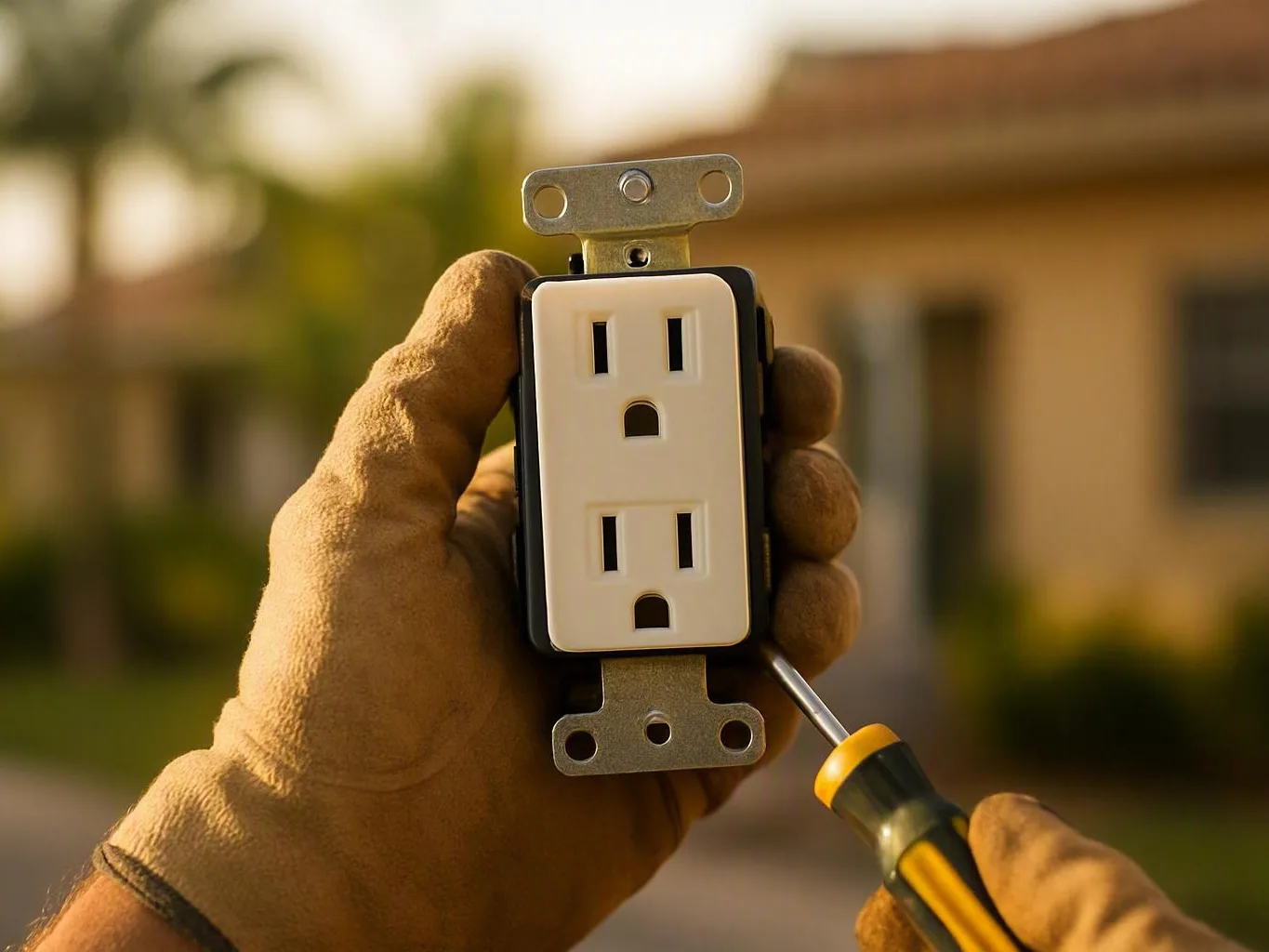
Open Circuit describes a full path with one break. The break stops electric current from moving through the load. Current can't return to the power source. An open switch is a normal example. A broken wire or loose terminal can create an unwanted opening.
Related glossary terms: Short Circuit, Branch Circuit, Voltage.
A circuit may still have voltage across the open point. Voltage means electric pressure. Current means charge flow. Voltage doesn't prove that current is moving. For example, a wall switch can have line voltage on its supply side. An open switch can stop voltage from reaching a light fixture.
How Open Circuit Works, Is Measured, or Is Used?
Current needs a full path through the source, wires, controls, and load. Opening any part makes circuit resistance very high. This change reduces current to nearly zero during normal use. In a simple circuit, Ohm's Law shows this link as I = V/R. Very high resistance produces very little current.
Technicians test for an open condition in stages. A voltage tester can show if voltage reaches a device. A continuity tester or ohmmeter checks a path with power off. Safe testing requires turning off the circuit. You must confirm that power is absent. You must follow the meter manufacturer's instructions. Common checks include the following.
- Inspect terminals, splices, switches, and wires for loose or damaged connections.
- Test voltage at the source and then at the load. This shows where power stops.
- Check continuity only after disconnecting power from the circuit.
- Reset or test a protective device when its contacts may be open.
Why Open Circuit Matters?

An unwanted open circuit can cause dead outlets and dark lights. It can also cause inactive appliances and controls that don't respond. The fault may be close to the device or inside a junction box. It may also be at a panel terminal or in a hidden cable. Finding the exact break matters. Replacing a working device won't fix a broken wire upstream.
An open condition can also provide useful protection. A circuit breaker, disconnect, or switch opens the path. This action isolates equipment during service. It can also stop use after a fault is found. The opening may be safe when the circuit's properly de-energized. Exposed wires can still have power on the supply side.
When Open Circuit Matters Most?
Open-circuit diagnosis matters when part of a branch circuit loses power. A failed receptacle may stop downstream outlets. Its terminals or splice may pass power to other devices. Heat, shaking, rust, moisture, and use can loosen connections. This makes inspection important in garages, outdoor areas, kitchens, and coastal locations.
Take extra care near service equipment, high-current loads, or damaged insulation. A meter reading can change when a connection carries load. A connection may look fine without load. It may still fail during use. In Miami, salt air, humidity, storm damage, and flood exposure can raise inspection needs. Check terminals, enclosures, and wiring for rust or physical damage.
How to Evaluate Open Circuit?
- Does voltage reach the circuit source, control device, and load in the expected sequence?
- Was power turned off and absence of voltage confirmed before a continuity test?
- Does the continuity test show a low-resistance path through the conductor or switch?
- Are terminals tight, conductors undamaged, and splices contained in approved junction boxes?
- Does the circuit remain operational when the connected load runs under normal conditions?
Related Concepts Compared
Open Circuit vs. Short Circuit
An open circuit breaks the intended path and stops current. A short circuit creates an unintended low-resistance path that can produce excessive current.
Open Circuit vs. Closed Circuit
A closed circuit has a continuous path that permits current to flow. An open circuit has a break that interrupts that path.
Open Circuit vs. Ground Fault
A ground fault sends current along an unintended path to ground or grounded metal. An open circuit interrupts the intended path instead.
Expert Note
A voltage reading alone may not locate an open conductor because a high-impedance meter can detect induced or backfed voltage. Confirm the circuit state, test under appropriate conditions, and trace both supply and return conductors.
Common Mistakes or Myths About Open Circuit
- Assuming a circuit has no voltage because the connected light or receptacle is not working.
- Testing continuity on an energized circuit, which can damage the meter or create a shock hazard.
- Replacing a breaker before checking for a loose terminal or broken conductor.
- Treating a tripped GFCI receptacle as proof that the branch wiring is open.
- Using a noncontact tester as the only test for an open circuit.
Open Circuit in Practice: A Real-World Example
A hallway light works, but two receptacles downstream are dead. The breaker is on, and the first receptacle has power on its line terminals. A loose connection at that receptacle interrupts the outgoing path, creating an open circuit for the downstream devices.
Sources & Further Reading on Open Circuit
- OpenStax College Physics 2e, Electric Current, Resistance, and Ohm's Law
- Occupational Safety and Health Administration, Electrical Safety
Related Services
Related Terms
Short Circuit
Short Circuit is an unintended low-resistance path that lets electric current bypass part of a circuit…
Branch Circuit
Branch Circuit is the wiring section that carries electricity from a circuit breaker or fuse to…
Voltage
Voltage is the electrical force that pushes current through a circuit. Measured in volts, voltage represents…
Ohm's Law
Ohm's Law is the relationship between voltage, current, and resistance in an electrical circuit. The law…
Earth Electric
Have Questions About Open Circuit?
Contact Earth Electric for practical guidance on Open Circuit and related 24 hour electrician work in Miami.